An inside look at NASA’s new Artemis program and its mission to return astronauts to the moon for the first time in 50 years.
No Trailers found.
No Cast found.
A mind-bending, thrilling journey exploring the fragility and wonder of planet Earth, one of the most peculiar, unique places in the entire universe, brought to life by the only people to have left it behind – the world’s most well known and leading astronauts. This edit combined episodes one and ten to create a new movie.
What advantage does space travel bring to mankind? A father and his son search for answers during a walk in the forest.
Can Homo sapiens evolve into Homo spatius? For over 50 years now, we have been testing our human nature in our effort to conquer outer space, and still 30 years away from a possible human exploration of Mars, a question remains: Can our body take such travels? Will it ever adapt? Combining human adventure and the exploration of the human body, this film offers unique insights into the physical and psychological effects of space travel on the Astronauts and measures the impact on medical sciences.
A French documentary or, one might say more accurately, a mockumentary, by director William Karel which originally aired on Arte in 2002 with the title Opération Lune. The basic premise for the film is the theory that the television footage from the Apollo 11 Moon landing was faked and actually recorded in a studio by the CIA with help from director Stanley Kubrick.
No overview available.
Recently discovered footage reveals the secret history of NASA's first landing on the moon, and using this brand-new evidence, former astronauts and experts challenge everything known about the Apollo missions.
The captivating tales of the people and events behind one of humanity's greatest achievements in exploration: NASA's Voyager mission.
This extraordinary film features NASA film footage enhanced by AI-based software and other image processing. The clarity of the images gives viewers a whole new perspective on what it was like to step onto lunar soil and ramble about the alien landscapes. The film shows how teams of astronauts collected evidence that has revolutionized our understanding of the origin of both Earth and the moon.
Laika, a stray dog, was the first living being to be sent into space and thus to a certain death. A legend says that she returned to Earth as a ghost and still roams the streets of Moscow alongside her free-drifting descendants. While shooting this film, the directors little by little realised that they knew the street dogs only as part of our human world; they have never looked at humans as a part of the dogs’ world.
A testament to NASA's Apollo program of the 1960s and '70s. Composed of actual NASA footage of the missions and astronaut interviews, the documentary offers the viewpoint of the individuals who braved the remarkable journey to the moon and back.
1969 documentary film covering the flight of Apollo 11 from vehicle rollout to splashdown and recovery.
In one single, epic camera move we journey from Earth's surface to the outermost reaches of the universe on a grand tour of the cosmos, to explore newborn stars, distant planets, black holes and beyond.
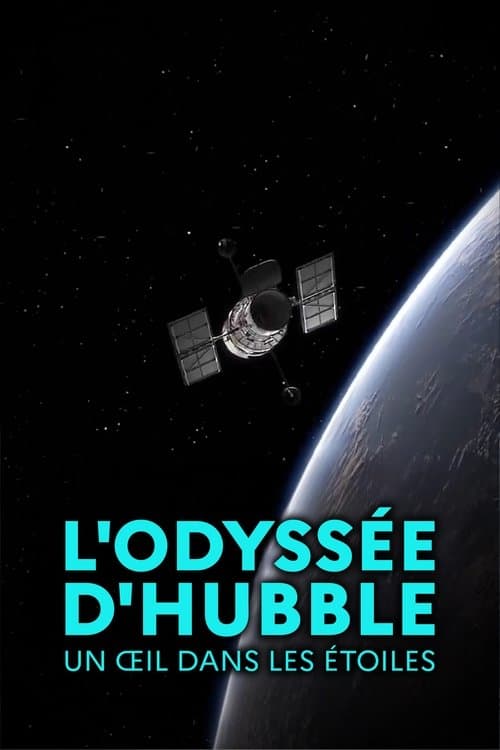
The Hubble Space Telescope has spent more than 30 years scrutinizing the cosmos in an attempt to unravel the secrets of the Universe and go as close as possible to its origin. But Hubble has also become the superstar of space, offering us magnificent paintings of the Universe.
Explores the $10 billion JWST's engineering and construction process, historic Dec. 25, 2021 launch, and the release of its first full-color, galaxy-sprinkled images on July 12, 2022 witnessed by the entire planet.
A year through the distant eyes of meteorological satellite Himawari-8 – a hypnotic stream of Earth's beauty, fragility and disasters. Animation of satellite irradiation scan measurements, scientific data by meteorological satellite Himawari-8 courtesy of JMA/BoM/NCI
Archival material from the original NASA film footage – much of it seen for the first time – plus interviews with the surviving astronauts, including Jim Lovell, Dave Scott, John Young, Gene Cernan, Mike Collins, Buzz Aldrin, Alan Bean, Edgar Mitchell, Charlie Duke and Harrison Schmitt.
Travel alongside the astronauts as they deploy and repair the Hubble Space Telescope, soar above Venus and Mars, and find proof of new planets and the possibility of other life forming around distant stars.
Travel to the edges of our solar system with this unique blend of photographic images, video and computer animation. Hosted by renowned scientist and author Isaac Asimov, the program is set to Gustav Holst's moving 1917 musical suite "The Planets." The infrequently seen footage from NASA includes images of planets and other impressive galactic bodies, including Jupiter, Saturn's rings, Pluto and much more.
On July 16, 1969, the world watches as the three Apollo 11 astronauts attempt the impossible: to ride a controlled explosion off Planet Earth, land on another celestial body and return home. As the nine-day mission proceeds, audio from mission control captures the drama as it unfolds—each moment revealing new dangers, new decisions and new wonders. For the first time on television, this documentary utilizes “lost tapes” of the astronauts, recorded before and after the mission, along with rare film and photos. The documentary reveals the doubts and fears of the astronauts as they stand on the brink of history. The mission was nearly aborted twice, as the crew faced a mysterious alarm sounding in the spacecraft, and when fuel levels ran dangerously low. On the 50th anniversary of NASA’s most audacious achievement, Moon Landing: The Lost Tapes reveals the incredible true story of mankind’s greatest leap.