Mogens Elbæk travels across the Alps - from France to Slovenia. A cooperation between Danmarks Radio and Morgenavisen Jyllands-Posten.
Self - Narrator
No Trailers found.
No overview available.
It is a fact that our winters are less and less cold. Therefore it is harder and harder to get the conditions for ice-climbing. Fortunately, man adapts to his environment and makes progress: this is how dry-tooling was born. This movie will make you discover this discipline: its history, its evolution and the current practice. You will also see how much excitement dry tooling can bring. Dry-tooling now allows to free-climb some routes which were impossible to climb without aid in the past.
Joseph Vallot and his team of guides and porters climb Mont Blanc in 1906. Their ascent will take three days. They spent their nights at the Grands Mulets refuge and the Grand Plateau refuge. This is the very first successfully filmed ascent. Joseph Vallot (1854-1925), rich heir of Lodève in Occitania. He devotes part of his fortune to the observation of the Alps, sometimes opposing the scientific community. He built an observatory, still standing today.
This episode is part of the series "The Conquerors of the Impossible (2/3)". From the 1950s to the 1980s, René Desmaison achieved a large number of "firsts". A specialist in normal routes (west face of Les Drus, Pilier du Freyney, Shroud...), he experienced a tragedy at the Grandes Jorasses, where his exceptional resistance allowed him to survive against all logic. He is the first to claim the practice of the mountain as a high level sport. A man of contrasts, his apparent strength hides great shyness and an unalterable enthusiasm despite the years. Beyond mountaineering, it is the spirit of adventure that has always inhabited him. A whole life devoted to mountaineering.
No Comment portrays the top climbers and young talents of the scene in both bouldering and route climbing with spectacular cinematography. It doesn't just show the hardest problems, it's also about climbing as a lifestyle and those who have shaped the scene from the beginning, such as Ben Moon, Jerry Moffat and Gerhard Hörhager. It also showcases the young talents like David Lama, Luca Zardini, Markus Bock and Michael Mayr introducing a new generation of super athletes, their philosophy and the way they live their lives. The film features an original soundtrack by10 Tyrolean musicians.
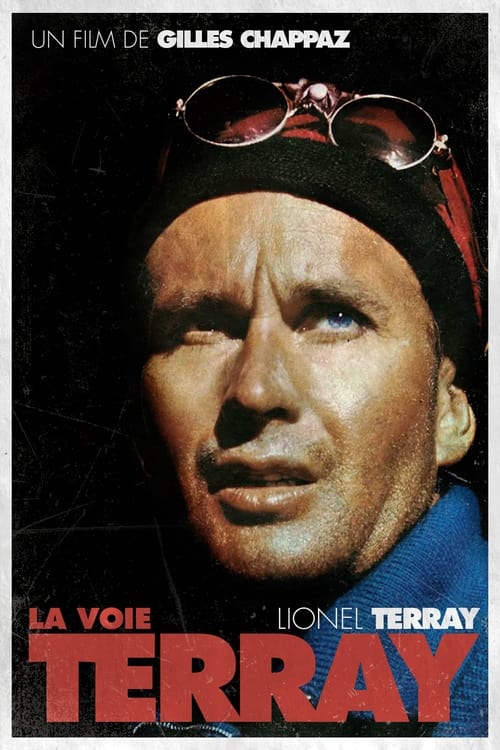
Terray. This name sounds like a challenge and evokes deep respect in the memory of every mountaineer. For all, Lionel Terray remains forever the "Conqueror of the useless", the example of a generous and mature mountaineer, far from any egocentrism and any ambition. Not only a pioneer and witness to the history of mountaineering, Terray is also remembered as a man and a master more than an athlete. Forty years after the tragic death of this extraordinary mountaineer and guide, who liked to think of himself as a "simple mountaineer", his former friends and the youngest generation of mountaineers come together in this film to celebrate and remember his legacy.
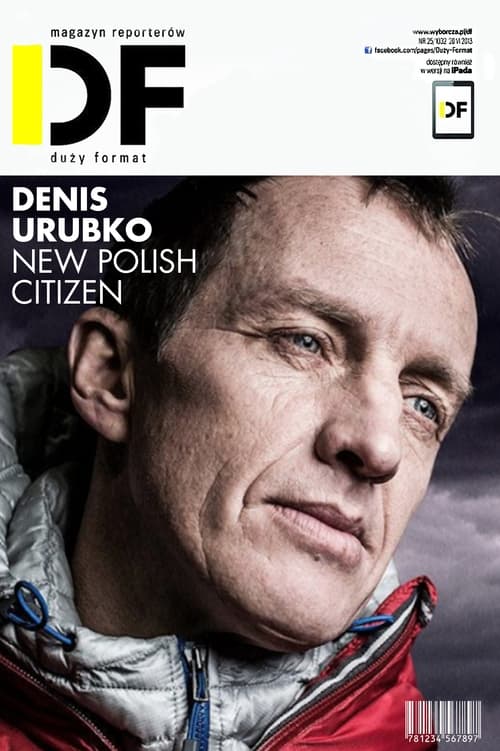
Mountaineering legend Denis Urubko shares his thoughts on what mountaineering is (or isn't). "It's important to get up from the table before you're full at mealtime. Sometimes people try to enjoy life to the fullest. And I'm afraid of it," he says in this interview given to Dominik Szczepański and produced by Jarek Tokarski for Duży Format.
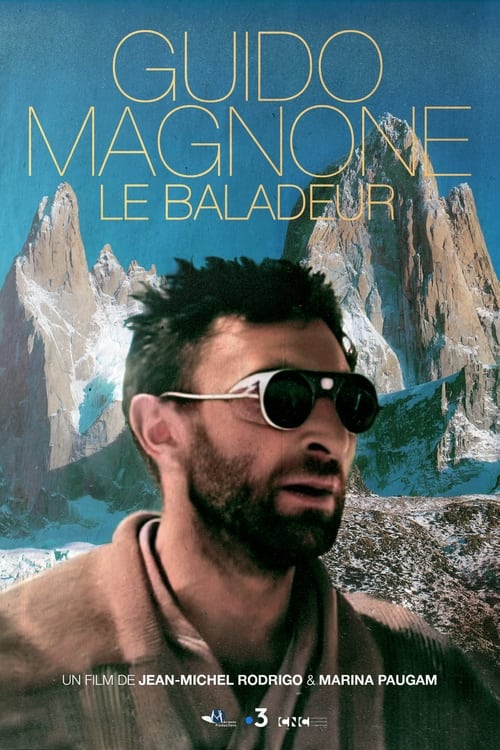
Guido Magnone's incredible adventure begins strangely on the banks of the Ourcq canal among a group of kids who dream of swimming. Guido, the solitary son of "rital", dives to get noticed, succeeds, takes a liking to it, breaks his first record, collects medals. At the same time, he draws, attends the Beaux-Arts, is accepted with open arms and befriends the sculptors César and Féraud. At the end of the war, during a health stay in Chamonix, it is love at first sight for the mountains, climbing. Guido's ascent is now dizzying. He stormed the west face of the Drus, then the Fitzroy and the Tour de Mustagh, summits reputed to be impossible. He rubs shoulders with the greatest, Lionel Terray, Maurice Herzog, and participates in the Makalu expedition, camera in hand, or those of Jannu and Chacraraju. Later, in his fifties, Guido hangs up the carabiners and participates in the foundation of the UCPA
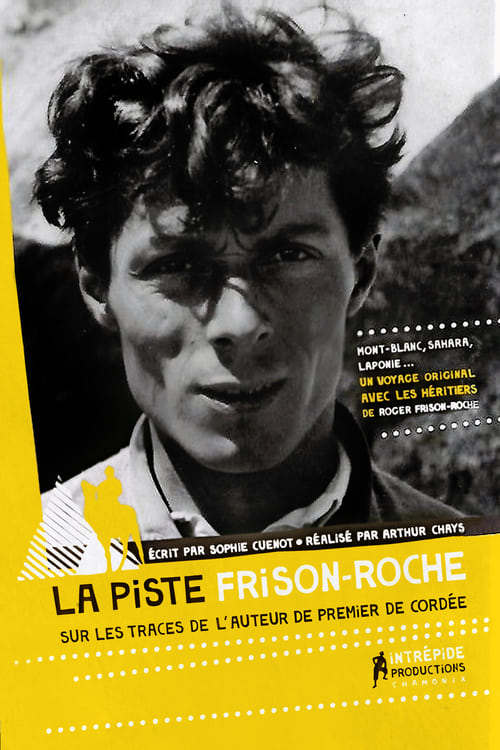
Roger Frison-Roche born in Paris in 1906 and moved to Chamonix at the age of 17. He was quickly adopted by local mountaineers and became the first guide in the Company not to have been born in the valley. He is also an insatiable explorer, in love with landscapes and peoples, having traveled from the Hoggar to the Sami camps in Lapland. And the author, among others, of the famous adventure novel Premier de Cordée! This documentary, made up of archive images and interviews, exposes the prolific life of a man who communicated his passion for the mountains by all possible means. A young journalist from Chamonix follows in the footsteps of Roger Frison-Roche. She meets people who knew him and others who followed in his footsteps: guides, filmmaker and author Philippe Claudel, a director, his family; on a trip to Lapland, Algeria, Chamonix.
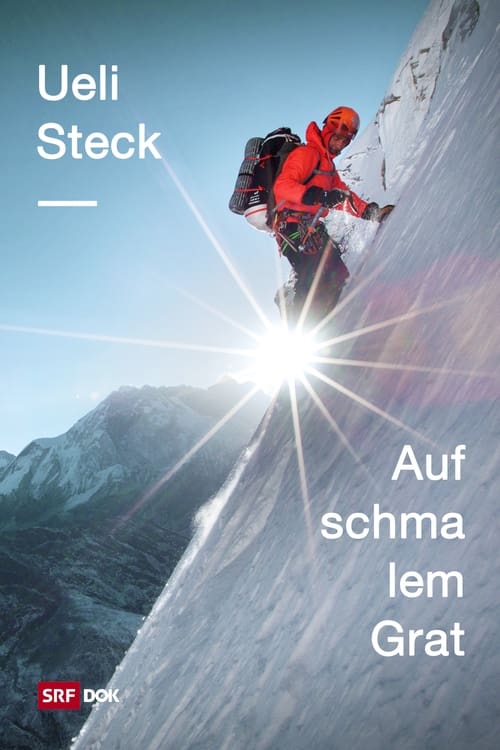
Deceased but not forgotten. In 2017, Switzerland's most famous mountaineer, "Swiss Machine" Ueli Steck, fell to his death in the Himalayas when he was just 40 years old. Three close friends travel again to the Everest region where he died. His family in Emmental has to deal with premature death.
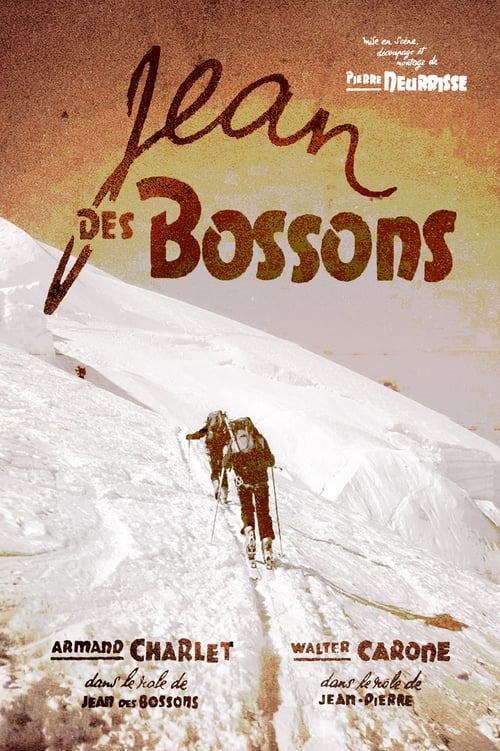
Jean des Bossons is a documentary-fiction which recounts the activities of a high mountain guide in 1947. Around Chamonix Mont-Blanc, the guide Jean des Bossons, interpreter by the mountaineer Armand Charlet, accompanies on mountain hikes, Jean-Pierre, an apprentice guide. The novice, skis on the shoulder, is already clumsy. The professional taught him how to travel on skis uphill and downhill, then mountaineering in ice and rock parishes. By dint of training, Jean-Pierre has made it his job. Guides are also lifeguards. A group went to a glacier to rescue a man who had fallen into a crevasse. During this rescue, Jean des Bossons is the victim of an accident. A drama that prevents him from practicing the profession, but not climbing. The man sinks into the fog and Jean-Pierre cannot find him.
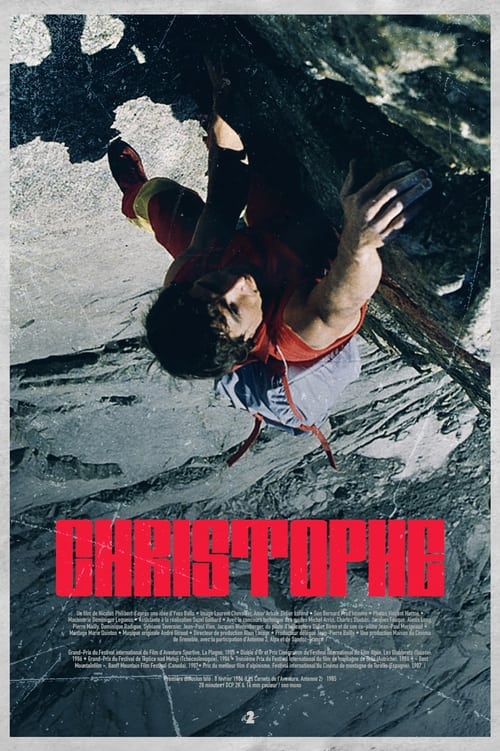
It is 1 p.m. on June 30, 1982, when Christophe Profit, 24, shows up at the foot of Les Drus with his pof bag, his climbing shoes and nothing else. He will try the west face of Les Drus in "solo", in the Mont Blanc massif by "Directe Américaine", 1100 meters of vertical and smooth rock. Christophe will achieve the feat of climbing the wall in free solo, without using a rope or any belaying technique. At 4:10 p.m., barely more than three hours after the start of his ascent, the new climbing star can embrace the Virgin of the Drus at the same time as the career of a high-level mountaineer. Three years later, on July 25, 1985, he climbed the north faces of the Matterhorn, the Eiger and the Jorasses in the same day. Awarded at many mountain film festivals, this great documentary is a magnificent testimony to one man's passion for climbing, the mountains and adventure.
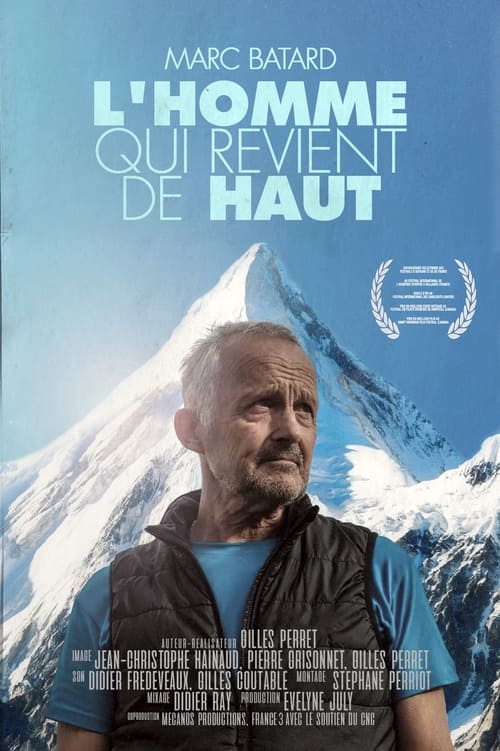
What compels a man to push the limits of what is attainable ever higher? After thirty years of relentless struggle with the highest peaks on earth, Marc Batard has finally found the answers to these questions. He had to reach the summit of Everest twice, once shattering the record for fastest time in 24 hours without oxygen, and climb the most difficult faces of the Alps to glimpse the path to inner healing. It was through physical suffering that he was able to confront the pain of his soul. He was finally able to talk about the violence of his childhood, the shock he carried like a ball and chain for decades. Having completed his summit therapy, Marc Batard tells his story in this documentary by Gilles Perret.
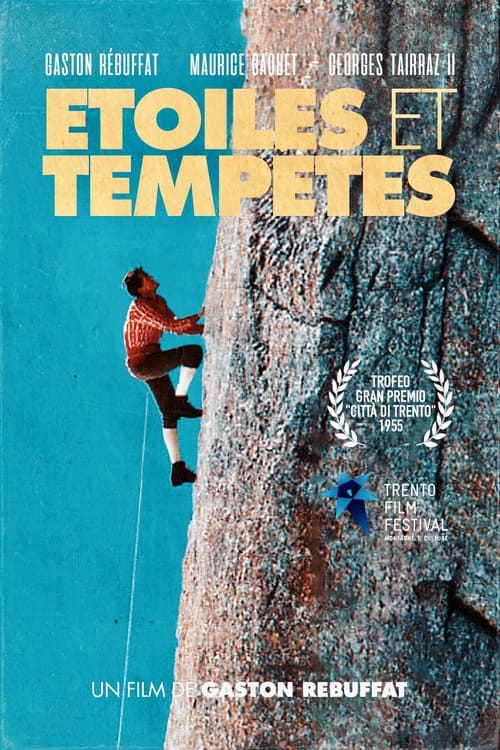
Gaston Rébuffat is part of the history of mountaineering. Marseillais prodigy, high mountain guide of the Chamonix guide company and famous for the ascent of the most famous north faces: some are 1st rehearsals, others 1st French or 1st as a guide. Filmed by Georges Tairraz, this masterpiece released in 1955 reveals the beauty of effort and the pleasure of sharing in the mountains. Apart from the feat, the mountains are not there to satisfy egocentric ambitions. A classic !
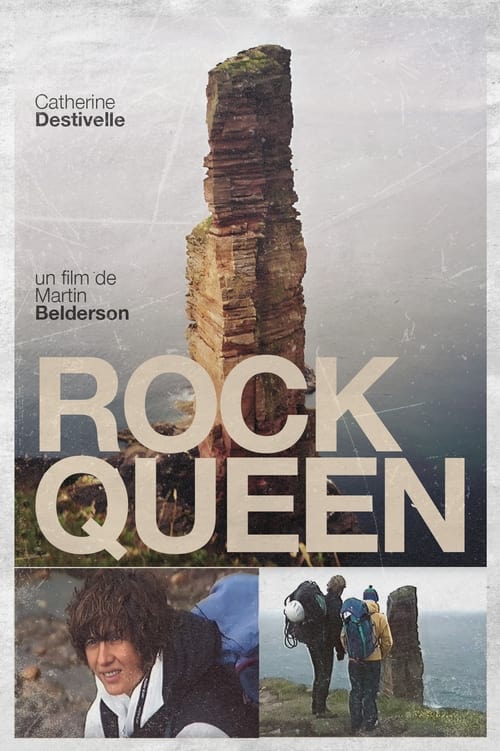
Catherine Destivelle has deservedly become the most famous female climber in the world. She rose to prominence with historic climbs, such as the free ascent of the Nameless Tower in Pakistan, and solo winter ascents of the classic north faces of the Matterhorn and the Eiger, climbs that have never been repeated by any woman. She also made history in sport climbing by winning the world championship title. In 1997, this time in Scotland, on the iconic Old Man of Hoy route, opened by Bonington, Patey & Baillie, Martin Belderson crowned Destivelle Queen of the Rock. She was four months pregnant when she made this 137-meter ascent, which was not difficult but on tricky rock.
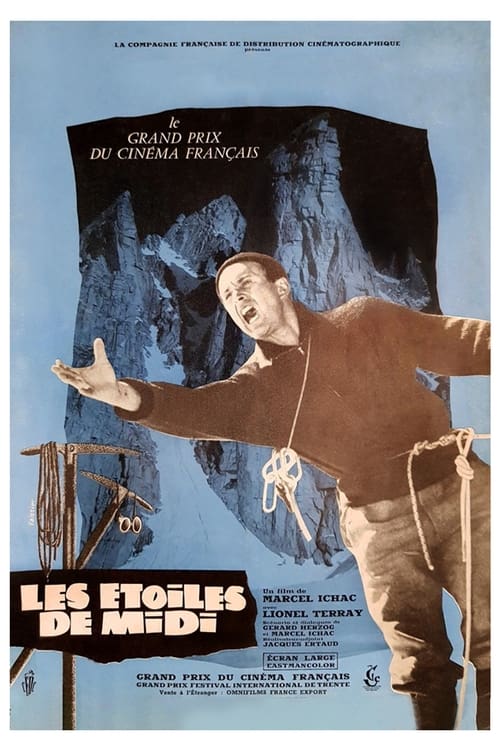
Les Etoiles de Midi is an engaging docudrama about some of the more spectacular exploits of French mountain climbers over the last several decades. In one re-enacted story, there is a wartime escape through the mountains, and in another, a daring rescue of a pair of climbers who had been missing. The actors themselves are adept at the sport of climbing, and they give the scenes an immediacy and real daring that brings the stories alive. A combination of their acrobatics and skill and the outstanding episodes in the history of French climbing creates a winning 78 minutes.
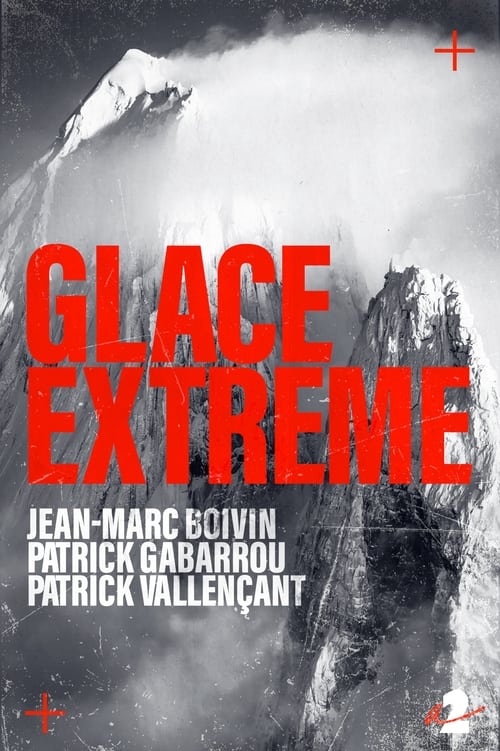
Directed by Jean-Marc Boivin in 1977, Glace Extrême is a documentary about mountaineering and extreme skiing at the Aiguille Verte and the Grand Pilier D'angle in the Mont-Blanc massif chain in France, with the legends of mountaineering Jean-Marc Boivin, Patrick Gabarrou and ski champion Patrick Vallencant. It was broadcast in the Carnet de L'Aventure on France 2 in 1980.