No Trailers found.
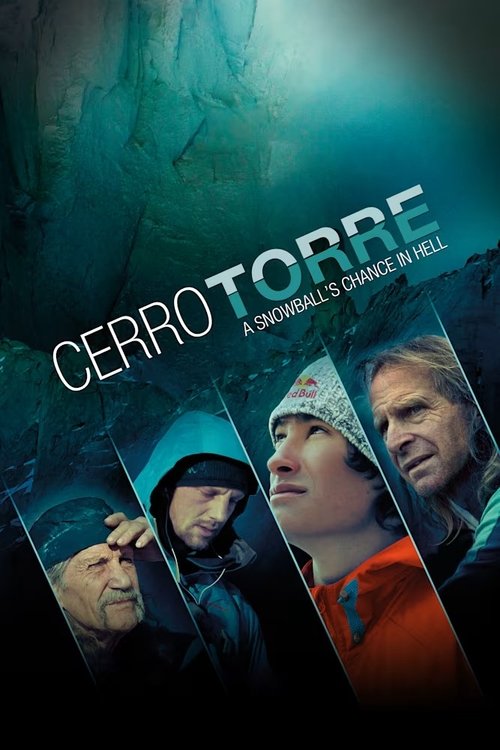
Movie about David Lama climbing the Patagonian mountain Cerro Torre for the first time free, a mountain that has been dubbed the most difficult to climb in the world.
Six blind Tibetan teenagers climb the Lhakpa-Ri peak of Mount Everest, led by seven-summit blind mountain-climber Erik Weihenmayer.
British diplomat Robert Conway and a small group of civilians crash-land in the Himalayas, where they are rescued by the inhabitants of the hidden, idyllic valley of Shangri-La. Protected by the mountains from the world outside, where the clouds of World War II are gathering, Shangri-La provides a seductive escape for the world-weary Conway.
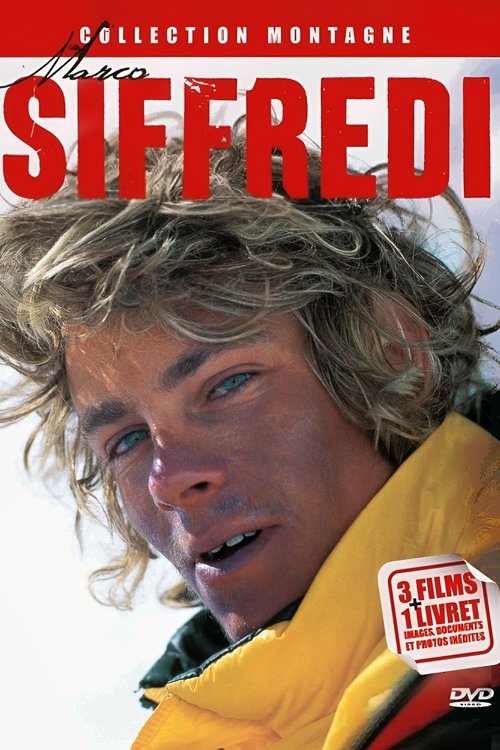
Avid for steep slopes, Marco Siffredi (1979-2002) obeys only one rule: not to fall. This gifted kid with hair sometimes blond peroxidized, green or blue clashed in his valley: Chamonix, mecca of mountaineering. His thing was to go up and down on a snowboard. . 90 minutes September 8, 2002, altitude 8848 meters, rare oxygen, his head already brushing the sky and his snowboard running, Marco Siffredi, 23, rushes from the summit of Everest in the Horbein corridor and its slopes at 50 degrees . A year earlier, he had already made the first descent of the mountain on a snowboard. But there remains another corridor… more direct. It's not a challenge, just a reason to be... However, that day, at the top of the roof of the world, his trace is lost...
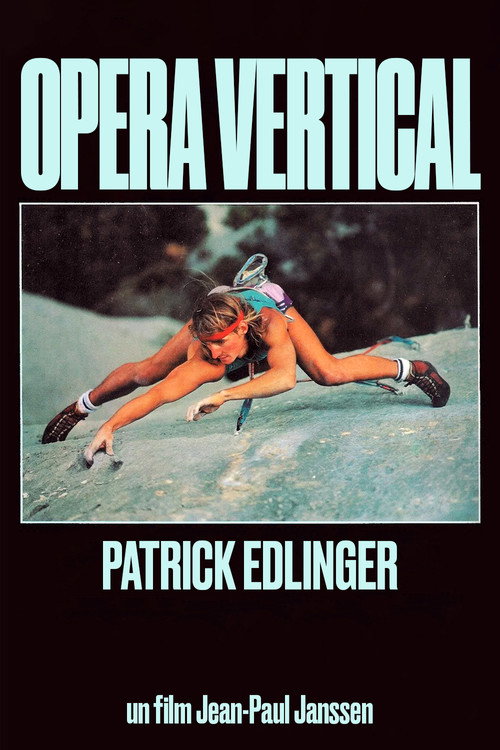
Vertical Opera is a documentary film directed by Jean-Paul Janssen, with climbers Patrick Edlinger and Jean-Paul Lemercier in the Gorges du Verdon. The film opens with a training sequence of Patrick Edlinger then he links the routes with Jean-Paul Lemercier "L'Ange en décongelation" (7a), in which he falls voluntarily to demonstrate the usefulness of the rope, then "Le Septième Saut" (7b+). Finally, the final scene, an anthology, consists of a close-up of Edlinger who climbs free solo and barefoot the route "Débiloff", still in the Verdon, above hundreds of meters of void, all to lyrical music. It is "Wie Furchtsam Wankten Meine Schritte", the aria for alto voice from Johann Sebastian Bach's cantata BWV 33, music not unrelated to the subject of the documentary: "How faltering and fearful my steps were".
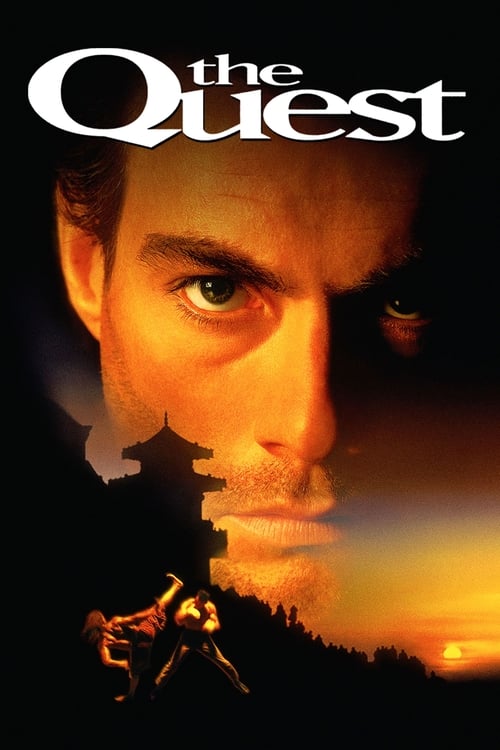
Ghang-gheng, the ancient winner-take-all competition in which the deadliest fighters from around the world employ the most spectacular feats of martial arts skills ever displayed in order to win the prized Golden Dragon. But fighting prowess alone will not be enough for Chris to triumph over such daunting foes.
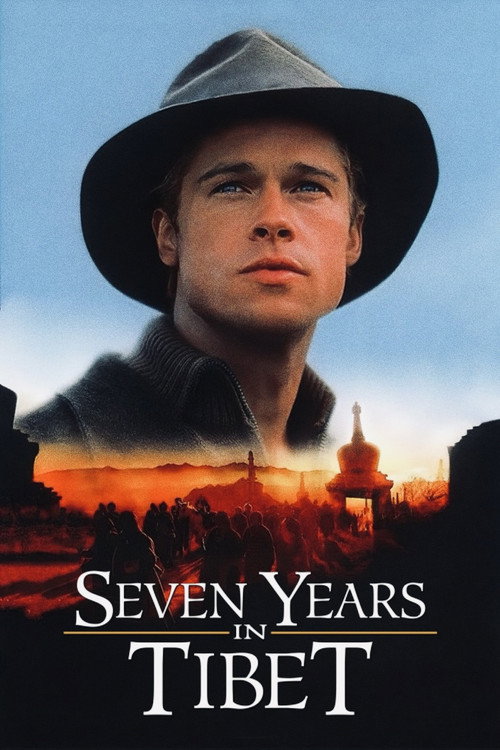
Austrian mountaineer Heinrich Harrer journeys to the Himalayas without his family to head an expedition in 1939. But when World War II breaks out, the arrogant Harrer falls into Allied forces' hands as a prisoner of war. He escapes with a fellow detainee and makes his way to Lhasa, Tibet, where he meets the 14-year-old Dalai Lama, whose friendship ultimately transforms his outlook on life.
No overview available.
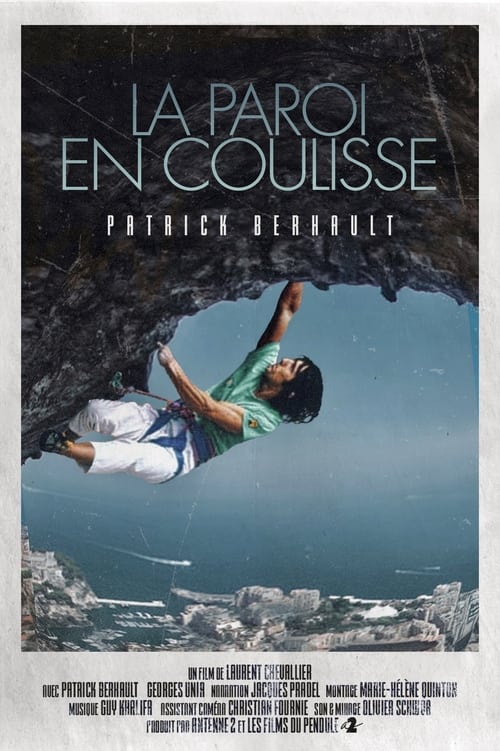
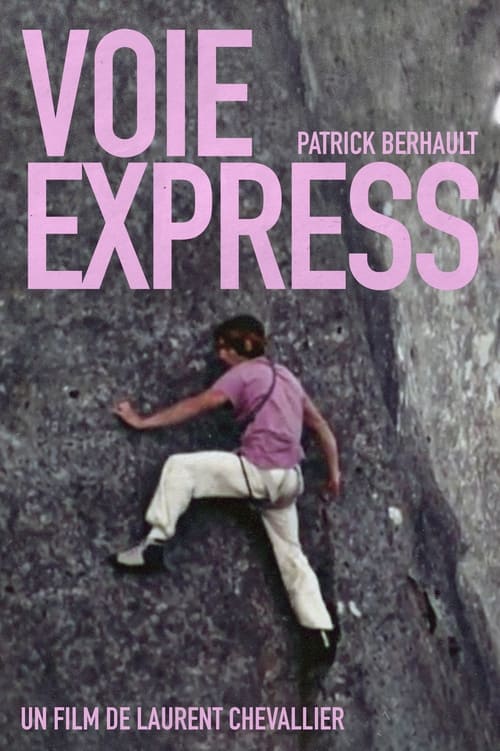
Behind the scenes of the filming of a film on climbing a cliff by Patrick Berhault and Georges Unia on the parishes of the route "La Tête de Chien" in Monaco. Director Laurent Chevallier explains the difficulties of filming at height, the kind of shots that are suitable and the specifications of equipment suitable for filming on a cliff.
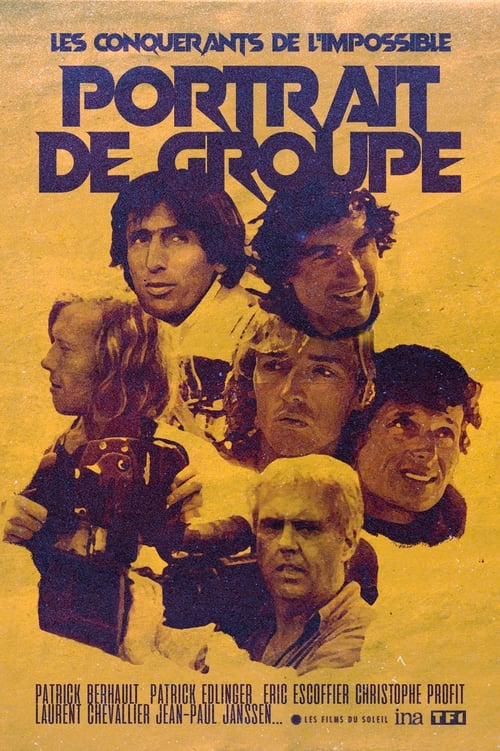
“The Conquerors of the Impossible: Group Portrait” is a documentary on free climbing which takes place in the Verdon Gorges and Toulon. It was directed by Bernard Dumont in 1986 and produced by Les Films du Soleil. It is part of the series The Conquerors of the Impossible (3-3). There we find Patrick Berhault, Patrick Edlinger, Eric Escoffier, Christophe Profit, Laurent Chevallier, Jean-Paul Janssen and other pioneers of free climbing.
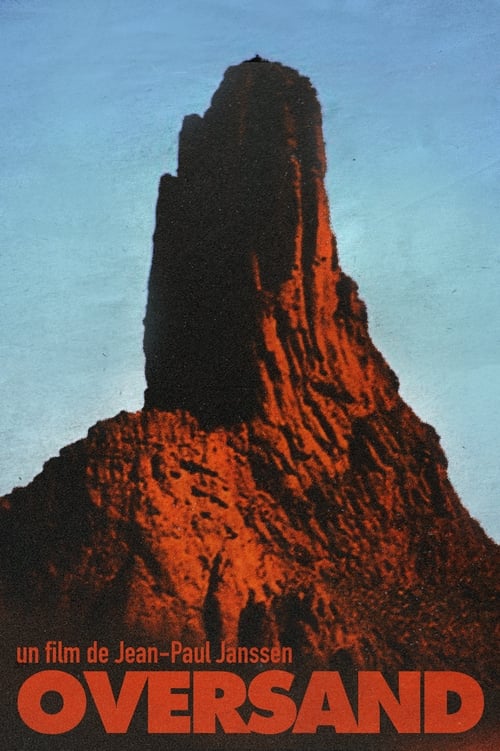
Oversand is one of the first films about free climbing, the third film in a series of three with "Overdon" and "Over-Ice". Directed by Jean-Paul Janssen, the film was shot in 35mm in Algeria, in the Sahara Desert, in the Tamanrasset region, on the walls of the majestic peaks of the Atakor massif, central sub-region of Hoggar, mountainous heart of Hoggar, a volcanic plateau of almost circular shape, whose average altitude is 2000 meters, and which culminates at Mount Tahat (2918m), the highest point in Algeria. The Atakor is distinguished by its spectacular volcanic peaks, its needles, and its rugged landscapes, resulting from the erosion of ancient volcanic chimneys, which make it the most emblematic summits of the Hoggar, such as the Assekrem, the Ilamane, or the Tizouyag, where climbers Patrick Edlinger, Patrick Bérhault, Bernard Gorgeon, Hugues Jaillet, Jacques Perrier, Stéphane Troussier and Odette Schoënleb evolve under the watchful eye of the Tuareg caravans.
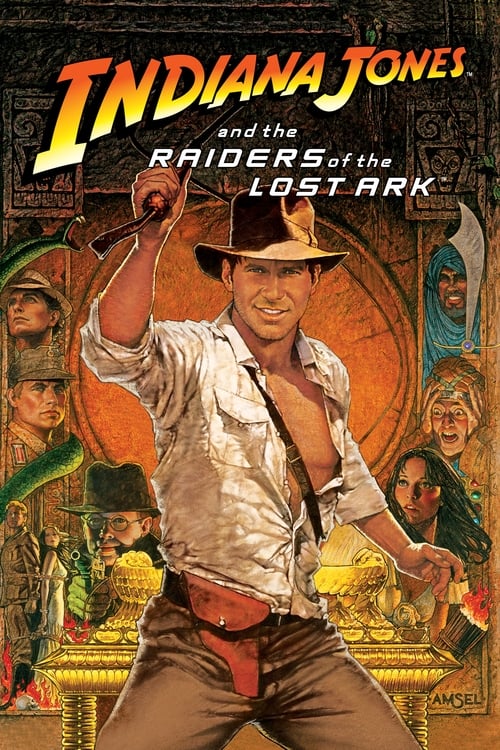
When Dr. Indiana Jones – the tweed-suited professor who just happens to be a celebrated archaeologist – is hired by the government to locate the legendary Ark of the Covenant, he finds himself up against the entire Nazi regime.
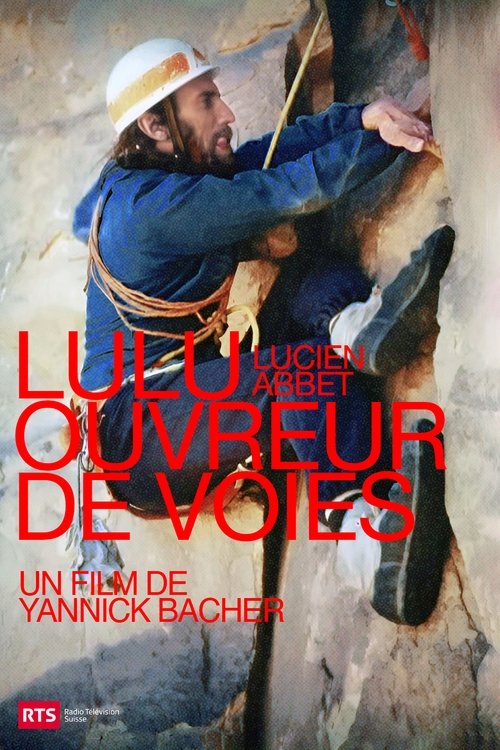
Lucien Abbet, better known as Lulu, is a pioneer of sport climbing and route-breaking in Valais. Although considered one of the best climbers of his generation in the field, his humility and his way of life have never been able to fit with the codes of public notoriety. Money, recognition, material goods have never interested him. He has devoted his entire life to his passion, a happy vagabond, as he likes to say: climbing and traveling.
Satyajit Ray's poetic documentary was commissioned by the Chogyal (King) of Sikkim at a time when he felt the sovereignty of Sikkim was under threat from both China and India. Ray's documentary is about the sovereignty of Sikkim. The film was banned by the government of India when Sikkim merged with India in 1975. The ban was finally lifted by the Ministry of External Affairs in September 2010. Preserved by the Academy Film Archive in 2007.
When gigantic robots attack New York City, "Sky Captain" uses his private air force to fight them off. His ex-girlfriend, reporter Polly Perkins, has been investigating the recent disappearance of prominent scientists. Suspecting a link between the global robot attacks and missing men, Sky Captain and Polly decide to work together. They fly to the Himalayas in pursuit of the mysterious Dr. Totenkopf, the mastermind behind the robots.
The documentary focuses on the annual Mani Rimdu festival of Tibet and Nepal, an event which encapsulates the Himalayan Buddhist experience.
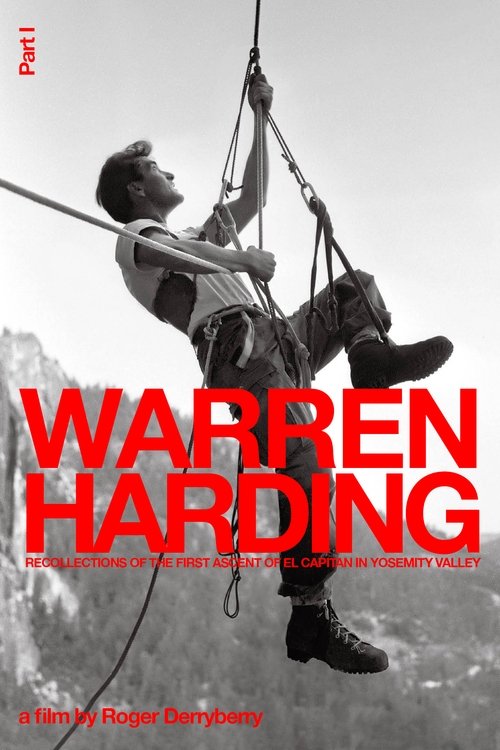
On November 12, 1958, nearly a year and a half after planting his first piton, Warren Harding climbed to the summit of El Capitan, the legendary face of Yosemite, which he became the first to climb via the equally legendary Nose route. An extraordinary undertaking closer to a heavy Himalayan expedition than to rock climbing. Climbing mainly on weekends in the fall and spring with companions whose level of skill was of little importance to him, Warren Harding spent a total of 47 days (spread over 17 months) on the face. 675 pitons (including 125 expansion pitons) and several thousand hammer blows were necessary to build his legend, despite the displeasure of the "Christians of the valley," as he somewhat sardonically nicknamed Royal Robbins and his cronies, who swear by style.
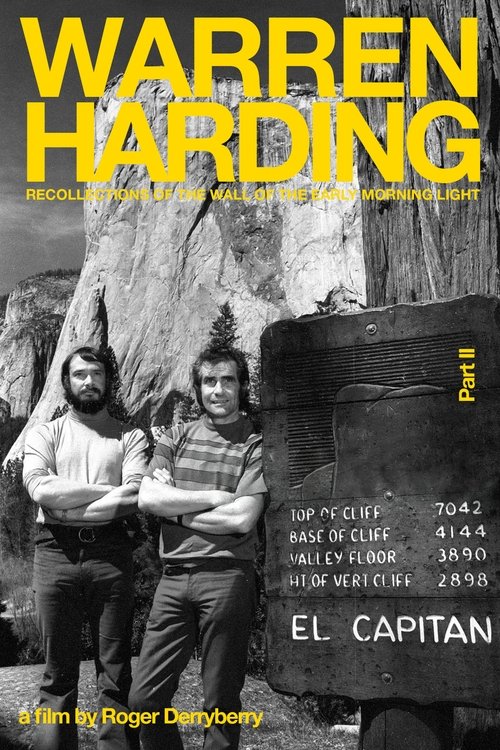
In 1970, Warren Harding and Dean Caldwell set out to climb Early Morning Light, better known as Dawn Wall, in Yosemite National Park. Arguably the most controversial climb in the park's history, due to multiple storms and a rescue attempt by the Yosemite Service. The climb thrust the event into the media spotlight, creating a controversy within the local climbing community. In this short documentary, Warren Harding himself recounts the climb.
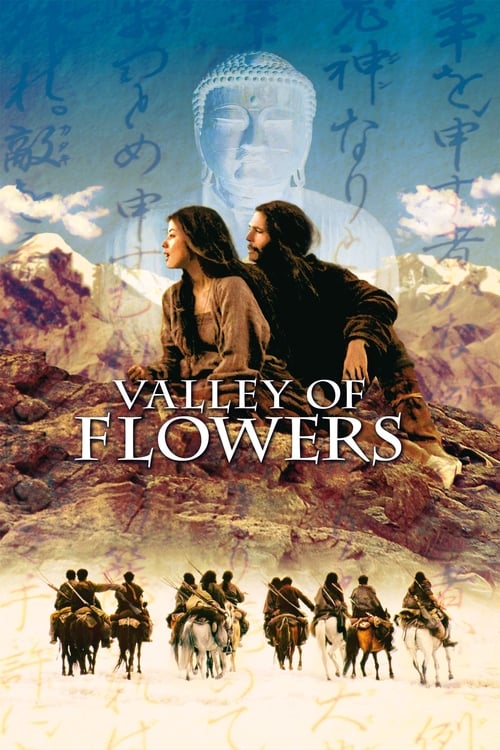
A Himalayan legend of a love struggling against the inevitability of death, an astonishing tale spanning from the early 19th century mountain existence, to hectic, bustling modern day Tokyo.
Self