logologo
MovieVerse© 2024
Privacy PolicyTerms of ServiceContact Us
Made with ❤️ by Thathsara
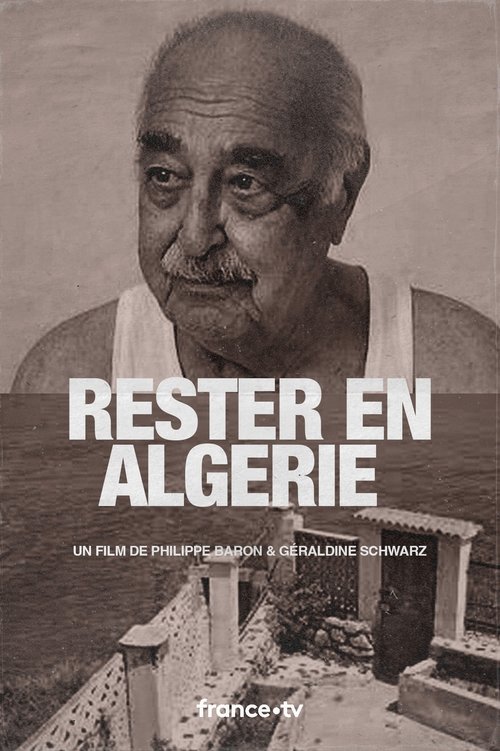
movie poster
Stay In Algeria
Sign in to create your own watchlist

Stay In Algeria

Nov 26, 2012
0h 52m
★ 10.0

Overview

Algeria, summer 1962, eight hundred thousand French people left their native land in a tragic exodus. But 200,000 of them decided to attempt the adventure of independent Algeria. Over the following decades, political developments would push many of these pieds-noirs into exile towards France. But some never left. Germaine, Adrien, Cécile, Guy, Jean-Paul, Marie-France, Denis and Félix, Algerians of European origin, are among them. Some have Algerian nationality, others do not. Some speak Arabic, others do not. They are the last witnesses to the little-known history of these Europeans who remained out of loyalty to an ideal, a taste for adventure and an unconditional love for a land where they were born, despite all the ups and downs that the free Algeria in full construction had to go through.

Genres

Documentary
History

Production Companies

Aber Images
France Télévisions

Stay In Algeria Trailers

No Trailers found.

Cast

Félix Colozzi

Self (Militant syndicaliste anticolonialiste et Moudjahid)

Félix Colozzi

Denis Gonzales

Self (Prêtre, Directeur des Services Caritas d'Algérie)

Denis Gonzales

Jean-Paul Grangaud

Self (Pédiatre)

Jean-Paul Grangaud

Marie-France Grangaud

Self

Marie-France Grangaud

Germaine Ripoll

Self

Germaine Ripoll

Sélim Grangaud

Self

Sélim Grangaud

Adrien Lopez

Self

Adrien Lopez

Maurice Baglietto

Self (Militant syndicaliste anticolonialiste et Moudjahid)

Maurice Baglietto

Cécile Serra

Self

Cécile Serra

Rachid Ramdane

Self (Chef de service pédiatrie)

Rachid Ramdane

Guy Bonifacio

Self

Guy Bonifacio

Lucette Lopez

Self

Lucette Lopez

You may also like

Moving Ice
0.0

Moving Ice

Mar 5, 2024

Ice has always moved. When glaciation took hold some 34 million years ago, interconnected rivers of ice combined to produce the Earth's vast ice sheets. As temperatures slowly warmed glaciers developed a unique balancing act; advancing and retreating to calibrate their annual winter accumulation against summer melt. Sometimes calving colossal icebergs into the sea. A positive feedback loop that has regulated the movement of ice for millions of years.

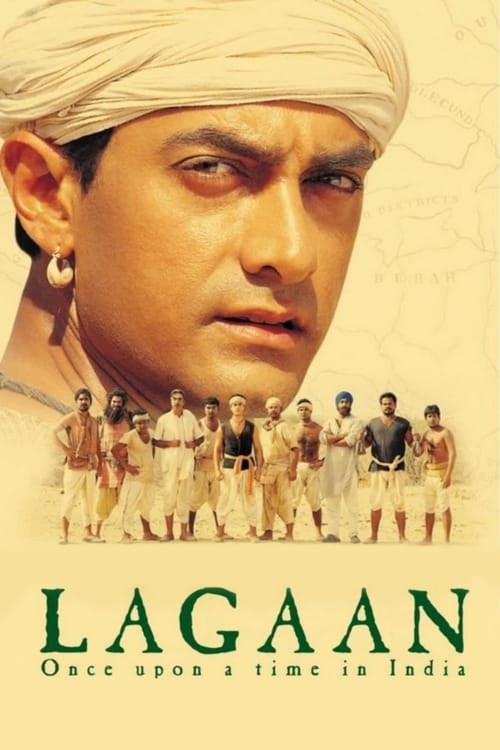
Lagaan: Once Upon a Time in India
7.3

Lagaan: Once Upon a Time in India

Jun 15, 2001

The year is 1893 and India is under British occupation. In a small village, the tyrannical Captain Russell has imposed an unprecedented land tax on its citizens. Outraged, Bhuvan, a rebellious farmer, rallies the villagers to publicly oppose the tax. Russell offers a novel way to settle the dispute: he challenges Bhuvan and his men to a game of cricket, a sport completely foreign to India. If Bhuvan and his men can defeat Russell's team, the tax will be repealed.

Guerre aux images en Algérie
9.0

Guerre aux images en Algérie

Sep 15, 1985

No overview available.

Put Your Soul on Your Hand and Walk
6.8

Put Your Soul on Your Hand and Walk

Aug 22, 2025

An Iranian filmmaker participates in a series of video calls with a young Palestinian photojournalist who describes her life confined in Gaza during the current regional conflict.

Five Directors On The Battle of Algiers
10.0

Five Directors On The Battle of Algiers

Aug 1, 2004

This 17-minute documentary is featured on the 3-Disc Criterion Collection DVD of The Battle of Algiers (1966), released in 2004. An in-depth look at the Battle of Algiers through the eyes of five established and accomplished filmmakers; Spike Lee, Steven Soderbergh, Oliver Stone, Julian Schnabel and Mira Nair. They discuss how the shots, cinematography, set design, sound and editing directly influenced their own work and how the film's sequences look incredibly realistic, despite the claim that everything in the film was staged .

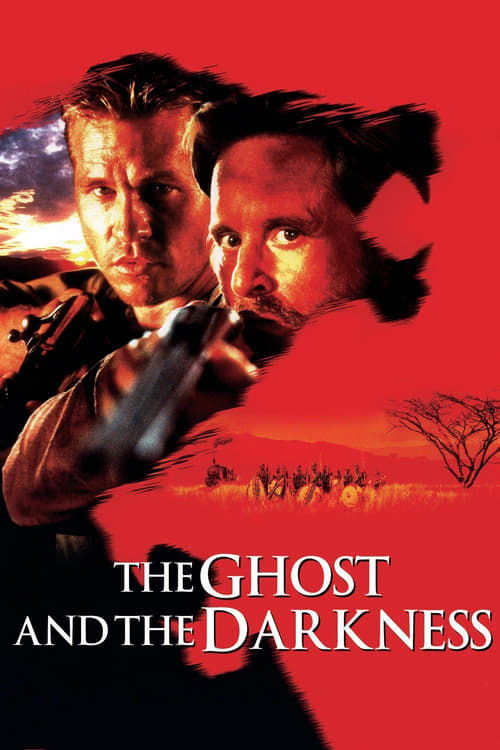
The Ghost and the Darkness
6.8

The Ghost and the Darkness

Oct 11, 1996

Sir Robert Beaumont is behind schedule on a railroad in Africa. Enlisting noted engineer John Henry Patterson to right the ship, Beaumont expects results. Everything seems great until the crew discovers the mutilated corpse of the project's foreman, seemingly killed by a lion. After several more attacks, Patterson calls in famed hunter Charles Remington, who has finally met his match in the bloodthirsty lions.

Dawn of the Damned
7.2

Dawn of the Damned

Jul 5, 1965

This excellent feature-length documentary - the story of the imperialist colonization of Africa - is a film about death. Its most shocking sequences derive from the captured French film archives in Algeria containing - unbelievably - masses of French-shot documentary footage of their tortures, massacres and executions of Algerians. The real death of children, passers-by, resistance fighters, one after the other, becomes unbearable. Rather than be blatant propaganda, the film convinces entirely by its visual evidence, constituting an object lesson for revolutionary cinema.

CHoosing at Twenty
6.8

CHoosing at Twenty

Aug 24, 2017

Between 1954-1962, one hundred to three hundred young French people refused to participate in the Algerian war. These rebels, soldiers or conscripts were non-violent or anti-colonialists. Some took refuge in Switzerland where Swiss citizens came to their aid, while in France they were condemned as traitors to the country. In 1962, a few months after Independence, Villi Hermann went to a region devastated by war near the Algerian-Moroccan border, to help rebuild a school. In 2016 he returned to Algeria and reunited with his former students. He also met French refractories, now living in France or Switzerland.

MERA YAAR
10.0

MERA YAAR

Nov 20, 2019

MERA YAAR" Film based On a play in Punjabi by Dr. S.N.Sewak. It deals with an important phase of the struggle for the independence of India from the colonial British rulers in the early years of the twentieth century. It depicts the role of Kartar Singh Sarabha, a young revolutionary, who had gone to the USA for higher studies, as seen through the eyes of another revolutionary of later years, Bhagat Singh, for whom he was a role model. Interestingly, Bhagat Singh kept the photograph of Kartar Singh Sarabha in his pocket because he always sought inspiration from him. Thus, Bhagat Singh is the narrator in the play which follows 'ode and episode' technique.

Afrique 50
6.8

Afrique 50

Dec 31, 1950

The first French anti-colonialist film, derived from an assignment in which the director was to document educational activities by the French League of Schooling in West Africa. Vautier later filmed what he actually saw: “a lack of teachers and doctors, the crimes committed by the French Army in the name of France, the instrumentalization of the colonized peoples.” For his role in the film, Vautier was imprisoned for several months. The film was banned from public screening for more than 40 years.

Dark Night, October 17, 1961
7.3

Dark Night, October 17, 1961

Jun 7, 2005

Parisian authorities clash with the Front de Libération Nationale (FLN) in director Alain Tasma’s recounting of one of the darkest moments of the Algerian War of Independence. As the war wound to a close and violence persisted in the streets of Paris, the FLN and its supporters adopted the tactic of murdering French policemen in hopes of forcing a withdrawal. When French law enforcement retaliated by brutalizing Algerians and imposing a strict curfew, the FLN organizes a peaceful demonstration that drew over 11,000 supporters, resulting in an order from the Paris police chief to take brutal countermeasures. Told through the eyes of both French policemen as well as Algerian protestors, Tasma’s film attempts to get to the root of the tragedy by presenting both sides of the story.

Fadhma N'Soumer
6.4

Fadhma N'Soumer

May 1, 2014

This film, is about the courage and the determination of a young woman in djurdjur"as mountain in Algeria, fighting for her ancestor land during the earlier years of french occupation.

Jamila, the Algerian
7.0

Jamila, the Algerian

Dec 9, 1958

Djamila, a young Algerian woman living with her brother Hadi and her uncle Mustafa in the Casbah district of Algiers under the French occupation of Algeria, sees the full extent of injustice, tyranny and cruelty on his compatriots by French soldiers. Jamila's nationalist spirit will be strengthened when French forces invade her university to arrest her classmate Amina who commits suicide by ingesting poison. Shortly after the prominent Algerian guerrilla leader Youssef takes refuge with her, she realizes that her uncle Mustafa is part of this network of anti-colonial rebel fighters. Her uncle linked her to the National Liberation Front (FLN). A series of events illustrate Jamila's participation in resistance operations against the occupier before she was finally captured and tortured. Finally, despite the efforts of her French lawyer, Jamila is sentenced to death...

Sawt Echaâb
10.0

Sawt Echaâb

Jan 1, 1961

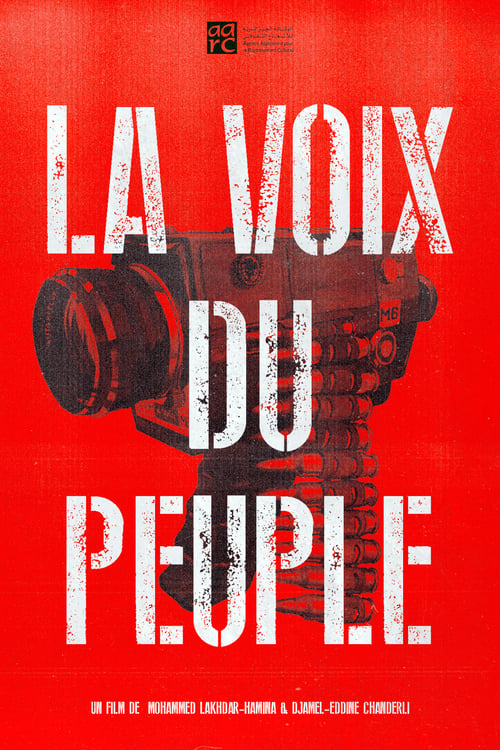
“La Voix du Peuple,” composed of archival photographs by René Vauthier and others, exposes the root causes of the armed conflict of the Algerian resistance. Participating in a war of real images against French colonial propaganda, these images aimed to show the images that the occupier had censored or distorted, by showing the extortions of the French occupation army: torture, arrests and arbitrary executions, napalm bombings, roundabout fires, erasing entire villages from the map, etc. This is what the French media described as a “pacification campaign”.

The Barbary Corsairs
7.7

The Barbary Corsairs

Oct 31, 2015

In the 18th century, the Barbary threat became serious. In July 1785, two American boats were returned to Algiers; In the winter of 1793, eleven American ships, their crews in chains, were in the hands of the dey of Algiers. To ensure the freedom of movement of its commercial fleet, the United States was obliged to conclude treaties with the main Barbary states, paying considerable sums of money as a guarantee of non-aggression. With Morocco, treaty of 1786, 30,000 dollars; Tripoli, November 4, 1796, $56,000; Tunis, August 1797, 107,000 dollars. But the most expensive and the most humiliating was with the dey of Algiers, on September 5, 1795, “treaty of peace and friendship” which cost nearly a million dollars (including 525,000 in ransom for freed American slaves). , with an obligation to pay 20,000 dollars upon the arrival of each new consul and 17,000 dollars in annual gifts to senior Algerian officials...

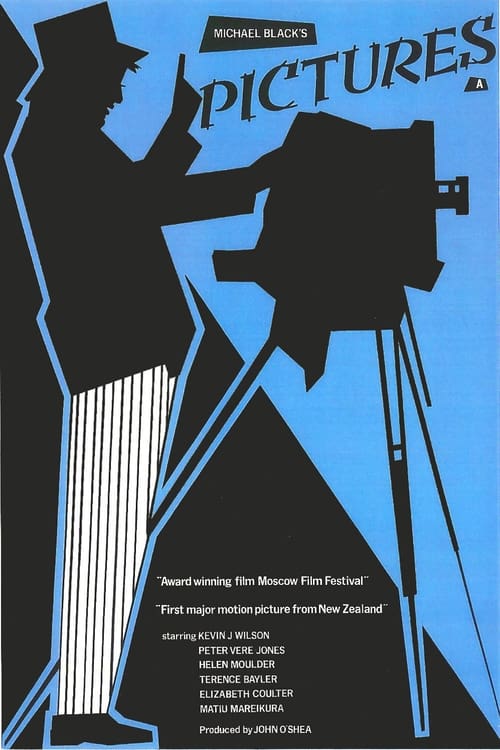
Pictures
5.0

Pictures

Oct 1, 1981

Walter Burton's realistic photographs depicting poor treatment of Maori prisoners are rejected by late 19th century government officials. Walter is condemned to making a living from everyday studio work, the frustration of which is apparently quite sufficient to make him a drunk. His brother Alfred is happy to take the photos that the officials want and therefore gets the commissions. Alfred's photos are well received, but when Walter shows his own photos, toughs are sent around to smash up his plates.

Manca Moro
10.0

Manca Moro

Aug 25, 2021

Born to an Algerian father and a Sicilian mother in Tunisia, I have always been wealthy of three cultures. This motherland is where were born my Algerian ancestors when it was called Ifriqya but also my Sicilian grand-parents whose parents were part of the important migration flux of the beginning of the last century. A reservoir of workforce by the thousands reached the shores of this "promised land". A hundred years later, I embark on a quest to rediscover my Sicilian family, exiled for the past sixty years, scattered between Italy and France.

They Joined the Front
10.0

They Joined the Front

Jan 1, 2012

In this film, four key witnesses, who live in Algeria today, as full-fledged Agerians, show us what this colonization was really like, so "beneficial" that they themselves perceived it as the oppression of one people by another. Three of them, who today would be called "pieds noirs," in other words, those Europeans to whom France, the occupying power, gave the best land, taken from the indigenous populations, work, and exclusive rights, not shared by the entire population, lived rather well compared to the majority of the "natives." The fourth was far from all that and lived in Argentina. Annie Steiner, Felix Colozzi, Pierre Chaulet, and Roberto Muniz explain to us what led them to show solidarity with the struggle of the weak, the humiliated, and to risk their freedom and their lives by committing to liberate Algeria.

Zulu Dawn
6.1

Zulu Dawn

May 14, 1979

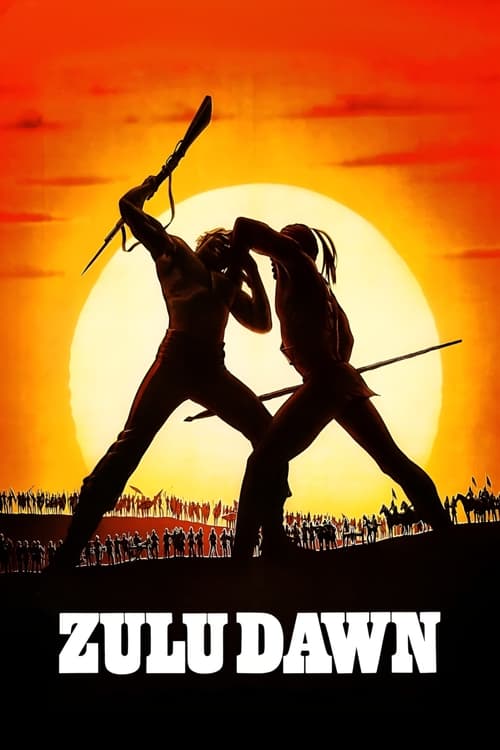
In 1879, the British suffer a great loss at the Battle of Isandlwana due to incompetent leadership.

The Battle of Algiers
7.9

The Battle of Algiers

Sep 8, 1966

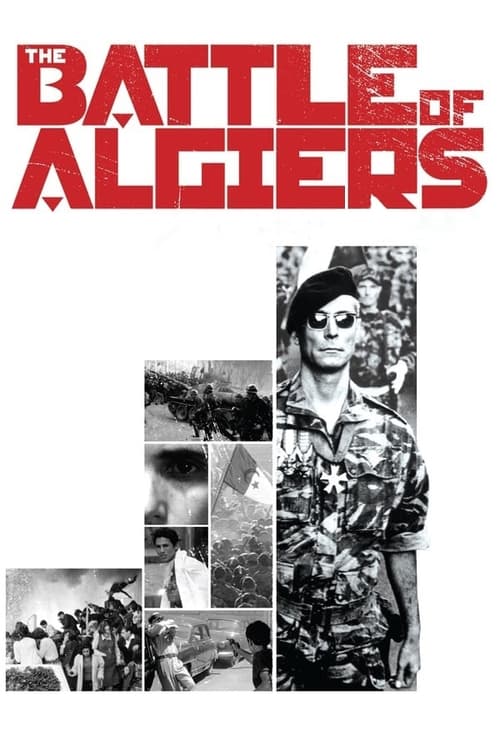
Paratrooper commander Colonel Mathieu, a former French Resistance fighter during World War II, is sent to Algeria to reinforce efforts to squelch the uprisings of the Algerian War. There he faces Ali la Pointe, a former petty criminal who, as the leader of the Algerian Front de Liberation Nationale, directs terror strategies against the colonial French government occupation. As each side resorts to ever-increasing brutality, no violent act is too unthinkable.