logologo
MovieVerse© 2024
Privacy PolicyTerms of ServiceContact Us
Made with ❤️ by Thathsara
movie poster
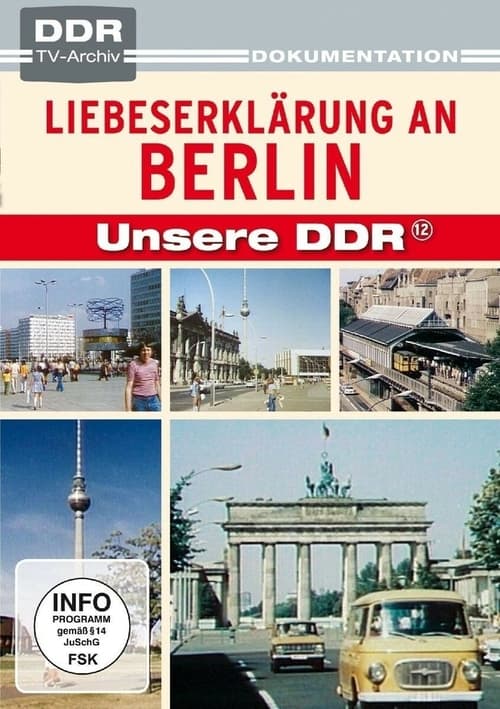
Liebeserklärung an Berlin
Sign in to create your own watchlist

Liebeserklärung an Berlin

Oct 7, 1977
2h 3m
★ 0.0

Overview

A stroll through East Berlin in 1977 - unique original recordings of the GDR capital by day and night, summer and winter, accompanied by music, offer a comprehensive insight into the diversity of urban life at that time. Numerous sights, famous buildings and squares, such as the television tower, the Red City Hall, the Palace of the Republic, Alexanderplatz and Unter den Linden, are shown. Popular places for leisure and recreation are also filmed, including the zoo, Volkspark Friedrichshain, the Christmas market on Alex and the Pankow outdoor pool. The film team also interviews a wide variety of Berliners, giving an impression of the lifestyle and everyday life of the capital's inhabitants at the time. The cityscape is rounded off with insights into new housing developments, renovated streets, businesses, restaurants and stores as well as official political events, military parades and memorial ceremonies.

Genres

Documentary

Production Companies

DEFA-Studio für Dokumentarfilme
Fernsehen der DDR

Cast

No Cast found.

Liebeserklärung an Berlin Trailers

No Trailers found.

You may also like

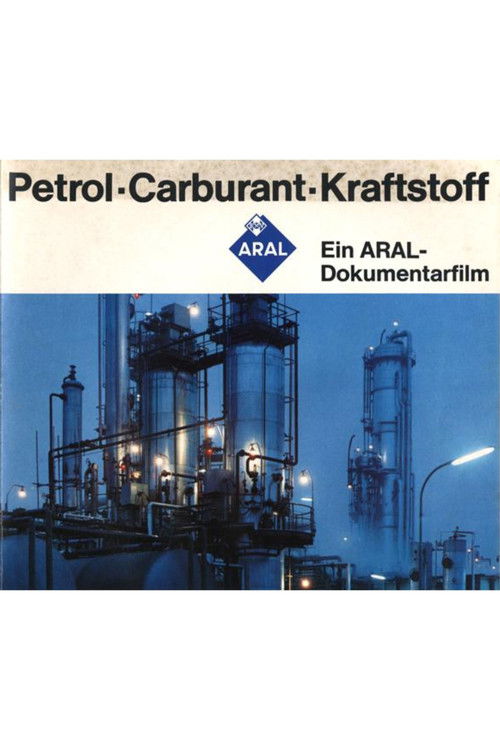
Petrol - Carburant - Kraftstoff
0.0

Petrol - Carburant - Kraftstoff

May 10, 1965

An audiovisual experiment that shows how oil is refined into gasoline and ultimately powers cars and other vehicles, accompanied by classical music and experimental synthesizer sounds. Filmed in the Libyan desert, the film traces the path and development of the gasoline, from the extraction of oil as it is drilled in the Libyan desert to the pump at the gas station, making road construction machines dance and convertibles roar through the Spessart forests. This film also drew Herbert von Karajan and Leo Kirch's attention to Hugo Niebeling, in which the director has road bulldozers "dance" to the music of Vivaldi.

A German Party
8.3

A German Party

Jun 16, 2022

A focus on the inner workings of a political party making headlines at district, state and national level as an “alternative for Germany”. Thanks to the film’s striking objectivity, it becomes clear where argument ends and contradictions begin.

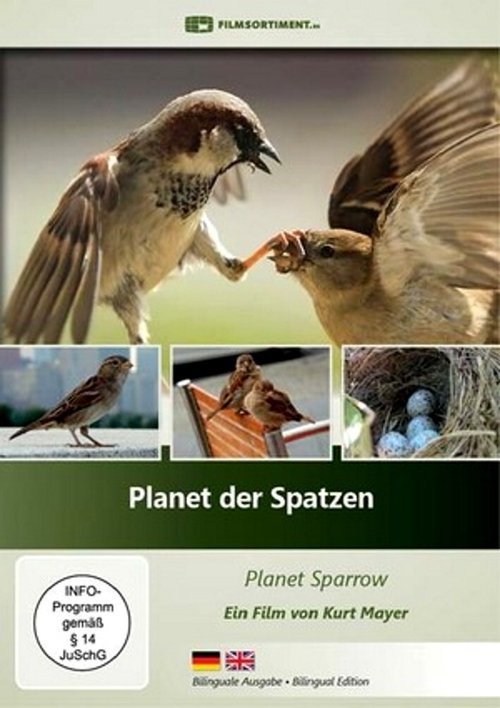
Planet der Spatzen
8.0

Planet der Spatzen

Mar 6, 2017

No overview available.

pogendroblem präsentiert: Auf der Suche nach der Utopie
0.0

pogendroblem präsentiert: Auf der Suche nach der Utopie

Invalid Date

No overview available.

No Image Available
0.0

Was wurde aus der Stasi?

Sep 18, 2016

No overview available.

Agents of the Shadows
7.6

Agents of the Shadows

Jun 7, 2017

Thirteen intelligence agents who have worked on secret missions for Frances DGSE tell their accounts of recruitment, training, and their fears and victories of acting undercover, as well as the effects on their private and personal lives.

A Gamer's Life
5.7

A Gamer's Life

Dec 6, 2016

Go behind the scenes to uncover the truths of being a professional gamer for a living. Can you really make a living from being a gamer?

Imperfect Journey
5.0

Imperfect Journey

Dec 31, 1994

Haile Gerima and Ryszard Kapuscinski travel around Ethiopia talking to people about their current situations and what needs to be done for a prosperous country.

Images of Women of the Social Corset
0.0

Images of Women of the Social Corset

Jan 5, 2011

A man asks himself about the image of women who are offered for his gaze. A documentary about the image of women in fashion, film, and life.

Fontelonga
8.0

Fontelonga

Jul 8, 2013

Fontelonga is a village of Trás-os-Montes, in the interior of Portugal. A mirror of exile in the eyes of their own people. A reflexion where memory is the last object of beauty and redemption.

Cinéastes de notre temps : Erich von Stroheim
5.0

Cinéastes de notre temps : Erich von Stroheim

Oct 14, 2012

No overview available.

How I Learned to Love the Numbers
9.0

How I Learned to Love the Numbers

Nov 27, 2014

A New York film and at the same time the study of a young man suffering from an obsessive-compulsive disorder (OCD). The Berlin filmmaker Oliver Sechting (37) and his co-director Max Taubert (23) travel to New York with the idea of documenting the art scene there. However, the project is quickly overshadowed by Oliver's OCD, and the two directors fall prey to a conflict that becomes the central theme of their film. Encounters with such artists as film directors Tom Tykwer (Cloud Atlas), Ira Sachs (Keep the Lights On), and Jonathan Caouette (Tarnation) or the transmedia artist Phoebe Legere seem more and more to resemble therapy sessions. At last, Andy Warhol-Superstar Ultra Violet succeeds in opening a new door for Oliver.

Filmmakers of Our Time: François Truffaut or the Critical Spirit
6.0

Filmmakers of Our Time: François Truffaut or the Critical Spirit

Dec 2, 1965

No overview available.

Ingmar Bergman: The Magic Lantern
0.0

Ingmar Bergman: The Magic Lantern

May 24, 1988

The first of two documentaries about Ingmar Bergman produced to mark his 70th birthday. Includes behind the scenes "home movies" from Bergman's personal archive, interviews with Bergman recorded over his 40 years in the film industry and passages from his autobiography read by Max von Sydow and Bergman himself.

No Image Available
6.0

Icons

Jan 1, 1966

A film about Slovak icons painted in the period of the late 15th to the early 19th centuries, when original Byzantine icon was ending in Slovak folk art.

No Image Available
6.0

Keeping a Distance

Jan 1, 1966

Documentary illustrating the classic principles of Byzantine iconography on the examples of sixteen icons from a museum of ancient Greek art.

Nanook of the North
7.1

Nanook of the North

Jun 11, 1922

This pioneering documentary film depicts the lives of the indigenous Inuit people of Canada's northern Quebec region. Although the production contains some fictional elements, it vividly shows how its resourceful subjects survive in such a harsh climate, revealing how they construct their igloo homes and find food by hunting and fishing. The film also captures the beautiful, if unforgiving, frozen landscape of the Great White North, far removed from conventional civilization.

Olympia Part One: Festival of the Nations
6.9

Olympia Part One: Festival of the Nations

Apr 21, 1938

Starting with a long and lyrical overture, evoking the origins of the Olympic Games in ancient Greece, Riefenstahl covers twenty-one athletic events in the first half of this two-part love letter to the human body and spirit, culminating with the marathon, where Jesse Owens became the first track and field athlete to win four gold medals in a single Olympics.

Olympia Part Two: Festival of Beauty
6.7

Olympia Part Two: Festival of Beauty

Jun 2, 1938

Part two of Leni Riefenstahl's monumental examination of the 1938 Olympic Games, the cameras leave the main stadium and venture into the many halls and fields deployed for such sports as fencing, polo, cycling, and the modern pentathlon, which was won by American Glenn Morris.

Workers Leaving the Lumière Factory
6.7

Workers Leaving the Lumière Factory

Mar 22, 1895

Working men and women leave through the main gate of the Lumière factory in Lyon, France. Filmed on 22 March 1895, it is often referred to as the first real motion picture ever made, although Louis Le Prince's 1888 Roundhay Garden Scene pre-dated it by seven years. Three separate versions of this film exist, which differ from one another in numerous ways. The first version features a carriage drawn by one horse, while in the second version the carriage is drawn by two horses, and there is no carriage at all in the third version. The clothing style is also different between the three versions, demonstrating the different seasons in which each was filmed. This film was made in the 35 mm format with an aspect ratio of 1.33:1, and at a speed of 16 frames per second. At that rate, the 17 meters of film length provided a duration of 46 seconds, holding a total of 800 frames.