No Trailers found.
Commentary (voice)
A day-to-day record of the construction of the Confederation Bridge linking Prince Edward Island to the mainland, Abegweit reveals some of the innovations that made this mammoth project one of the most impressive engineering feats in Canadian history.
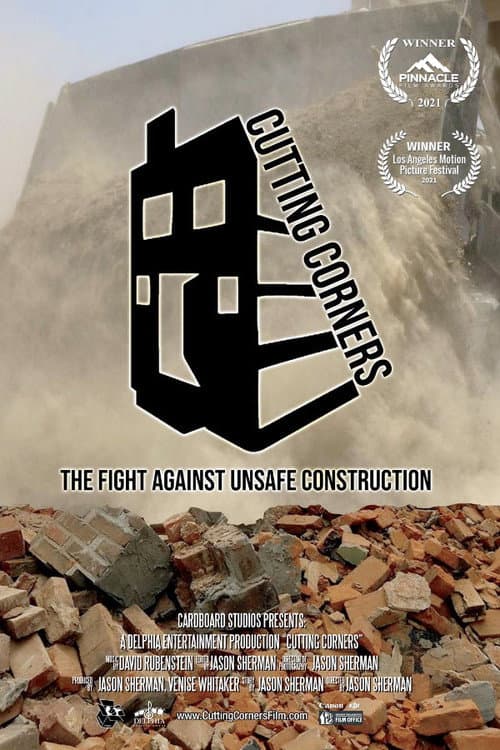
With building collapses happening around the country, activists band together to confront the real estate developers and hold them accountable for the construction destruction, lives they have destroyed, and deaths they have caused.
MANUFACTURED LANDSCAPES is the striking new documentary on the world and work of renowned artist Edward Burtynsky. Internationally acclaimed for his large-scale photographs of “manufactured landscapes”—quarries, recycling yards, factories, mines and dams—Burtynsky creates stunningly beautiful art from civilization’s materials and debris.
The Heroes of the Massacre River is a powerful documentary that chronicles the stories of the pioneers behind the construction of the historic Canal of Ouanaminthe, a project that united Haitians across the nation and the diaspora. This film celebrates the groundbreaking efforts of key figures, centering on Dr. Bertrhude Albert, Dr. Naismy-Mary Fleurant, architect Wideline Pierre, economist Etzer Emile as well as dedicated canal workers Milourie Sylfrard, Theodore Johnson and Joseph Pressoir — all guided by the investigative journey of Max Angie Clervil. It also serves as a commentary on the complexity of colonialism and borders, tracing the role that the Massacre River continues to play in the history of Ayiti.
A dive into the origins of two revolutions: the rapid expansion of Hydro-Québec with the construction of the La Grande hydroelectric power plant, a project championed by Premier Robert Bourassa, and the awakening of Indigenous nations. A clash of civilizations where two worldviews collide. Quebec, buoyed by the momentum of the Quiet Revolution, takes control of its destiny. Meanwhile, in the North, young Inuit and Cree rise up for the first time to protect what is most precious to them: their land and their culture. At the heart of the conflict is the James Bay construction site, the largest of its kind in North America.
With humor, chutzpah and a piece of vinyl siding firmly in hand, Peabody Award-winning filmmaker Judith Helfand and co-director and award-winning cinematographer Daniel B. Gold set out in search of the truth about polyvinyl chloride (PVC), America's most popular plastic. From Long Island to Louisiana to Italy, they unearth the facts about PVC and its effects on human health and the environment.
Documentary short about the disastrous dangers of aging, ailing dams.
An expedition looks into whether Titanic's hull had a construction design flaw that caused her to break apart. Featuring advanced CGI technology, archive documents and photographs, as well as footage from the modern-day History(R) expeditions, "Titanic's Achilles Heel" is a remarkable journey into the ongoing legacy of a ship that continues to capture the world's attention.
No overview available.
A man named Walt who has recently completed building a fallout shelter in his home, a project initiated due to the threat of nuclear war during the Cold War era. Walt demonstrates to his friends the multi-functionality of the shelter, which can also serve as a darkroom, an extra bedroom, or a safe space during tornadoes. He explains the construction process in detail, emphasizing the need for precise measurements, proper leveling, and the use of concrete blocks for radiation protection. The shelter includes a stock of essentials like a radio, batteries, and a fire extinguisher. Walt’s narrative is interspersed with advice on obtaining official bulletins for guidance and the importance of building shelters correctly. The film concludes with a message from the Director of the Office of Civil and Defense Mobilization, advocating for the construction of family fallout shelters across America as a means of personal safety and national security in the nuclear age.
Explore the 1928 collapse of the St. Francis Dam, the second deadliest disaster in California history. A colossal engineering and human failure, the dam was built by William Mulholland, a self-taught engineer who ensured the growth of Los Angeles by bringing the city water via aqueduct. The catastrophe killed more than 400 people and destroyed millions of dollars of property.
Today it's a symbol of strength and vitality. 135 years ago, it was a source of controversy. This documentary examines the great problems and ingenious solutions that marked the construction of the Brooklyn Bridge. From conception to construction, it traces the bridge's transformation from a spectacular feat of heroic engineering to an honored symbol in American culture.
This late 1940s/early 1950s rather graphic color film about carelessness and safety operating heavy machinery is presented by Caterpillar.
Documentary portrait of a day in the life of a welder, created by Netflix to test high dynamic range high frame rate streaming.
Considers marvels of modern science: contact lenses, kitchen gadgets, bubble bath (with cheesecake), diatoms, Boulder Dam.
A short, impressionistic documentary about the extremely precise process behind the creation of an autoclave (a reaction container) for a nuclear power plant. Otherworldly electroacoustic soundtrack by Oskar Sala.
For more than 120 years, Mohawk ironworkers have raised America’s modern cityscapes. They are called 'sky walkers' because they walk fearlessly atop steel beams just a foot wide, high above the city. In this nuanced portrait of modern Native Americans' double lives, Jerry McDonald Thundercloud and his colleague Sky shuttle between the hard-drinking Brooklyn lodging houses they call home during the week and their rural reservation, a grueling drive six hours north, where a family weekend awaits. While the men are away working, their wives often struggle to keep their children away from the illegal temptations of an economically deprived area.
An overview of high-rise construction activity in London. From the crane operators who build the new sky-scrapers to the tenants who live in the penthouses, this newsreel provides a colorful birds-eye view of London Town.