A clash of true oceanic titans sees fights in the remote battlefields of Ascension Island. Tuna are often faster, fitter and bigger than the sharks.
No Trailers found.
The film follows an expedition into Ivohiboro — a small, previously unexplored tropical forest in Southeast Madagascar rich with biodiversity.
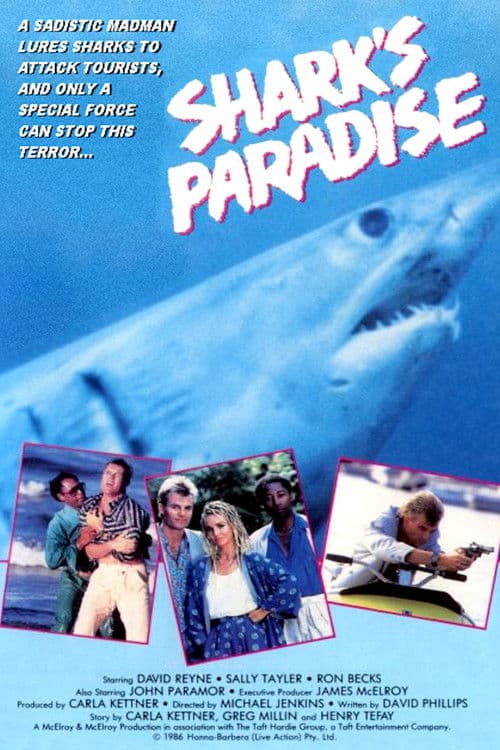
A mad man threatens to lure hundreds of sharks to the beach at Surfers Paradise Australia at the start of the tourist season, his price to hold off the sharks is $2 million. Our heroes do everything from escaping jail to risking death in a chemical factory, to stop him.
On the edge of the Namibian desert, cattle farmers are looking for new land to graze their animals. The lions, who occupied these previously wild spaces, are hunted by herd guards, or even slaughtered when they attack cows. Will and Lianne Steenkamp lived for two years in a territory occupied by a 17-year-old lioness - a "queen" -, her two daughters and their five lion cubs. This film traces the process of empowering the young: after learning to hunt alone, they will have to leave the family pack and find young females to reproduce. A necessity all the greater as their species seems threatened.
No overview available.
Follow comedian Ellen DeGeneres as she fulfills her dream of protecting Fossey’s legacy by building the The Ellen DeGeneres Campus of the Dian Fossey Gorilla Fund in Rwanda.
Violent squalls, hail, waterspouts, lightning... storms put animals and plants to the test. At a time when climate change is multiplying extreme weather events, this documentary plunges into the heart of a storm, from the heavy, dry atmosphere that precedes it to the deluge that follows.
Fin and his wife April travel around the world to save their young son who's trapped inside a sharknado.
Documentary film about the then longest range bombing mission in history, which changed the outcome of the Falklands War.
Short documentary, shot over fours years, showing the incredible daily migration of the western toad tadpoles, a designated indicator species on Vancouver Island, British Columbia.
Dr. Jim Bednarz and Brooke Prater, the two leads of the UNT American Kestrel Project, seek to find out why the widespread raptor is on the decline.
Marine biologist Dr. Austin Gallagher searches for the holy grail of shark research -- the secret breeding grounds of tiger sharks.
A Dog's Life examines how our canine companions perceive the world - from the moment they take their first morning walk to the time they curl up at our feet to go to sleep. We accompany Daisy, a Jack Russell Terrier, through an average day and on the way discover that, while dogs are not miniature humans, they are amazingly well adapted to life with us. But how well do we know them?
A documentary of insect life in meadows and ponds, using incredible close-ups, slow motion, and time-lapse photography. It includes bees collecting nectar, ladybugs eating mites, snails mating, spiders wrapping their catch, a scarab beetle relentlessly pushing its ball of dung uphill, endless lines of caterpillars, an underwater spider creating an air bubble to live in, and a mosquito hatching.
A wildlife documentary about marmot.
In the heart of southern France there is a fog-prone area where, according to legend, a bloodthirsty creature wreaked havoc 250 years ago. A rumor is spreading again in this legendary place, as eyewitnesses report an animal with large paws and a long tail that crosses roads in a single leap - powerful enough to tear down a horse and leave it mutilated in the pasture. Is the Beast of Gévaudan back? The animal photographer Bruno Loisel has a supposedly more rational explanation. The animal that fits the descriptions could be a cougar, but this species of big cat is only native to America. In order to learn the proper techniques for tracking down the puma, he travels to Canada, where he accompanies a team of researchers dedicated to studying the shy, almost invisible predator. Will Bruno be able to use his findings to solve the mystery of the new beast of Gévaudan?
A documentary about returning the swift fox, the smallest of Canada's native foxes, into its original habitat.
Bertie Gregory heads to the Azores, a vital marine sanctuary and seasonal hotspot for migrating ocean predators. During feeding season, thousands of elusive hunters gather to feast on massive bait balls. Battling storms and scanning vast seas, Bertie races against time to capture the most epic feeding frenzy of his career.
Narrator