Biography and in-depth look of Beckett and his work.
The Last Straw is a film documenting the very last live poetry reading given by Charles Bukowski at The Sweetwater, a music club in Redondo Beach, California on March 31, 1980
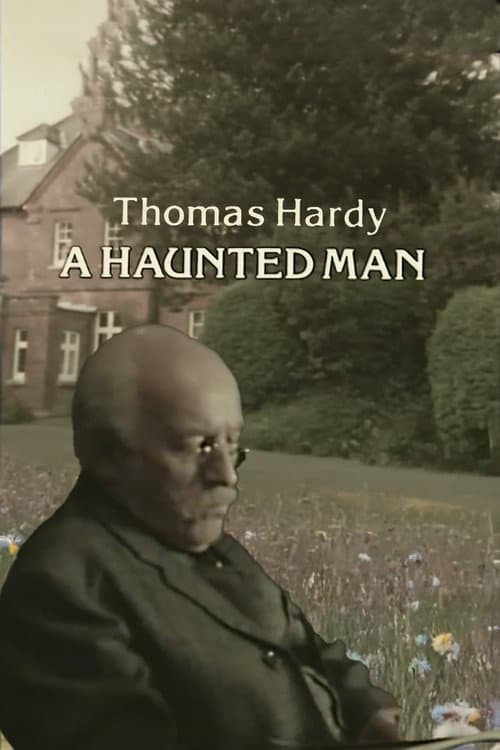
Drama documentary from 1978 exploring the private feelings of novelist Thomas Hardy through the poems of love and remorse that he wrote after the death of his first wife, Emma.
No overview available.
In this artistic exploration of the life and work of writer Henry Miller, filmmaker Joe Kishton skillfully weaves clips of films and interviews of Miller with the music of Laurie Anderson. From Miller himself we hear of his difficult relationship with his parents, and of his need to create, even (or especially) when his message abrades social mores.
Samuel Beckett has fascinated Adrian Dunbar since he was a young student. Now, 30 years after Beckett's death in Paris, Dunbar explores what made the man who made Waiting for Godot.
The film focuses on the exciting life journey of Swiss writer Katharina Zimmermann. She follows her husband on a mission to the jungle in Indonesia where she raises their four children and five foster children and lives through the military coup. Back in Switzerland Katharina discovers her voice and finds her path. Now, at eighty, she is writing her life story. Yet suddenly she faces another battle because her publisher is threatening to let her go.
This in-depth program explores Philip K. Dick`s world, a universe full of mysteries and intrigues.
The elusive author of Waiting for Godot cooperated in the production of this portrait, which traces Beckett’s artistic life through his prose, plays, and poetry. Billie Whitelaw, Jack McGowran, and Patrick Magee—Beckett’s great dramatic interpreters—appear in selected extracts from the plays; Beckett specialist David Warrilow narrates a variety of texts.
Hosted by Keeley Hawes, star of the popular television series The Durrells, this documentary reveals the adventures of the eccentric Durrell family once they left Corfu, Greece.
At the crossroads of Black literary consciousness and political struggle, the ideas of Claude McKay, Jamaican poet and novelist, laid the foundations for major literary movements, including Négritude. Proudly wandering, both bohemian and politically committed, a chameleon with a magnetic personality, he traveled across the globe: New York’s literary scene, Parisian aristocracy, Communist intelligentsia in Russia, and Black diasporas in the port of Marseille. Using archival materials and texts read in voice-over by Gaël Faye and Manon Azem, the film traces McKay’s journey as he crosses paths with major figures of his time, from George Bernard Shaw to W.E.B. Du Bois, Trotski, and many others.
Emmy Award-winning chronicle of the history of Orchard House, the home in Concord, Massachusetts where Louisa May Alcott wrote and set Little Women.
One of the most controversial writers of our times, join Trainspotting author Irvine Welsh as he undergoes a remarkable trip to find new meaning in his work, life and legacy.
A wordless, silent interview with Samuel Beckett for Swedish Television after Beckett won the Nobel Prize in Literature.
John Irving's literary worlds are satirically exaggerated, socially critical, unexpectedly magical. But how do these dazzling, sometimes bizarre, narrative worlds emerge? A unique insight into his writing workshop and a search of the places and people who have become part of his stories.
The Spanish author Enrique Jardiel Poncela (1901-1952) was one of the best comedy writers of all time, a novelist and newspaper columnist, misunderstood, even censored, both by the Second Republic government and Francoism, an outsider ahead of his time; also a filmmaker and screenwriter in Hollywood, architect of a revolutionary theatrical building and scenographer, cartoonist and illustrator. An implausible genius.
Louisa May Alcott, author of "Little Women," leads a literary double life, writing under the pseudonym A.M. Barnard, an identity that remains until the 1940s.
A docu-drama portrait of the early-20th-century French author Marcel Proust, based on Alain de Botton's updated analysis of his work as a modern-day self-help guide. Ralph Fiennes plays Proust, with Phyllida Law and Donald Sinden as his contemporaries, while commentators including de Botton, Louis de Bernières and Doris Lessing explain their enthusiasm for his work.
British author Agatha Christie (1890-1976) is the world's most translated author: her heroes, private detective Hercule Poirot and amateur sleuth Miss Marple, are known the world over. But who is the woman behind her bestsellers? A biographical search for clues, the unraveling of an iridescent personality whose existence and works were shaped by the tragic history of the 20th century: the eventful life of the Queen of Crime.
The incredible life of novelist, screenwriter, actress and nude dancer Sidonie-Gabrielle Colette (1873-1954), who led her life to the beat, constantly reinventing herself through words, scandals and metamorphoses; a peasant woman who became an icon of the European Belle Époque; an artist who defied religion and social prejudices to live a hedonist existence worthy of her desires; a real woman who turned herself into a fictional character…
No Trailers found.
Self