a documentary made by and for women
Six professionals in the audiovisual field share their experiences through a visual and sound sensory journey
No Trailers found.
herself
After World War II, Antonia and her daughter, Danielle, go back to their Dutch hometown, where Antonia's late mother has bestowed a small farm upon her. There, Antonia settles down and joins a tightly-knit but unusual community. Those around her include quirky friend Crooked Finger, would-be suitor Bas and, eventually for Antonia, a granddaughter and great-granddaughter who help create a strong family of empowered women.
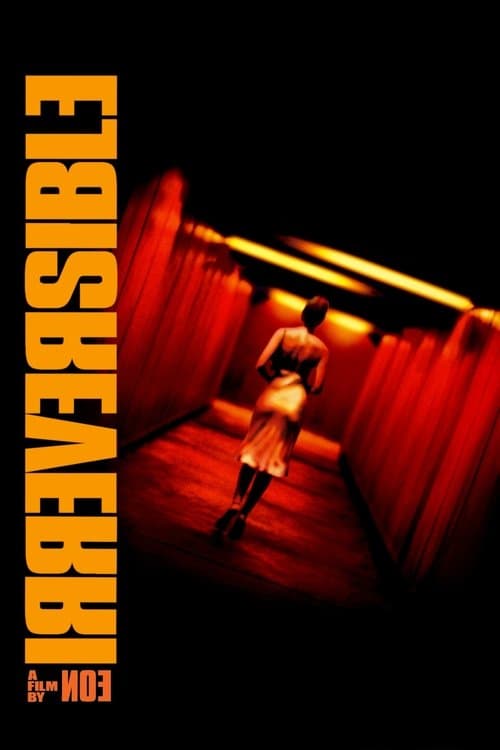
A woman’s lover and her ex-boyfriend take justice into their own hands after she becomes the victim of a rapist. Because some acts can’t be undone. Because man is an animal. Because the desire for vengeance is a natural impulse. Because most crimes remain unpunished.
As a young woman walks home alone one night, a chance encounter with a missing dog incites the reclamation of her body and self — as she learns to bite as tough as her bark.
Shut Up and Sing is a documentary about the country band from Texas called the Dixie Chicks and how one tiny comment against President Bush dropped their number one hit off the charts and caused fans to hate them, destroy their CD’s, and protest at their concerts. A film about freedom of speech gone out of control and the three girls lives that were forever changed by a small anti-Bush comment
No overview available.
After collapsing during rehearsal, Yuri struggles to understand her mysterious medical condition and her even more enigmatic hospital-ward neighbour. Both patients are forced to confront the link between mind and body in vastly different ways.
A wife is sick and tired of her husband's infidelities, so she leaves home and goes back to grad-school. There she meets many self-confident women who help her find her own voice.
Published in 1949, The Second Sex became the bible of global feminism. An essential work that passionately advocates for gender equality, women's independence, and the liberation of morals. Today, how does this seminal work continue to resonate in our contemporary world? Conceived as an initiatory journey to the origins of Simone de Beauvoir's thinking, the film The Second Sex: In the Footsteps of Simone de Beauvoir takes us to the United States, to the places that inspired the philosopher and nourished her theories. An American road trip bringing together the worst and the best, predatory capitalism and mad love. A unique reinterpretation in the company of the great thinkers of our century.
At times of changing gender roles, a tinder date encourages young Leonid to live his own definition of "masculinity". A current reflection on love, sexuality and role models.
This documentary features sexologist and writer Betty Dodson as she assembles a group of women to discuss the appearance and purpose of female genitalia. The discussion is followed by some group self-stimulation exercises and full-body massages.
Nadine and Manu are two mad women, as tidy as can be, almost perfectionists. They have several things in common: extreme sex, drugs, beer and the trigger. They find the solution to their problems with guns and beware to those who dare to get in their way!
In a remote, rustic mid-90s village in Tamil Nadu, An elderly widow fights to save her sense of individuality when her younger son demands that she wear a blouse to impress his prospective in-laws.
'Figure I' uses a feminist perspective to frame and deconstruct patriarchal techniques of control. This film asks: how was a patriarchal gaze construct-ed, and how has it come to effect biological processes? How have specific tools (like Dürer's Grid) come to shape our technological present and possible futures? Are modern Western scientif-ic/mathematic/technological/medical structures rooted in extractive patriarchal philosophies? 'Figure 1' is composed of re-drawn illustrations of allegorical art historical paintings and etchings, alongside archival footage, Obstetric photography, and rotoscoped animation.
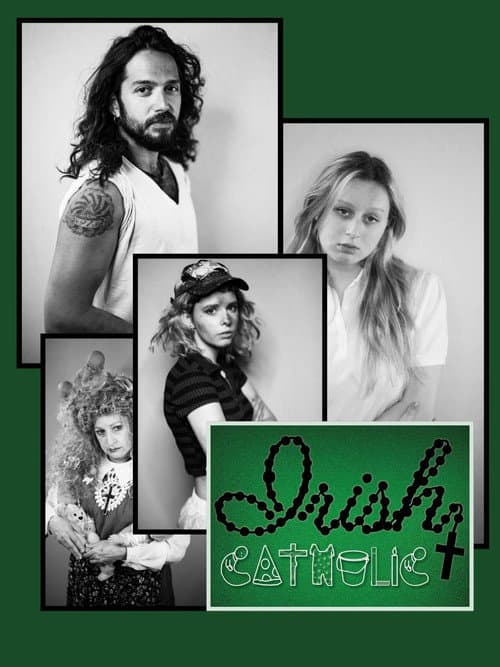
Meet Shavon O'Brien: Her family doesn't understand her, her church ignores her, even Jesus forgets about her. With only the spirit of Sinead O'Connor to guide her, Shavon battles institutional child abuse, narcissistic group think, a talking stomach and a singing poop bucket! Shavon goes from Catholic to Crusty Punk in this very, very, very, dark musical comedy!
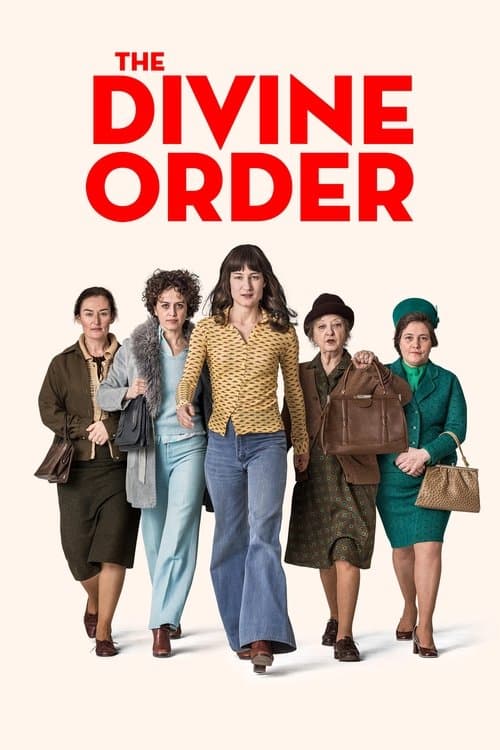
Nora is a young housewife and mother, living in a quaint little village with her husband and their two sons. The Swiss countryside is untouched by the major social upheavals the movement of 1968 has brought about. Nora’s life is not affected either; she is a quiet person who is liked by everybody – until she starts to publicly fight for women’s suffrage, which the men are due to vote on in a ballot on February 7, 1971.
September 2016: Stacey Dooley embeds herself on the frontline with the extraordinary all-female Yazidi battalion, who are fuelled to take revenge against the so-called Islamic State. As the battle to take Mosul from ISIS advances in Northern Iraq, in this extraordinary film for BBC Three, Stacey finds these young women's lives have been transformed by a desire to avenge their loved ones who were murdered by Isis.
A mysterious woman returns to her mountain village home to confront her painful past. As she tries to uncover the long-buried truth, the local villagers accuse her of witchcraft and murder.
Fleabag may seem oversexed, emotionally unfiltered and self-obsessed, but that's just the tip of the iceberg. With family and friendships under strain and a guinea pig café struggling to keep afloat, Fleabag suddenly finds herself with nothing to lose.
Directed by Solveig Hoogesteijn, Macu, the Policeman's Woman (1987) is a Venezuelan crime drama based on a true story. The film follows Macu, a young woman living in a Venezuelan shantytown, who becomes romantically involved with a local policeman named Ismael. As their relationship develops, Ismael's jealousy intensifies, leading to tragic consequences. The narrative delves into themes of power, control, and the dynamics of abusive relationships within marginalized communities. The film is notable for its exploration of gender roles and societal issues in Latin America.
Working-class waitress Slim thought she was entering a life of domestic bliss when she married Mitch, the man of her dreams. After the arrival of their first child, her picture perfect life is shattered when she discovers Mitch's hidden possessive dark side, a controlling and abusive alter ego that can turn trust, love and tranquility into terror. Terrified for her child's safety, Slim flees with her daughter. Relentless in his pursuit and enlisting the aid of lethal henchmen, Mitch continually stalks the prey that was once his family.