logologo
MovieVerse© 2024
Privacy PolicyTerms of ServiceContact Us
Made with ❤️ by Thathsara
movie poster
Heliopolis
Sign in to create your own watchlist

Heliopolis

May 20, 2021
1h 56m
★ 8.3

Story inspired by real facts

Overview

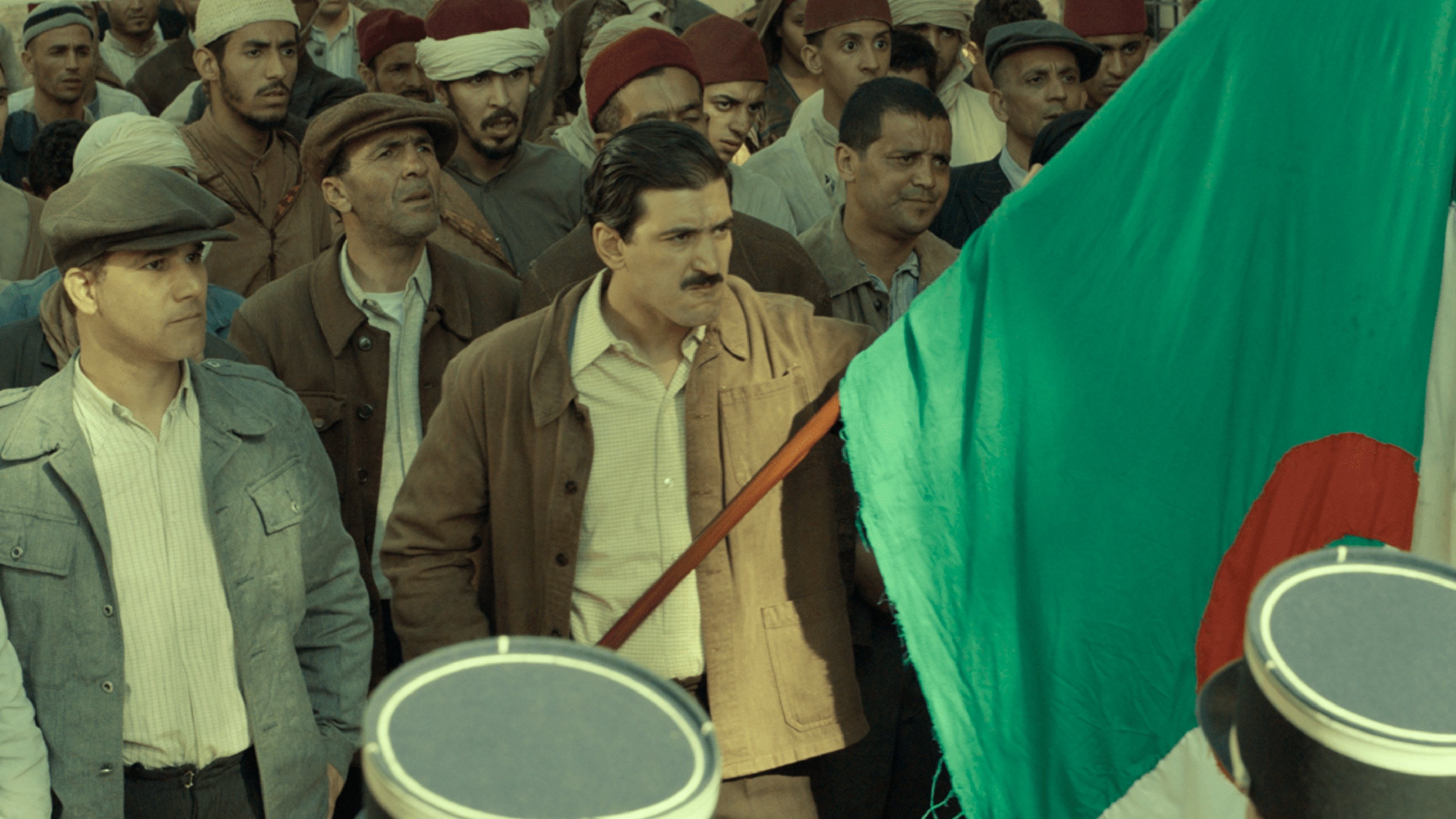
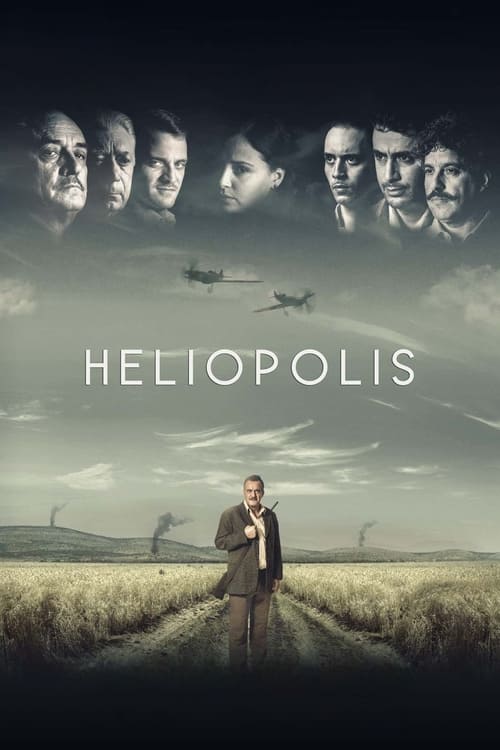
In the city of Guelma, which was once called Heliopolis in ancient times, the daily life of an Algerian family takes its usual course. But on May 8, 1945, the day the end of World War II was announced, demonstrations by the Algerian people against the French colonial power and for the country's independence took place, which were bloodily suppressed by the French army and French settler militias. The event went down in history as the Sétif and Guelma massacre.
Genres

Drama
History
War

Production Companies

Agence Algérienne pour le Rayonnement Culturel
Prod’Art Films

Cast

Aziz Boukrouni

Mokdad

Aziz Boukrouni

Mehdi Ramdani

Mahfoud

Mehdi Ramdani

Souhila Mallem

Nedjma

Souhila Mallem

Alexis Rangheard

Gervais

Alexis Rangheard

Mourad Oudjit

Bachir

Mourad Oudjit

Fodil Assoul

Sedek

Fodil Assoul

Jacques Serres

Marcel Lavie

Jacques Serres

Cesar Duminil

Claude Roland

Cesar Duminil

Laurent Gernigon

Bertrand Roland

Laurent Gernigon

Mustapha Laribi

Farhad Abass

Mustapha Laribi

Nacereddine Djoudi

Smail

Nacereddine Djoudi

Mohamed Frimehdi

Mabrouk

Mohamed Frimehdi

Heliopolis Trailers

You may also like

Barton Fink
7.5

Barton Fink

Aug 1, 1991

A renowned New York playwright is enticed to California to write for the movies and discovers the hellish truth of Hollywood.

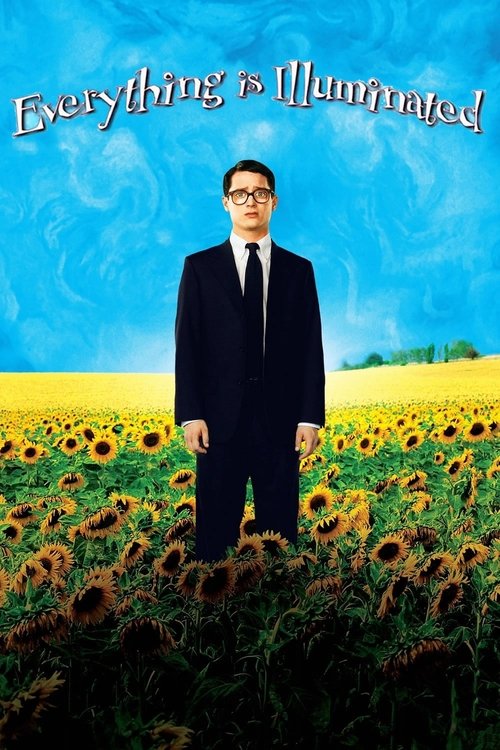
Everything Is Illuminated
7.3

Everything Is Illuminated

Sep 5, 2005

A young Jewish American man endeavors—with the help of eccentric, distant relatives—to find the woman who saved his grandfather during World War II—in a Ukrainian village which was ultimately razed by the Nazis.

GoodFellas
8.5

GoodFellas

Sep 12, 1990

The true story of Henry Hill, a half-Irish, half-Sicilian Brooklyn kid who is adopted by neighbourhood gangsters at an early age and climbs the ranks of a Mafia family under the guidance of Jimmy Conway.

The Look of Silence
7.8

The Look of Silence

Nov 13, 2014

An optician grapples with the Indonesian mass killings of 1965-1966, during which his older brother was exterminated.

Cléo from 5 to 7
7.7

Cléo from 5 to 7

Apr 11, 1962

Agnès Varda eloquently captures Paris in the sixties with this real-time portrait of a singer set adrift in the city as she awaits test results of a biopsy. A chronicle of the minutes of one woman’s life, Cléo from 5 to 7 is a spirited mix of vivid vérité and melodrama, featuring a score by Michel Legrand and cameos by Jean-Luc Godard and Anna Karina.

Bowling for Columbine
7.5

Bowling for Columbine

Oct 9, 2002

This is not a film about gun control. It is a film about the fearful heart and soul of the United States, and the 280 million Americans lucky enough to have the right to a constitutionally protected Uzi. From a look at the Columbine High School security camera tapes to the home of Oscar-winning NRA President Charlton Heston, from a young man who makes homemade napalm with The Anarchist's Cookbook to the murder of a six-year-old girl by another six-year-old. Bowling for Columbine is a journey through the US, through our past, hoping to discover why our pursuit of happiness is so riddled with violence.

The Last King of Scotland
7.4

The Last King of Scotland

Sep 27, 2006

Young Scottish doctor, Nicholas Garrigan decides it's time for an adventure after he finishes his formal education, so he decides to try his luck in Uganda, and arrives during the downfall of President Obote. General Idi Amin comes to power and asks Garrigan to become his personal doctor.

Waltz with Bashir
7.7

Waltz with Bashir

Jun 12, 2008

An Israeli film director interviews fellow veterans of the 1982 invasion of Lebanon to reconstruct his own memories of his term of service in that conflict.

Wind from the South
10.0

Wind from the South

Jan 2, 1975

Néfissa, a student in Algiers, returns to her village in the south in the summer. Her father wants her to marry the mayor but she wants to continue her studies. Confronting her father and the opinion of the villagers who do not understand her, she decides to flee to Algiers. The shepherd Rabah discovering her wounded and lost in the mountains, has her treated by her mother. In contact with Nefissa, Rabat becomes aware of his exploited condition and discovers the possibilities offered to him by the cooperatives of the agrarian revolution. The two young people will go through the decisive stage together which will allow them to escape obscurantism and exploitation. Based on the novel "Le vent du sud" by Abdelhamid Benahouga

Pas De Blanc À La Une
10.0

Pas De Blanc À La Une

Jan 1, 1971

Pas De Blanc À La Une, by Youcef Bouchouchi, treatises the brutality of the conflict during the war of independence in Algeria from 1854 to 1962, and the systematic use of torture which pushes even the most hesitant to make up their minds.

The Price of Freedom
10.0

The Price of Freedom

Jul 7, 2007

In the midst of the Algerian liberation war, two characters, a meddah (traditional storyteller) and a guerrab (water distributor), having become aware of their subhuman condition in their own country, join the National Liberation Army (ALN) to fight against inhumane colonialism. They will climb the ranks to become political commissioners before falling on the field of honor, the first in a skirmish and the other in Barberousse prison (Serkadji) where he will be guillotined.

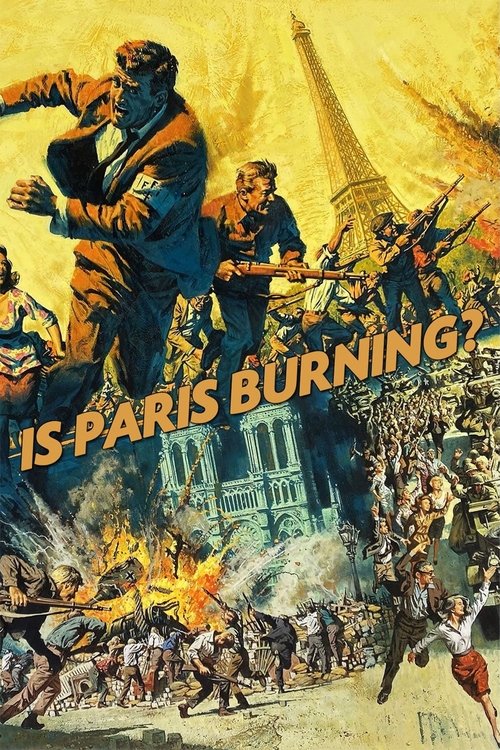
Is Paris Burning?
7.2

Is Paris Burning?

Oct 26, 1966

Near the end of World War II, Gen. Dietrich von Choltitz receives orders to burn down Paris if it becomes clear the Allies are going to invade, or if he cannot maintain control of the city. After much contemplation Choltitz decides to ignore his orders, enraging the Germans and giving hope to various resistance factions that the city will be liberated. Choltitz, along with Swedish diplomat Raoul Nordling, helps a resistance leader organize his forces.

Papillon
7.8

Papillon

Dec 16, 1973

A man befriends a fellow criminal as the two of them begin serving their sentence on a dreadful prison island, which inspires the man to plot his escape.

Algeria in Flames
8.5

Algeria in Flames

Jan 2, 1958

These are the first images shot in the ALN maquis, camera in hand, at the end of 1956 and in 1957. These war images taken in the Aurès-Nementchas are intended to be the basis of a dialogue between French and Algerians for peace in Algeria, by demonstrating the existence of an armed organization close to the people. Three versions of Algeria in Flames are produced: French, German and Arabic. From the end of the editing, the film circulates without any cuts throughout the world, except in France where the first screening takes place in the occupied Sorbonne in 1968. Certain images of the film have circulated and are found in films, in particular Algerian films. Because of the excitement caused by this film, he was forced to go into hiding for 25 months. After the declaration of independence, he founded the first Algerian Audiovisual Center.

Tale of an Encounter
5.6

Tale of an Encounter

Jan 2, 1985

Two deaf and dumb children. She is the daughter of an American Oil engineer. He is the son of an Algerian farmer. They meet and manage to communicate, transcending all the cultural barriers that separate them.

The Zerda or the Songs of Forgetting
7.6

The Zerda or the Songs of Forgetting

Feb 27, 1983

“La Zerda and the songs of oblivion” (1982) is one of only two films made by the Algerian novelist Assia Djebar, with “La Nouba des femmes du mont Chenoua” (1977). Powerful poetic essay based on archives, in which Assia Djebar – in collaboration with the poet Malek Alloula and the composer Ahmed Essyad – deconstructs the French colonial propaganda of the Pathé-Gaumont newsreels from 1912 to 1942, to reveal the signs of revolt among the subjugated North African population. Through the reassembly of these propaganda images, Djebar recovers the history of the Zerda ceremonies, suggesting that the power and mysticism of this tradition were obliterated and erased by the predatory voyeurism of the colonial gaze. This very gaze is thus subverted and a hidden tradition of resistance and struggle is revealed, against any exoticizing and orientalist temptation.

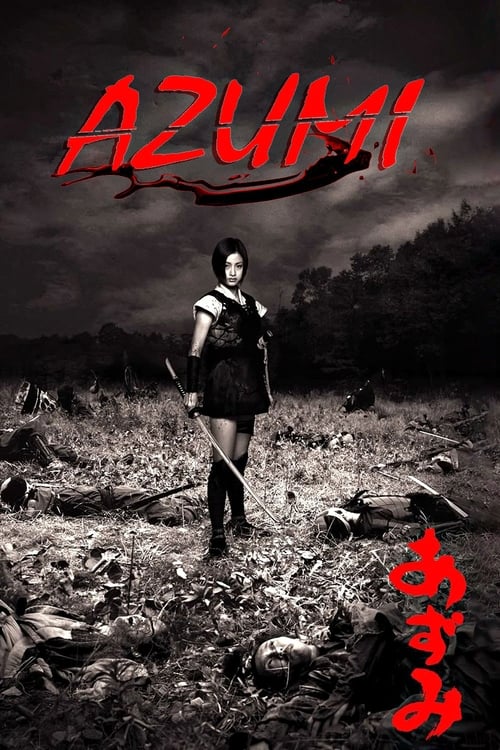
Azumi
6.9

Azumi

May 10, 2003

In war-torn Japan, the Tokugawa Shogun, desperate to restore peace to his people, orders the assassination of the hostile warlords. A beautiful young woman is raised from birth with nine other orphans, to become an assassin. Her name is Azumi, the ultimate assassin.

Hustlers of Dubai
0.0

Hustlers of Dubai

Invalid Date

Dubai - the city of controversies. Six individuals go through personal insecurities, cultural pressures, money issues and the hustle of staying true to who they are. In the world that says otherwise. Is it all really worth it ? The film touches upon Arab identity, female role in the world, family values, Islam.

The Outlaws
7.7

The Outlaws

Jan 1, 1969

In prison in colonial Algeria, shortly after the end of the Second World War, three indigenous cellmates make out. Once free, they attack the authority represented by the triad of the boss, the gendarme and the administrator. “Living the colonial condition,” confided Tewfik Farès, “is something! It’s not sociologically or historically speaking. It’s life. And I think that’s all there in it. [...] For a hundred and thirty years, we wait. We hold back. We push back. We hope. At the same time, on different occasions, there are skirmishes, unrest.

Yasmina
10.0

Yasmina

Jan 1, 1961

"Yasmina" filmed in 1961 in the middle of the Algerian war tells the story of a little Algerian girl with her hen and her family whose father was killed in a bombing by the French colonial army of occupation. The family, after a long journey, heads towards the refugee camps on the Tunisian border. Produced by the Cinema Service of the Provisional Government of the Algerian Republic (GPRA) in the midst of the war of independence, these films were intended to re-inform the population and international public opinion on the abuses committed by the French colonial army: torture, arrests and arbitrary executions, napalm bombings, fires in douars, entire villages wiped off the map, etc. which the French media described as a "pacification" campaign. The latter censoring or reorienting any images that could harm the colonial narrative.