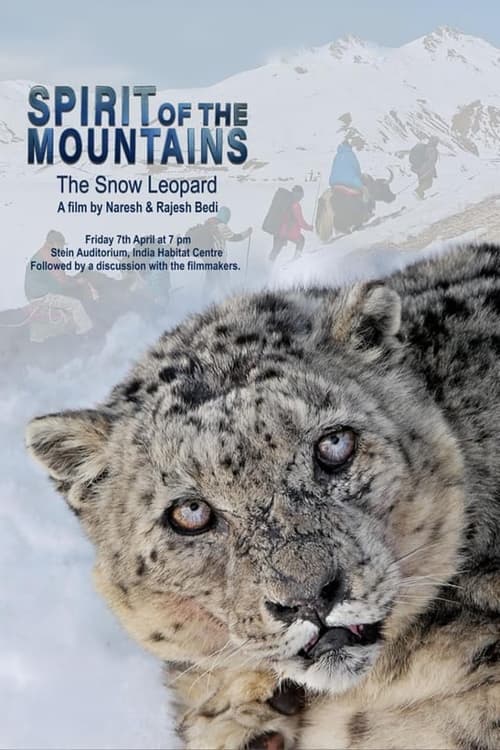
If Sidik manages to spot a leopard in his beloved mountains of Kurdistan, the area can be declared a protected nature reserve. Will that finally bring peace?
Sven has a dream. Once in his life he wants to walk the Camino de Santiago - the Way of St. James. But that seems impossible, Sven has Usher syndrome, a disease which slowly, inexorably robs him of hearing and vision. Profoundly deaf and completely blind since 2010, he can only communicate using a special hearing aid in the spoken language.
A contemplation of art and adventure in the southern wilds of New Zealand by both a landscape photographer and an adventure filmmaker. This film is the unexpected result of their two unique perspectives.
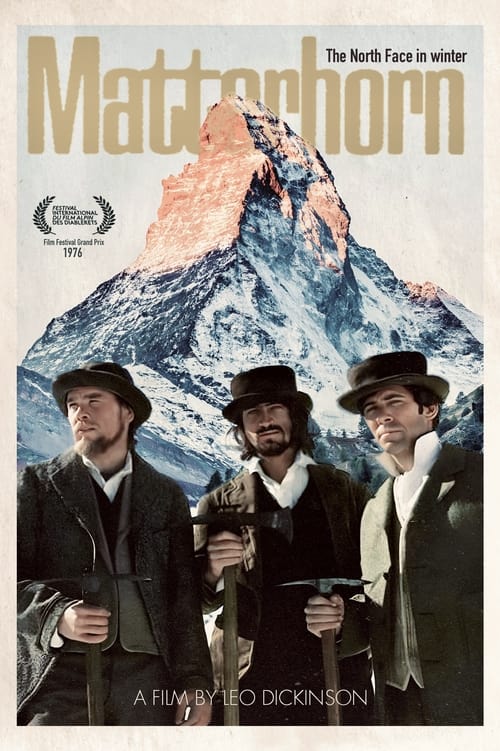
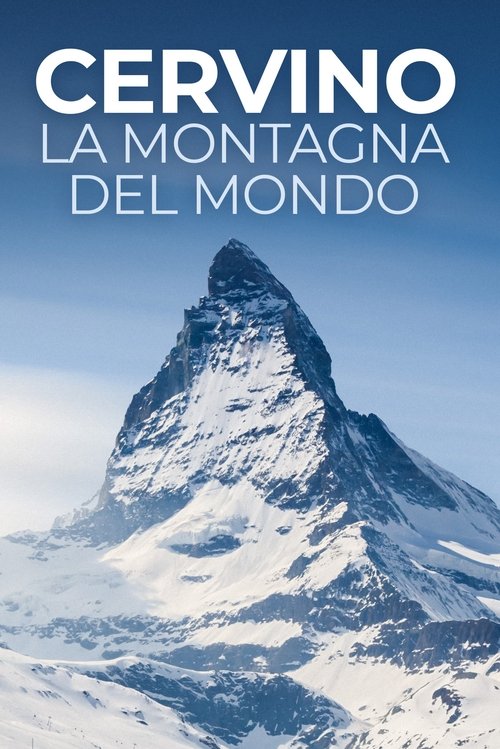
The first ascent of the Matterhorn was made on July 14, 1865 by Edward Whymper, Francis Douglas, Charles Hudson, Douglas Hadow, Michel Croz and two guides from Zermatt, Peter Taugwalder father and son. Douglas, Hudson, Hadow and Croz are killed on the descent after Hadow slips and drags the other three men down the north face. Whymper and the two Taugwalders, who survive, are later accused of having cut the rope that connected them to the rest of the group so as not to be dragged into the fall, but the ensuing investigation finds no evidence of their guilt and they are acquitted. The Matterhorn is the last great peak in the Alps to be conquered and its ascent marks the end of the golden age of mountaineering. One hundred and fifty years later, a team undertakes the same expedition in order to unravel the mystery.
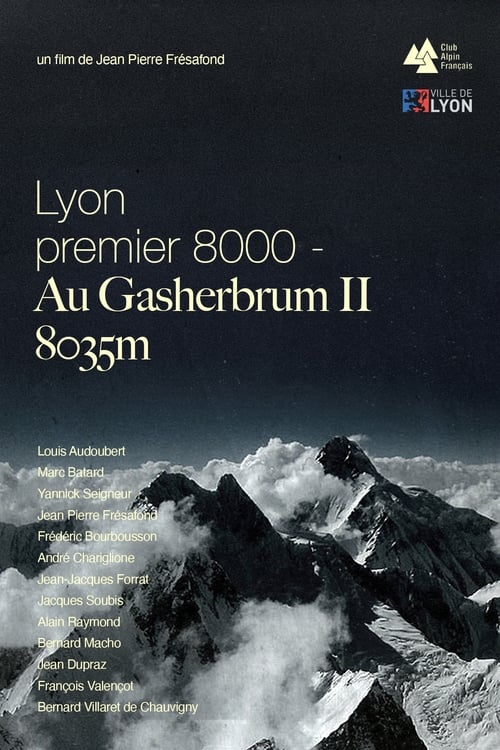
What compels a man to push the limits of what is attainable ever higher? After thirty years of relentless struggle with the highest peaks on earth, Marc Batard has finally found the answers to these questions. He had to reach the summit of Everest twice, once shattering the record for fastest time in 24 hours without oxygen, and climb the most difficult faces of the Alps to glimpse the path to inner healing. It was through physical suffering that he was able to confront the pain of his soul. He was finally able to talk about the violence of his childhood, the shock he carried like a ball and chain for decades. Having completed his summit therapy, Marc Batard tells his story in this documentary by Gilles Perret.
Nepal 1950. A mysterious, unexplored country. The Swiss geologist Toni Hagen, was the first European to pass through the "forbidden" kingdom. He doesn't discover any mineral resources there. Yet he does uncover the mysteries of life and penetrates towards a more profound truth which lends a new dimension to his life. In the spring of 1999, Hagen returns to Nepal to keep a promise of almost 50 years: At that time a Buddhist monk had presented him with the gift of a valuable and mystical ring.
A filmmaker's insight into the biggest gathering on earth -the Kumbh Mela.
A 3D feature film about Sir Edmund Hillary's monumental and historical ascent of Mt. Everest in 1953 - an event that stunned the world and defined a nation.
Record of the first ascent of Everest made without the use of oxygen equipment, made in May 1978 by Reinhold Messner and Peter Habeler. Could it be done? Would their blood vessels burst? Would they suffer brain damage leading to madness? Nobody was sure. Messner: 'I would never come here for trying Everest with oxygen. That is not a challenge for me.' A fascinating piece of history, well filmed by Leo Dickinson and Eric Jones (above the South Col Messner used a cine camera to continue the filming), featuring Messner and Habeler's thoughts. The film follows the usual sequence from Namche to Base Camp, through the Icefall, to Camps I, II and III. It also shows historical footage of the pioneering Mallory and Shipton expeditions.
A poetic view into the relationship of immensity between man and landscape. We contemplate, from the distance, the activity of the skiers on the snowy mountain. The pictorial image and the dark and dreamlike atmosphere transforms the space into something unreal, imprecise, converting it also in a spectral presence.
Kluane National Park is situated in the Yukon area of northern Canada and is a research paradise for glaciologists, geologists and other scientists. Mountaineers come to scale the impressive heights. Animals are free to roam, protected by stringent legislation. This film reveals many facets of this beautiful park, which has been declared a protected zone by UNESCO.
In a leafy forest, a Galician sovereign who longs to attain wisdom meets a sorcerer, who tells him: “Go back to your country and study the Earth and the Stars in the sky; anywhere in the world reflects an image of it. You will ride on this arrow, which you must keep for a hundred years and a day. After this time, stick it in the widest valley of all those you possess, with the tip facing the sky. Then the Moon will come and, just as it exerts its action on the waters of the sea, it will act on the arrow, turning it into a holy mountain." - Legend about the Pico Sacro Inspired by Hokusai's views of Mount Fuji and Cézanne's paintings of Mont Sainte-Victoire, "Pico Sacro [The Holy Mountain]" aims to reveal the mystery and the magic that underlie reality.
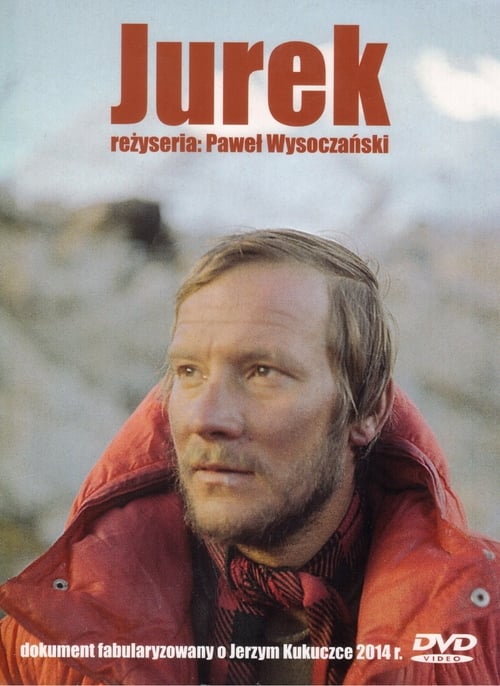
This documentary follows the feats of high-altitude climber Jerzy Kukuczka and his ascent to higher heights before his death in 1989.
In 1975, Raymond Renaud, Yves Pollet-Villard, Maurice Gicquel, Maurice Cretton, Jean Coudray, Yvon Masino, Walter Cecchinel, all teacher guides at ENSA in Chamonix, with the help of the Indian Mountaineering Foundation, set out to cross the 2 peaks of the highest mountain in India. After 43 hours in a truck, 10 days of slow and difficult approach walking, helped by goats for the portage due to lack of sherpas, the base camp is set up on the Nanda Devi glacier. Two groups share the two eastern and western slopes, 3 kilometers separate them: the goal being to meet between the two summits by the ridge. But on the big day, with the monsoon, bad weather arrives with wind and snow, we will have to give up. Like the French expedition of 1951 which lost two mountaineers, Roger Duplat and Gilbert Vigne, to whom Paul Gendre and Louis Dubosc pay tribute.
Avid for steep slopes, Marco Siffredi (1979-2002) obeys only one rule: not to fall. This gifted kid with hair sometimes blond peroxidized, green or blue clashed in his valley: Chamonix, mecca of mountaineering. His thing was to go up and down on a snowboard. . 90 minutes September 8, 2002, altitude 8848 meters, rare oxygen, his head already brushing the sky and his snowboard running, Marco Siffredi, 23, rushes from the summit of Everest in the Horbein corridor and its slopes at 50 degrees . A year earlier, he had already made the first descent of the mountain on a snowboard. But there remains another corridor… more direct. It's not a challenge, just a reason to be... However, that day, at the top of the roof of the world, his trace is lost...
The documentary film Art of Freedom answers the most poignant questions on the phenomenon of Polish expeditions to the Himalayas. Poles have reigned the highest mountaintops of the world for more than 20 years. They not only set down new trails, but new rules of behavior. They set themselves apart with an original style of climbing, endurance, conscientiousness about the overall well-being of the team - and solidarity.
The Athos peninsula in Greece is one of Europe's last secrets. Over 2000 monks live on Athos - cut off from the outside world. Access is denied to women, tourists are not welcome. Only workers and pilgrims can obtain a visa. The "Autonomous Monastic State of the Holy Mountain" attracts people who feel like they are missing something from their modern lives. With the help of three Athos monks, "Athos - A Taste of Heaven" tells the story of the island and its inhabitants in a unique filmed diary style. The film's guiding theme is the path we as people have to find and follow - each and everyone for themselves. "First we must heal our own souls, only then we can help others", is one of Father Galaktions core messages. He lives as a hermit on the holy mountain. Not all monks, however, live as secluded and demure as Father Galaktion. The film team is also received by Father Epiphanios - a gifted and poetic cook who certainly does not disdain the pleasures of life.
The highest mountain range in the world, the Himalayan range is far reaching, spanning thousands of miles, and holds within it an exceptionally diverse ecology. Coniferous and subtropical forests, wetlands, and montane grasslands are as much a part of this world as the inhospitable, frozen mountaintops that tower above. The word Himalaya is Sanskrit for abode of snow, fitting for a stretch of land that houses the world’s largest non polar ice masses. Extensive glacial networks feed Asia's major rivers including the Ganges, Indus, and Brahmaputra. More than a billion people rely on these glacier-fed water sources for drinking water and agriculture. The Himalayas are not only a remarkable expanse of natural beauty. They're also crucial for our survival.
Satyajit Ray's poetic documentary was commissioned by the Chogyal (King) of Sikkim at a time when he felt the sovereignty of Sikkim was under threat from both China and India. Ray's documentary is about the sovereignty of Sikkim. The film was banned by the government of India when Sikkim merged with India in 1975. The ban was finally lifted by the Ministry of External Affairs in September 2010. Preserved by the Academy Film Archive in 2007.
Les Etoiles de Midi is an engaging docudrama about some of the more spectacular exploits of French mountain climbers over the last several decades. In one re-enacted story, there is a wartime escape through the mountains, and in another, a daring rescue of a pair of climbers who had been missing. The actors themselves are adept at the sport of climbing, and they give the scenes an immediacy and real daring that brings the stories alive. A combination of their acrobatics and skill and the outstanding episodes in the history of French climbing creates a winning 78 minutes.
No Trailers found.
No Cast found.