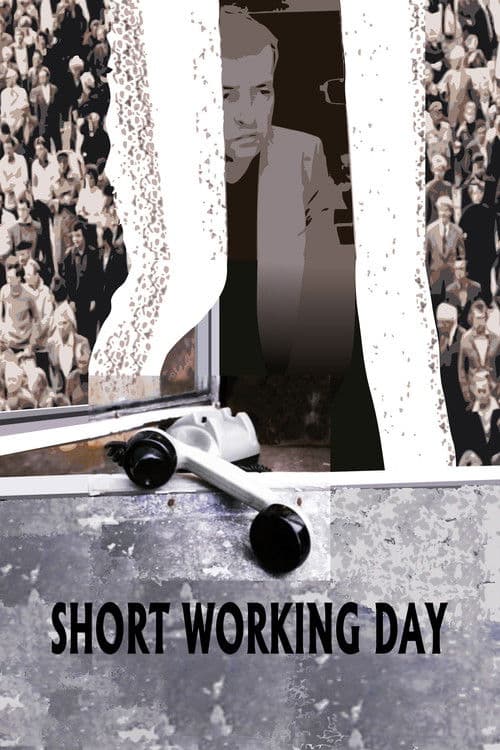
Paris, Latin Quarter, May 1968. Images of barricades and police movements in the street. In his bedroom, on his bed, a young man indulges in daydreams that invade the whole space.
No Trailers found.
Young man
Guy Debord's analysis of a consumer society.
Luka Banjanin is an unemployed young man living with his parents in Belgrade. He hangs out with few devoted friends who, like him, are yet to find place in a society that discarded young intellectuals. He plays saxophone and dreams about going to Oktoberfest, the annual beer festival in Munich, but he's being unable to get passport because of a smaller drug incident he had in the past. Totally careless about his long-term girlfriend, he suddenly falls for a mysterious woman who seems to appear in the same places as him, and then vanishes as quickly as possible. Believing that he's at the wrong place at the wrong time, Luka wanders from one misadventure to another, gradually losing the contact with reality and living out his own Oktoberfest in his mind.
The third in a series of films featuring François Truffaut's alter-ego, Antoine Doinel, the story resumes with Antoine being discharged from military service. His sweetheart Christine's father lands Antoine a job as a security guard, which he promptly loses. Stumbling into a position assisting a private detective, Antoine falls for his employers' seductive wife, Fabienne, and finds that he must choose between the older woman and Christine.
A dramatisation of the workers' protests in June 1976 in Radom, seen from the perspective of the local Secretary of the Polish United Workers' Party.
Daryl Johnson a young man trying to stay in college and Burt Marshall a young man just released from jail work together at a Barbershop but clash shop.
During the events of May 1968 in France, different worldviews of conflicting relatives collide in their family estate.
After the war, the country is plagued by famine. The secretary party committee, Martin Kreka, leads a campaign to gather the grain that is sold in the black market.
A rebellious and spoiled engineering student named Vivek falls into a cycle of bad company and poor choices, leading him down a destructive path.
In 1915, Elizabeth has fallen in love with Horace Robedaux, a young man her father condemns as a "wild boy." No matter how strict and protective, her parents cannot deter their daughter's growing independence.
A young man confronts himself at 80.
In this gripping tale about the way social media impacts youth culture, a group of students discover how social media affects their friendships, relationships, and almost every aspect of their lives.
After a fateful encounter in the summer of 1966, the lifepaths of two brothers from a middle-class Roman family diverge, intersecting with some of the most significant events of postwar Italian history in the following decades.
Documentary film about the protests against the 1968 Davis Cup tennis match between Sweden and Rhodesia, in Båstad, Sweden. In a series of interviews, demonstrators and members of the Swedish government give their views on sport, politics and civil disobedience.
A young man goes home after a day of work.
During the summer of 1968, a young French woman staying in an isolated country house reflects upon her involvement in the events of that May.
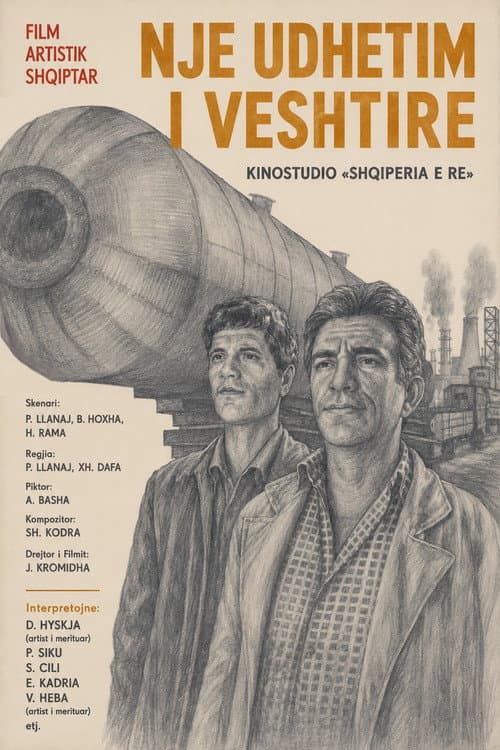
Miti, an old worker, and Sokol, a young driver, undertake a long journey to transport a huge metallic tower from the Durrës harbor to an important plant.
Writer, journalist, explorer, filmmaker, communist militant, freedom fighter. Truths and lies. A plot twist. Politician. General De Gaulle's shadow. Overwhelmed by the weight of power. The numerous exploits of André Malraux (1901-1976).
Produced within the framework of the “Programmi Sperimentali” of Italian public television (structure of the RAI which allowed, in the 1970s, the production of films such as Lutte en Italie by the Dziga Vertov Group, Cancer by Glauber Rocha or Perché pagare per essere felici by Marco Ferreri), Cronaca di un gruppo tells the story of a group of young French revolutionaries who, between Paris and the Pyrenees region, are looking for ways to continue their political activities, through the theater experimental and counter-information, the day after May 68. Produced in collaboration with Gianni Toti, Didier Sandre and the Nanterre experimental theater group.
It's almost Christmas but these three people are still on the road. The products don't sell, the car is a wreck and the weather is freezing. Moreover there is a problem: how to cope with an emerging friendship?
About a man and a woman who miss each other but cannot meet. Young-ho, a young man who took several tries to get into college, doesn't have any special goals in life, and starts exchanging letters with someone.