logologo
MovieVerse© 2024
Privacy PolicyTerms of ServiceContact Us
Made with ❤️ by Thathsara
movie poster
Nest
Sign in to create your own watchlist

Nest

Jun 26, 2021
1h 1m
★ 4.0

Overview

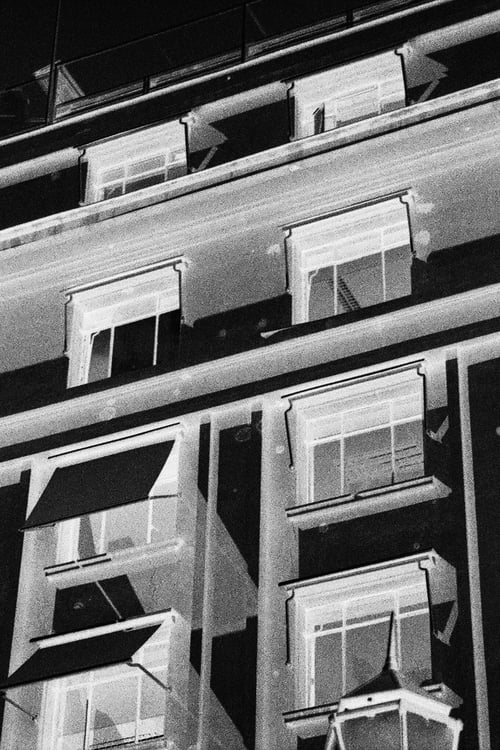
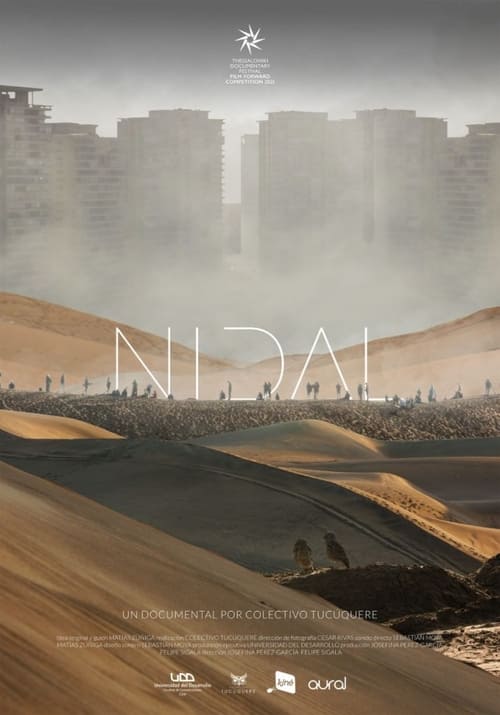
The real estate industry has destabilized the natural surroundings of the city of Concón, on the Chilean coast, forcing the inhabitants and landscapes of the region to find new ways to adapt and survive. “Nidal” depicts the cohabitating of species and the accelerated transformation of the landscapes due to human occupation.

Genres

Documentary

Production Companies

Colectivo Tucuquere
Universidad del Desarrollo

Nest Trailers

Cast

No Cast found.

You may also like

Far from the Trees
5.8

Far from the Trees

May 19, 1972

An unprejudiced portrait of Spanish folklore and a crude analysis in black and white of its intimate relationship with atavism and superstition, with violence and pain, with blood and death; a story of terror, a journey to the most sinister and ancestral Spain; the one that lived far from the most visited tourist destinations, from the economic miracle and unstoppable progress, relentlessly promoted by the Franco regime during the sixties.

In the Shadow of Light
0.0

In the Shadow of Light

Jun 15, 2023

Life in the isolated town of Charrúa is dominated by the presence of a large power plant that distributes energy to most of Chile. A little boy hunts rabbits, residents demand better electrical coverage at a town meeting, a woman waters the plants outside her house and a local radio station relays the day's happenings. At night, wildlife is captured on camera, along with strange bursts of light that momentarily illuminate a countryside criss-crossed with pylons and cables. And ever present is the insidious hum of electricity.

The Shaman's Apprentice
0.0

The Shaman's Apprentice

May 27, 2001

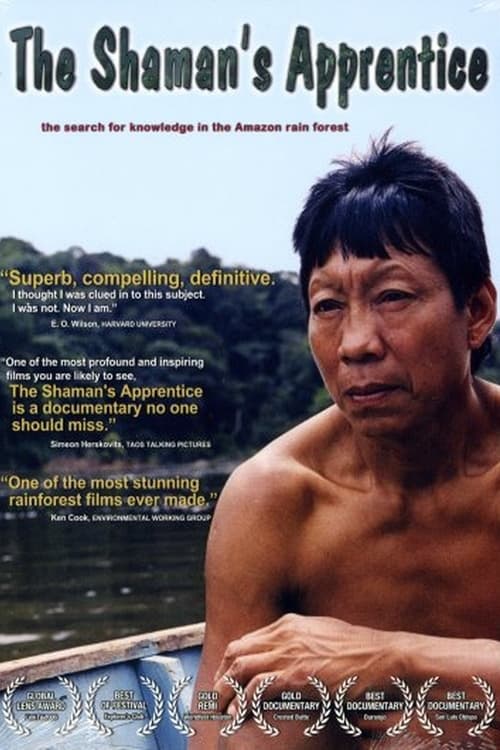
Scientist Mark Plotkin races against time to save the ancient healing knowledge of Indian tribes from extinction.

The Sea Stares at Us from Afar
6.0

The Sea Stares at Us from Afar

Jan 19, 2018

Huelva, Spain, an isolated region lost in time. The grass, the sand and the sky are the same that those foreigners saw in the spring of 1895, when they crossed the sea from a distant country to mark the unspoiled terrain and extract its wealth, when the tower was new, when people could climb to the top of the highest dune and imagine that the city of Tartessos was still there, in the distance, almost invisible in the morning brume.

Metal: A Headbanger's Journey
7.6

Metal: A Headbanger's Journey

Sep 14, 2005

The film discusses the traits and originators of some of metal's many subgenres, including the New Wave of British Heavy Metal, power metal, Nu metal, glam metal, thrash metal, black metal, and death metal. Dunn uses a family-tree-type flowchart to document some of the most popular metal subgenres. The film also explores various aspects of heavy metal culture.

American Hardcore
6.8

American Hardcore

Sep 22, 2006

Inspired by Steven Blush's book "American Hardcore: A tribal history" Paul Rachman's feature documentary debut is a chronicle of the underground hardcore punk years from 1979 to 1986. Interviews and rare live footage from artists such as Black Flag, Bad Brains, Minor Threat, SS Decontrol and the Dead Kennedys.

No Image Available
0.0

African Spirit

Sep 14, 2009

A celebration of the diversity of Ethiopia's culture and wildlife. It journeys from North to South - spanning mountains, rainforests and the hottest place on Earth. It documents Muslims mixing with Christians as they have for over a millennia and the 'honey people' of the forest, filmed here for the first time. Visually stunning and unsentimental, this is Ethiopia as you've never seen it before.

Trabantem až na konec světa
6.3

Trabantem až na konec světa

Mar 13, 2014

The third installment in Dan Přibáň's series of travel documentaries describes the author's journey with his friends across South America in vehicles that are often notorious but cult in their own way. The charming dynamics of the group on screen are further enhanced by the high-quality craftsmanship.

No Image Available
0.0

N/um Tchai: The Ceremonial Dance of the !Kung Bushmen

Jan 1, 1969

Tchai is the word used by Ju/'hoansi to describe getting together to dance and sing; n/um can be translated as medicine, or supernatural potency. In the 1950's, when this film was shot, Ju/'hoansi gathered for "medicine dances" often, usually at night, and sometimes such dances lasted until dawn.

No Image Available
0.0

N!owa T'ama: The Melon Tossing Game

Jan 1, 1970

Women from three separate Ju/'hoan bands have gathered at a mangetti grove at !O to play an intense game in which under-tones of social and personal tensions become apparent.

My Imaginary Country
6.6

My Imaginary Country

May 20, 2022

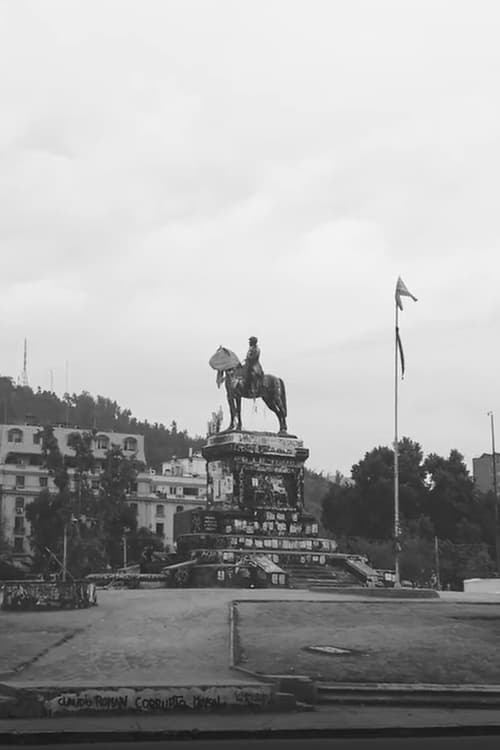
This documentary explores the protests that exploded onto the streets of Chile’s capital of Santiago in 2019 as the population demanded more democracy and social equality around education, healthcare and job opportunities.

Unearthed - The Mystery of the Shaman Woman
8.6

Unearthed - The Mystery of the Shaman Woman

Jun 22, 2024

One of the most significant cases in European archaeology is the grave of the shaman woman of Bad Dürrenberg, a key finding of the last hunter-gatherer groups. From a time when there were no written records, this site was first researched by the Nazis, who saw a physically strong male warrior from an ‘original Aryan race’ in the buried person. It was, in fact, the most powerful woman of her time. The latest research shows that she was dark-skinned, had physical deformities, and was a spiritual leader. The documentary – using high-end CGI and motion capture – compares the researchers of the Nazi era, who misrepresented and instrumentalised their findings, to today’s researchers, who meticulously compile findings and evidence, and use cross- disciplinary methods to examine and evaluate them. It also substantiates the theory of the powerful roles women played in prehistoric times. The story of this woman, buried with a baby in her arms, still fascinates us 9,000 years after her death.

Hitler's Evil Science
7.0

Hitler's Evil Science

May 25, 2019

In 1935, German scientists dug for bones; in 1943, they murdered to get them. How the German scientific community supported Nazism, distorted history to legitimize a hideous system and was an accomplice to its unspeakable crimes. The story of the Ahnenerbe, a sinister organization created to rewrite the obscure origins of a nation.

The Revolt
0.0

The Revolt

Jan 6, 2023

La Revuelta accounts for the tension experienced by those who, as of October 2019, came out to express their social discontent. The work has as its main stage, renamed by the people, as "Plaza de la Dignidad". It is a choral story, woven with the reflections of the protesters under the protection of the contextualization of a story in off that is unraveling the causes and effects of the outbreak. Thus, more than three years after the social demonstration, La Revuelta, is presented as a critical and contestative reflection, around the popular protest maintained by a people that took 30 years to awaken.

Séfar, A City of Mysteries
10.0

Séfar, A City of Mysteries

Nov 20, 2021

Séfar (in Arabic: سيفار) is an ancient city in the heart of the Tassili n'Ajjer mountain range in Algeria, more than 2,400 km south of Algiers and very close to the Libyan border. Séfar is the largest troglodyte city in the world, with several thousand fossilized houses. Very few travelers go there given its geographical remoteness and especially because of the difficulties of access to the site. The site is full of several paintings, some of which date back more than 12,000 years, mostly depicting animals and scenes of hunting or daily life which testify that this hostile place has not always been an inhabited desert. Local superstition suggests that the site is inhabited by djins, no doubt in connection with the strange paintings found on the site.

No Image Available
0.0

The Trick Brain

Jan 1, 2013

A dark and magical visit to the fabled Parisian address Rue Fontaine 42. This was the residence of André Breton, the mastermind of surrealism, who surrounded himself with an impressive collection of modern, Western art and ethnographic objects from Oceania and North America. The collection was sold and divided up in 2003 at a controversial auction. 'The Trick Brain' is a delirious montage and a trip back in time to Breton's private art collection, where Atkins has been scouring the archives and come up with a possessing interior film of the place that once was, complete with surrealistic paintings, scores of Indian figures and hundreds of other displayed rarities. The film's soundtrack is provided by an observant narrator, who reveals to us that the objects shown are not necessarily what they claim to be - but instead are catalysts for some kind of wonderful linguistic virus which reveals the real identity of things.

No Image Available
0.0

Son of Torum

Feb 5, 1989

In the same vein as Meri's other documentations, this one takes advantage of the glasnost policy to discuss the social and ecologic impact of the Russian oil industry on the natives and the lands they inhabit.

The Shaman
0.0

The Shaman

Feb 5, 1997

"Shaman" was filmed on July the 16th, 1977 in the northernmost corner of Eurasia, on the Taymyr Peninsula, at the Avam river, concurrently with the shooting of the documentary "The Winds of the Milky Way". The Nganasan Shaman Demnime (1913-1980) was 64 years old at the time. The documentary about Demnime's incarnation ritual was completed 20 years later. The fifth and final documentary in Lennart Meri's "Encyclopaedia Cinematographica Gentium Fenno - Uricarum" series.

The Winds of the Milky Way
7.5

The Winds of the Milky Way

Feb 4, 1978

Sequel to the "The Waterfowl People". The author interprets the kinship, linguistic and cultural relationships of the Finno-Ugric peoples. Finns, Vepsians, Votes, Setos, Erzya-Mordvinians, Mansi, Hungarians, Sami, Nganasans, and Estonians appear in the film. The film was shot in 1977 on location in northern Finland, Sapmi, Vepsia, Votia, Mordovia, Khantia-Mansia, Hungary, the Taymyr Peninsula, the Setomaa region in Estonia, and on the Estonian islands of Saaremaa and Muhu. Footage was also shot in 1970 in the Nenets Okrug. The second documentary in Lennart Meri's "Encyclopaedia Cinematographica Gentium Fenno - Ugricarum" series.

The Sounds of Kaleva
6.7

The Sounds of Kaleva

Mar 19, 1986

A three-act film-essay about memory and the historical-cultural ties of the Finno- Ugric peoples. The first chapter is dedicated to ancient Bearese of memory, such as Karelian cliff drawings, Kalevala runo song and Khanty bear feast rituals. the second act portrays the visit of Elias Lonnrot, compiler of the Finnish national epic Kalevala, to Estonia and his meetings with local intellectuals. Part three re-enacts an ancient smelting and blacksmith ritual set to Veljo Tormis' cantata 'curse upon iron'. Filmed in 1985 in Uhtuo, Karelia; in Khantia-Mansia at the Agan river, a tributary of the Ob; and in Estonia (Tallinn, Kuusalu, Tartu, Voru, Litsmetsa in Voru county, Lullemae, Karula, Rongu, Narva, and at a bend of the Pirita river). The third documentary in Lennart Meri's "Encyclopaedia Cinematographica Gentium Fenno - Ugricarum" series.