When Peter Wohlleben published his book "The Hidden Life of Trees" in 2015, he quickly entered bestseller lists. The forester wrote vividly about his experience that trees are able to communicate with each other, a thesis explored here.
Trailer
Self
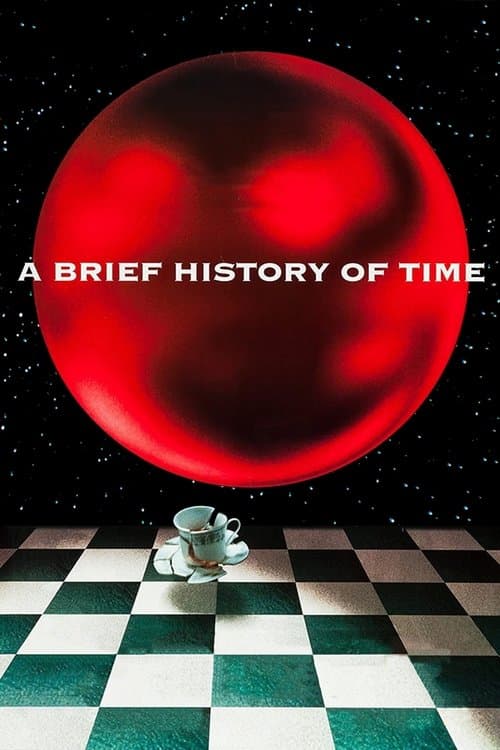
This shows physicist Stephen Hawking's life as he deals with the ALS that renders him immobile and unable to speak without the use of a computer. Hawking's friends, family, classmates, and peers are interviewed not only about his theories but the man himself.
One of a series of ‘falls’ by Bas Jan Ader that he recorded on film, this work was filmed in West Kapelle, Holland in 1970.
Bas Jan Ader hangs from the branch of a tall tree, until he loses his grip and falls into a river below.
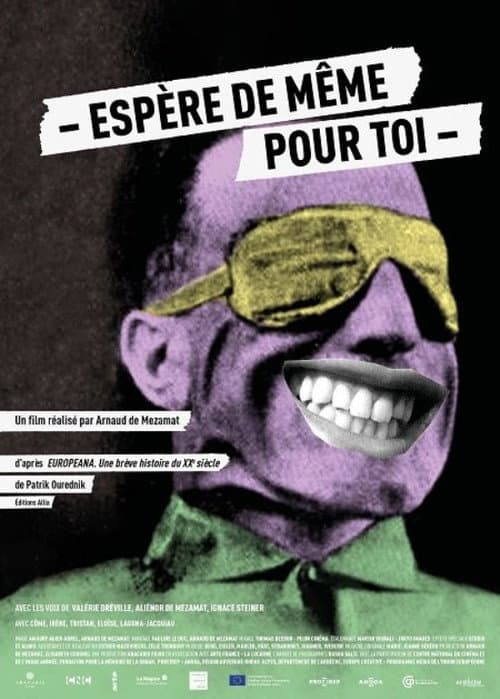
The iconic book ”Europeana: A Brief History of the Twentieth Century” by Patrik Ouředník, first published in 2001, thanks to the imagination of the French filmmaker has transformed into an apocalyptic chronicle of the last century. A straightforward testimony of scientific rationality, which led the society to a spiritual crisis and resulted in six genocides, is accompanied with melancholic Mahlerian echoes of La Belle Époque when the world was just getting ready for the century that negated all humanity. The film raises the question whether Europe in post-history and post-humanity, sweetly anaesthetized to collective unconsciousness, will pretend as if nothing had happened.
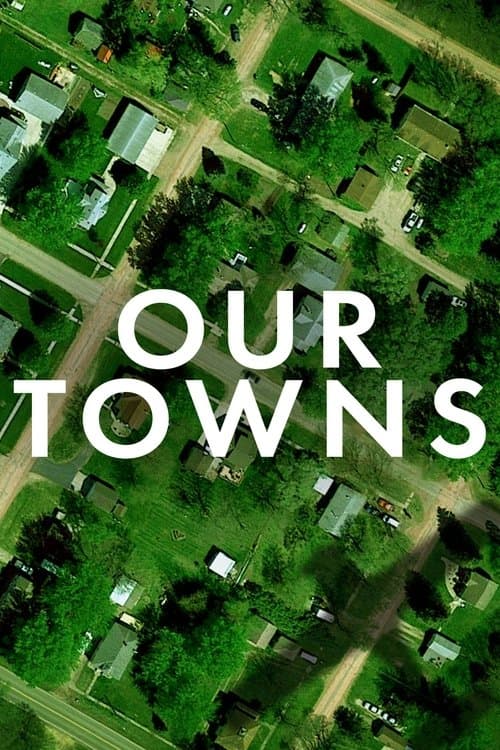
A documentary that paints a remarkable picture of America and how the rise of civic and economic reinvention is transforming small cities and towns across the country. Based on journalists James and Deborah Fallows' book Our Towns: A 100,000-Mile Journey into the Heart of America, the film spotlights local initiatives and explores how a sense of community and common language of change can help people and towns find a different path to the future.
The true story of Joe Simpson and Simon Yates' disastrous and nearly-fatal mountain climb of 6,344m Siula Grande in the Cordillera Huayhuash in the Peruvian Andes in 1985.
A Czech director wrestles with problems personal and political during the Prague spring of 1968.
An explosive investigation into how pharmaceutical giants systematically captured governments and deceived families and communities worldwide.
A short kid from a Canadian army base becomes the international pop culture darling of the 1980s—only to find the course of his life altered by a stunning diagnosis. What happens when an incurable optimist confronts an incurable disease?
Shere Hite’s 1976 bestselling book, The Hite Report, liberated the female orgasm by revealing the most private experiences of thousands of anonymous survey respondents. Her findings rocked the American establishment and presaged current conversations about gender, sexuality, and bodily autonomy. So how did Shere Hite disappear?
As a child in Burkina Faso, Yacouba was sent away from home to study the Qur'an, where he and his classmates were almost starving. The young boys would trek across miles of wilderness, only to fall and beg at a straw hut for meagre rations. It is from this harsh background that the young farmer became determined to develop techniques that would bring exhausted soil back into production. His efforts have outdone the work of the world's leading scientists and technological advances costing millions of pounds. They may also yet prove crucial to the future of the world's rapidly growing population and global food demands.
During the worst days of World War II, the British government asks the mathematician Alan Turing to unravel the mysteries of the German Enigma encryption machine, an impossible task to accomplish without the invaluable information that Hans-Thilo Schmidt, a disenchanted but greedy German citizen, had been handing over to the French secret services since 1931.
In August 1969, Charles Manson's followers killed seven people on his orders. Why? Explore a conspiracy of mind control, CIA experiments, and murder.
No overview available.
This documentary outlines the unique properties and latest studies of "Physarum Polycephalum", also known as Blob.
A keen chronicle of the unlikely rise to power of Adolf Hitler (1889-1945) and a dissection of the Third Reich (1933-1945), but also an analysis of mass psychology and how the desperate crowd can be deceived and shepherded to the slaughterhouse.
In Africa, the giant fig tree and the tiny fig wasp differ in size a billion times over, but neither could exist without the other. Their extraordinary relationship is a marvel of co-evolution, a marriage which has lasted for millennia. It forms the basis of a complex web of dependency that supports entire ecosystems, providing food for thousands of creatures, from elephants, giraffes, and fruit bats, to forest hornbills, monkeys, insects, and fish.
Structural study of a tree. Light, water and air coax it out of the soil in a manner foregrounding time’s relativity to different forms of life on Earth. Made the day my brother got his fork-lift license.
An intimate and political history of the French working class from the early 1950s to the present day.