No Trailers found.
Elke
Arnold
Asche
Big
-
In this East German teen musical, a group of girls are planning to take their summer vacation together on the Baltic coast. When a loud and obnoxious group of boys intrudes on their holiday, the girls are horrified to learn that the boys have the same vacations plans as them. The two groups quarrel with each other and compete over a number of things, but gradually an attraction starts to form.
When Dr. Schmith's proposal for international research on infant mortality is rejected, he decides to leave East Germany and strikes a deal with an escape agency that promises him a leading position at a children's hospital in West Germany. But then the decision is reversed: the project is approved and his international colleagues want Dr. Schmith to head the GDR section. Moreover, he falls in love with his new colleague, Katharina. Schmith initially tries to ignore the arrangements he made with the escape agency, but they blackmail him. Things soon turn deadly...
A group of kids grow up on the short, wrong (east) side of the Sonnenallee in Berlin, right next to one of the few border crossings between East and West reserved for German citizens. The antics of these kids, their families, of the "West German" friends and relatives who come to visit, and of the East German border guards, all serve to illustrate the absurdity of everyday life on the Sonnenallee, and therefore throughout the former East Germany.
The life story of Charlotte von Mahlsdorf, who survived the Nazi reign as a trans woman and helped start the German gay liberation movement. Documentary with some dramatized scenes. Two actors play the young and middle aged Charlotte and she plays herself in the later years.
A ship from the GDR fishing fleet is on its way home. The work is done, the hold full of fish. Captain Nipmerow could be satisfied with that, but he has a completely different problem to deal with - a matter about which he also owes the shipping company a statement.
Alex Kerner's mother was in a coma while the Berlin wall fell. When she wakes up he must try to keep her from learning what happened (as she was an avid communist supporter) to avoid shocking her which could lead to another heart attack.
A quintet of cabbies in five cities and their remarkable fares on the same eventful night.
When Martin, a former GDR citizen, is released from jail, he lately becomes confronted with the consequences of the German re-unification.
No overview available.
The brothers Kipp and Most set off to inherit their grandmother's estate. Along the way, they meet Viktor, a deserted Russian soldier who kidnaps them, and Nadine, who joins them voluntarily. On their way to their inheritance, the protagonists get into some seemingly hopeless situations.
Inspired by true events, Olympic swimmer Harry Melchior defects from East Germany in the 1960s and hatches a daring plot to help his sister and others flee East Berlin through a 145-yard underground tunnel.
Randy Daytona was a child ping pong prodigy who lost his chance at Olympic gold when his father is murdered by the mysterious Feng over a gambling debt. 15yrs later he's down on his luck and scraping a living doing seedy back room shows in Vegas; when the FBI turn up and ask for his help to take down Feng... who just happens to love Ping Pong.
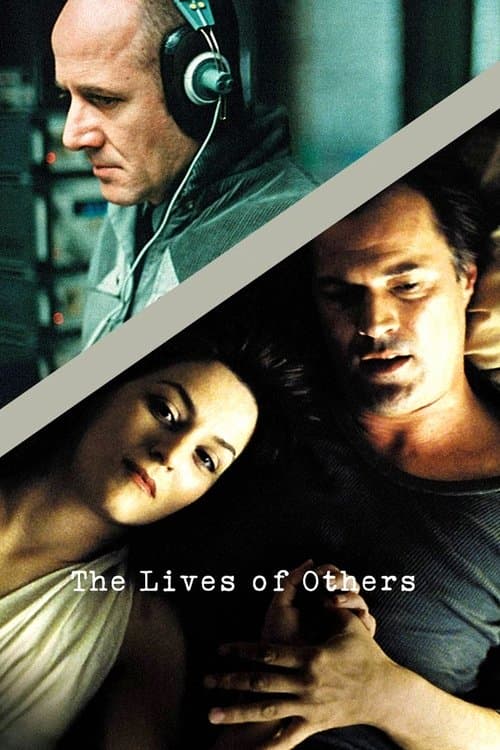
In 1984 East Berlin, dedicated Stasi officer Gerd Wiesler begins spying on a famous playwright and his actress-lover Christa-Maria. Wiesler becomes unexpectedly sympathetic to the couple, and faces conflicting loyalties when his superior takes a liking to Christa-Maria.
The movie's plot is based on the true story of a group of young computer hackers from Hannover, Germany. In the late 1980s the orphaned Karl Koch invests his heritage in a flat and a home computer. At first he dials up to bulletin boards to discuss conspiracy theories inspired by his favorite novel, R.A. Wilson's "Illuminatus", but soon he and his friend David start breaking into government and military computers. Pepe, one of Karl's rather criminal acquaintances senses that there is money in computer cracking - he travels to east Berlin and tries to contact the KGB.
Radical West German terrorist Rita Vogt abandons the revolution and settles in East Germany with a new identity provided by the secret service. She lives in constant fear of having her cover blown.
Flanders, a famous female author, travels in 1989 after the fall of the Berlin wall into the German capital. She is deeply depressed by the events because she saw the communist state as a very good thing that has now ended. In the joy of these days she finds no one to understand her, so she has to travel back to Munich. After meeting several people, known and unknown, it seems as if there will be no way to go.
Ingo Hasselbach, whose parents were Communist Party members in East Germany during his childhood, has lived at both ends of the political seesaw. The question of how people reach a change of heart is a profound one; Hasselbach describes the external forces that led to his founding Germany's first neo-Nazi political party and the internal ones that led him away from it five years later.
Elated by the Italian attitude to life, family Struutz returns to Bitterfeld and experiences a shock: In the turmoil of the reunification her house must give way to a golf course. Hope Udo teacher, his wife Rita and daughter Jacqueline through the surprising inheritance of a factory near Dresden. But of market economy, the staid Saxons unfortunately have no idea. Help comes in the guise of adventurer and condoms dealer Charlie, who works as a "business consultant" and gives Udo a Rock & Roll crash course in capitalism - with unsurpassed success.
Ina, just released from prison, returns to the place of her childhood in search of life and meets the occasional desperado Domühl in her mother's house, which has been empty for thirty years. Hagen, a mentally handicapped resident, also ends up in this unusual landscape somewhere in the middle of nowhere south of Berlin in search of his uncle.