To confront his past trauma, an amputee veteran acts in a hyperrealistic military simulation.
No Trailers found.
Cristian
Cindy
After their airplane crashes behind enemy lines, four soldiers must survive and try to find a way back to their battalion. However, when they come across a local peasant girl the horrors of war quickly become apparent.
A veteran soldier returns from his completed tour of duty in Iraq, only to find his life turned upside down when he is arbitrarily ordered to return to field duty by the Army.
This documentary follows two long-lost Ukrainian friends, Arsalan and Nastya, as they reconnect in Germany after russia's full-scale invasion against Ukraine. Arsalan, an actor now in Frankfurt after time in a refugee camp, and Nastya, journalist and producer who stayed in Kyiv, reflect on the divergent paths their lives have taken due to the war. Through their conversations and therapy sessions, the film explores themes of displacement, identity, and the emotional impact of war on youth.
After two tours of duty, Joe's life unravels as he waits for PTSD treatment.
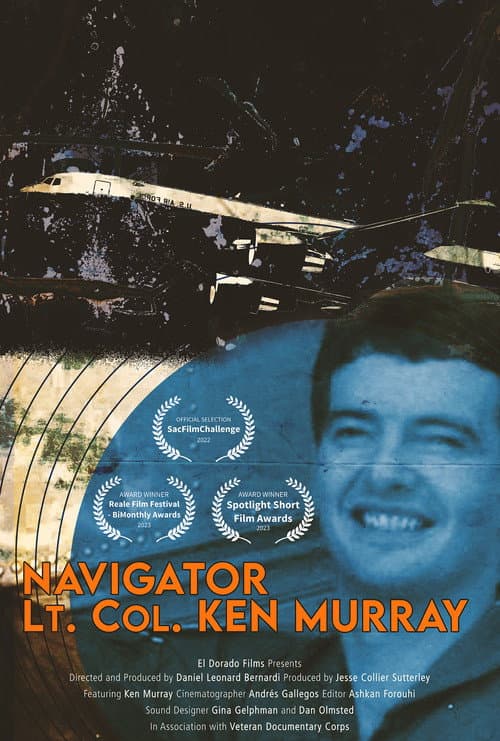
A former U.S. Air Force air tanker navigator, Lt. Col. Ken Murray’s career takes us from the horrific accident that killed 70 people at an airshow demonstration to Operation Just Cause in Panama and to the Iraq War. Through it all, we experience air operations, post-deployment divorce, a new career as a famed sports photographer and new loves.
Paralyzed in the Vietnam war, Ron Kovic becomes an anti-war and pro-human rights political activist after feeling betrayed by the country he fought for.
A veteran wounded in the war, wakes up from a three-month coma and learns that his mother has passed away and that his daughter has been placed in a boarding school. Later, she tries to put her life in order so that she can have her child. The film, which tells about his struggle to get his daughter back, focuses more on the scars of war on human psychology and the struggle of people who have left the war to live than on the heavy battle scenes.
In early 20th-century Montana, Col. William Ludlow lives on a ranch in the wilderness with his sons, Alfred, Tristan, and Samuel. Eventually, the unconventional but close-knit family are bound by loyalty, tested by war, and torn apart by love, as told over the course of several decades in this epic saga.
The day after they get the word they'll go home in two weeks, a group of soldiers from Spokane are ambushed in an Iraqi city. Back stateside we follow four of them - a surgeon who saw too much, a teacher who's a single mom and who lost a hand in the ambush, an infantry man whose best friend died that day, and a soldier who keeps reliving the moment he killed a civilian woman.
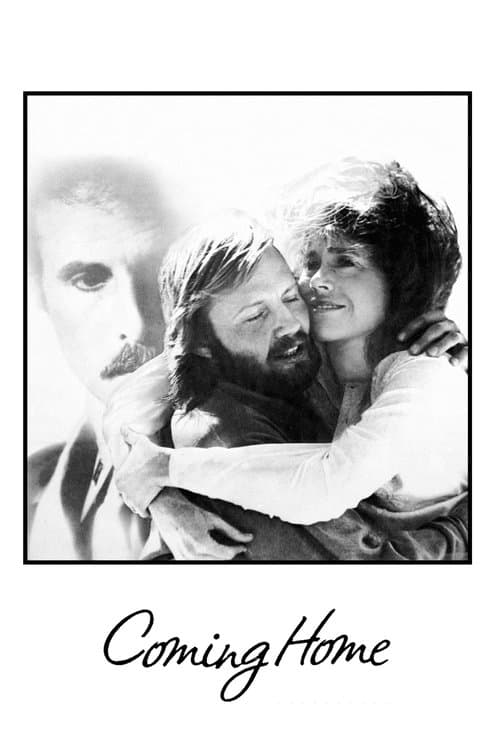
In 1968 California, a Marine officer's wife falls in love with a former high school classmate who suffered a paralyzing combat injury in the war.
Sergeant Michael Dunne fights in the 10th Battalion, AKA The "Fighting Tenth" with the 1st Canadian Division and participated in all major Canadian battles of the war, and set the record for highest number of individual bravery awards for a single battle
Sentenced to community service, a privileged and self-consumed young woman encounters a war veteran at a soup kitchen and realizes that she has the potential to support him on his road to wellness, while doing the same for herself.
Vietnam veteran Jonathan Teller suffers from guilt and paranoid delusions. He decides to take his own life, but as he struggles to come to terms with his choice and reality, a chance encounter changes everything.
Three steelworkers enlist in the army and are sent to Vietnam, one leaving behind a rushed marriage, the others a shared love. What they encounter during the war changes their lives forever.
A docudrama depicting a hypothetical nuclear attack on Britain. After backing the film's development, the BBC refused to air it, publicly stating "the effect of the film has been judged by the BBC to be too horrifying for the medium of broadcasting." It debuted in theaters in 1966 and went on to great acclaim, but remained unseen on British television until 1985.
A dangerously disturbed Vietnam veteran struggles with life 15 years after his return home, and slowly falls into insanity from his gritty urban lifestyle.
A group of Vietnam War veterans re-unite to rescue one of their own left behind and taken prisoner by the Vietnamese.
Many times during his presidency, Lyndon B. Johnson said that ultimate victory in the Vietnam War depended upon the U.S. military winning the "hearts and minds" of the Vietnamese people. Filmmaker Peter Davis uses Johnson's phrase in an ironic context in this anti-war documentary, filmed and released while the Vietnam War was still under way, juxtaposing interviews with military figures like U.S. Army Chief of Staff William C. Westmoreland with shocking scenes of violence and brutality.
In WWII-Italy, the Gestapo blackmails a con man to impersonate a dead partisan commander in order to extract information from his fellow inmates.
19-year-old Billy Lynn is brought home for a victory tour after a harrowing Iraq battle. Through flashbacks the film shows what really happened to his squad – contrasting the realities of war with America's perceptions.