A documentary celebrating 25 years of flemish subsidised cinema.
No Trailers found.
Self
An up-close look into the life of the often misunderstood movie director Grigori Kromanov through the lens of old friends and colleagues.
Four lives that could not be more different and a single passion that unites them: the unconditional love for their cinemas, somewhere at the end of the world. Comrades in Dreams brings together six cinema makers from North Korea, America, India and Africa and follows their efforts to make their audiences dream every night.
A poetic documentary about the lost film culture in the small villages on the Croatian islands during the SFR of Yugoslavia.
Previously a central part of communal life, the movie palaces of New York’s Chinatown are now extinct. This documentary short takes us inside the title theater located on the Bowery, as it’s about to close its doors, with its caretakers ruefully looking back at the life that once was. Eric Lin’s poignant first film serves as a glimpse into the usually private—and, according to the Music Palace’s projectionist, “lonely”—operations of a theater, and mourns the loss of a once-vital movie-going locale.
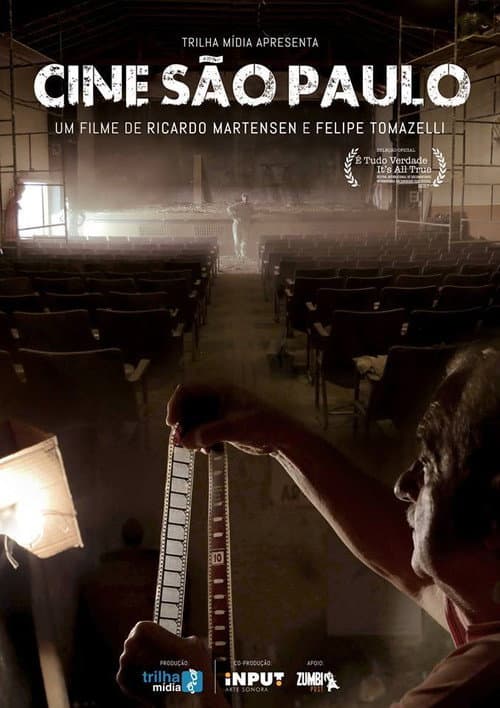
Chico has dedicated his whole life to CINE SAO PAULO. The building, inherited from his father, is now badly deteriorated. Refurbish it, in order to make the old movie theater get back to work, becomes his great obsession.
Germán Cipriano Gómez Valdés Castillo, a young radio announcer from Cuidad Juárez, succeeds in drawing attention to the pachuco movement through his character Tin Tan, laying the groundwork for a new form of binational and mass linguistic expression: Spanglish. He soon became a leading figure in theater and film on the American Continent. Singled out by critics as a destroyer of the language, he quickly won the approval of the public. His ability to improvise revolutionized the film industry. His talent as an actor, singer, dancer and comedian contributed to the Golden Age of Mexican Cinema. From El Hijo Desobediente to Capitán Mantarraya, from Cuidad Juárez to Havana, from mambo to rock, the legacy of Tin Tan makes him one of the great icons of Mexico today. This film tells his story as it has never been told before.
Actress Sally Field looks at the dramatic life and successful career of the superb actress Barbara Stanwyck (1907-90), a Hollywood legend.
A French documentary on how Covid-19 affected Hollywood and the cinema industry in the United States.
This documentary captures the sounds and images of a nearly forgotten era in film history when African American filmmakers and studios created “race movies” exclusively for black audiences. The best of these films attempted to counter the demeaning stereotypes of black Americans prevalent in the popular culture of the day. About 500 films were produced, yet only about 100 still exist. Filmmaking pioneers like Oscar Micheaux, the Noble brothers, and Spencer Williams, Jr. left a lasting influence on black filmmakers, and inspired generations of audiences who finally saw their own lives reflected on the silver screen.
A glimpse of the pre-history of cinema starting with the projections of Etienne Gaspard Robert (also known as M. Robertson), who used magic lanterns and other optical illusions to develop the genre of the Gothic phantasmagoria in the late eighteenth century.
Mixing new images to existing São Paulo movies takes, the documentary presents the city from the perspective of five main attributes: transformation, anonymity, crowd, precariousness and dimension.
A breathtaking investigation into blockbusters, a film genre that enjoys worldwide success yet keeps its secret weapon well hidden backstage in Hollywood. The blockbuster appeals to a very wide audience, from 7 to 77 years and from Paris to Beijing. These films, which have boosted the film industry, started out with "Jaws" and "Star Wars" and are still prospering with Avatar or Alice in Wonderland. To succeed, the films must meet a few precise criteria, one of them being their cost - at 100 million dollars minimum. But in Hollywood, the films' ingredients are a well-kept secret; perhaps for fear of discovering that the studios' house rules are not as rosy as in certain fruitful happy endings? The pressure and the stakes are colossal. This fascinating documentary reviews the numerous professions affiliated with the blockbuster, via interviews with producers of the major studios (Walt Disney Studio, 20th Century Fox...)...
The relations between Parma and cinema were so strong for almost the whole of the twentieth century that this city became an early laboratory of ideas and theories on cinema and a set chosen by some of the greatest Italian authors and beyond. Furthermore, a considerable number of directors, actors, screenwriters and set designers were born in Parma who have made their way internationally, testifying to the fact that in this small city in Northern Italy there was a decidedly cinematic air. Red armchairs takes up the thread of this story, wondering why, unique among the Italian provincial cities, Parma has given so much to the cinema, accompanying the viewer on a journey backwards that from the first projections of the Lumière cinema reaches the ultramodern experience of new multiplexes. During this journey we will meet the characters who created the conditions for this diffusion of cinematographic culture in Parma.
Tito del Amo, a passionate 72-year-old researcher, takes the final step to unravel the enigma about the alleged Spanish origin of the American cartoonist Walt Disney, making the same journey that his supposed mother made to give him up for adoption in Chicago. A journey that begins in Mojácar, Almería, Spain, and ends in New York. An exciting adventure, like Alicia's through the looking glass, to discover what is truth and what is not, with an unexpected result.
Handbook of Movie Theaters' History is a documentary about the history, the development in the present days and the future of movie theaters in the city of Turin, Italy. It mixes the documentary language with comedy and fiction, and is enriched by interviews to some of the most important voices of Turin cinematography. The film follows the evolution of movie theaters by enlightening its main milestones: the pre-cinema experiences in the late 19th Century, the colossals and the movie cathedrals of the silent era, the arthouse theaters, the National Museum of Cinema, the Torino Film Festival, the movie theaters system today and the main hypothesis about its future. The mission of Handbook of Movie Theaters' History is to explore and give back to the audience a deep reflection about the identity and the value of movie theater, in its social and anthropological role and as a mass media, and to analyze the experience of the viewer.
Documentary overview of Peter Lorre's ascension to fame as a master purveyor of silky but disquieting peril.
No overview available.
On 18th of December 2017, the Filarmonica Teatro Regio Torino, directed by Timothy Brock, presented "The Gold Rush" by Charles Chaplin, with live performance of the soundtrack. But let's go back a few days: this short film takes us in the backstage of the concert!
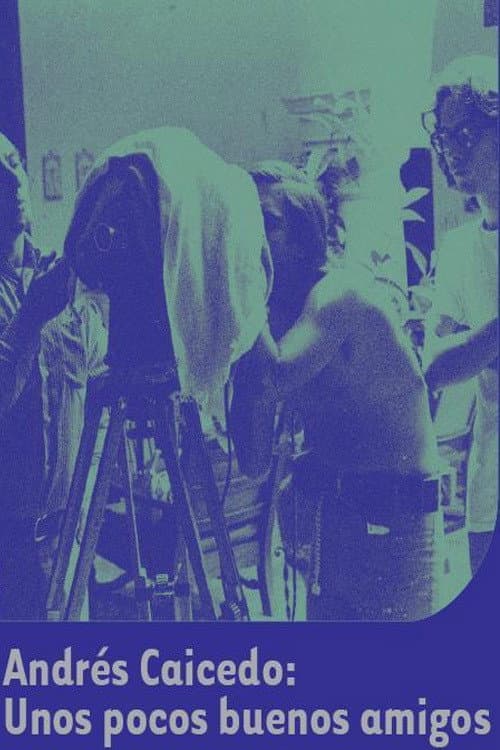
Using the unfinished film, ANGELITA Y MIGUEL ÁNGEL, by Andrés Caicedo and Carlos Mayolo, as a structuring device, friends of prolific film critic and writer Andrés Caicedo, an unforgettable figure of the group of Cali in the 1970s who left an incredible amount of texts, reflect upon his life, his work, and his suicide at the age of 25, testify to his influence in the cultural life of Colombia, and remember his strong and touching personality.
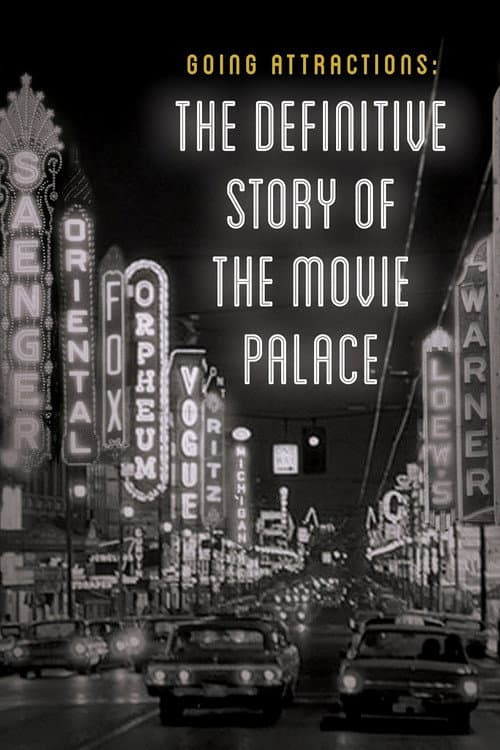
Celebrating the splendor and grandeur of the great cinemas of the United States, built when movies were the acme of entertainment and the stories were larger than life, as were the venues designed to show them. The film also tracks the eventual decline of the palaces, through to today’s current preservation efforts. A tribute to America’s great art form and the great monuments created for audiences to enjoy them in.