Thanks to DNA, this documentary establishes the identity of Marilyn's biological father, thus revealing her new paternal family, 60 years after the icon's death.
Denese Joy Becker, a manicurist living in Iowa, discovers she is indeed Dominga Sic Ruiz, a survivor from a 1982 Guatemalan massacre, when more than 200 people were killed in the small village of Rio Negro, after opposing the construction of a dam, sponsored by World Bank. She then tries to unveil the truth.
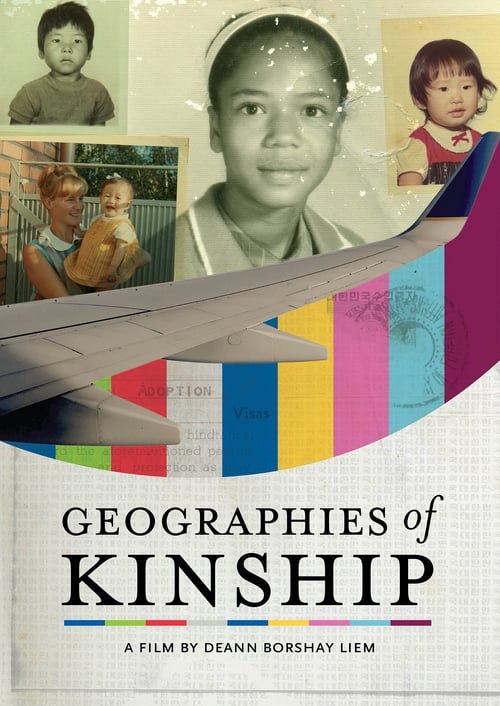
In this powerful tale about the rise of Korea’s global adoption program, four adult adoptees return to their country of birth and reconnect with their roots, mapping the geographies of kinship that bind them to a homeland they never knew.
My Flesh and Blood is a 2003 documentary film by Jonathan Karsh chronicling a year in the life of the Tom family. The Tom family is notable as the mother, Susan, adopted eleven children, most of whom had serious disabilities or diseases. The film itself is notable for handling the sensitive subject matter in an unsentimental way that is more uplifting than one might expect.
No overview available.
The free, almost naive view from the perspective of a child puts the "68ers" in a new, illuminating light in the anniversary year 2008. The film is a provocative reckoning with the ideological upbringing that seemed so progressive and yet was suffocated by the children's desire to finally grow up. With an ironic eye and a feuilletonistic style, author Richard David Precht and Cologne documentary film director André Schäfer trace a childhood in the West German provinces - and place the major events of those years in completely different, smaller and very private contexts.
Through one woman's experience as an adopted person and also as a mother who relinquished her child in 1971, this documentary highlights the many complex issues associated with adoption.
What does it mean to adopted and brought up far away from your country of birth? In “Given Away,” this week’s moving new Op-Doc by directors Glenn and Julie Morey, Korean adoptees who grew up in Western countries reflect on the complicated emotional terrain that they’ve navigated in their lives. Glenn Morey was himself adopted from Korea in the wake of the Korean war, and the directors have channeled that connection to create a beautifully nuanced and emotional film. As the Moreys write of Glenn’s experience interviewing adoptees, “He has needed others like him … to help him make sense of his life. They have also helped him make peace with the universe.”
In an effort to understand where she came from, Fabiola asked a question that became the central phrase of the film: what would my life have been like if I'd stayed in Haiti? Taking as her starting point her biological mother's precarious economic situation, she had no choice but to entrust her daughter to her care. Fabiola could have ended up restavek, or in a loving foster family, or on the streets abandoned to her fate, or adopted abroad.
Kati Pohler was abandoned in a market in China when she was three days old. Her parents left a note saying they would meet her on a famous bridge 10 or 20 years later. When the time arrived, it became a huge story in China, but Kati was living in America and had no idea. This is how she finally met her biological family.
Gil Cardinal searches for his natural family and an understanding of the circumstances that led to his becoming a foster child. An important figure in the history of Canadian Indigenous filmmaking, Gil Cardinal was born to a Métis mother but raised by a non-Indigenous foster family, and with this auto-biographical documentary he charts his efforts to find his biological mother and to understand why he was removed from her. Considered a milestone in documentary cinema, it addressed the country’s internal colonialism in a profoundly personal manner, winning a Special Jury Prize at Banff and multiple international awards.
Adopted Montreal filmmaker Adrian Wills discovers, on camera and in real time, the startling truths of his complex beginnings in Newfoundland. Shocking details drive Wills to the core of his birth mother’s resilience, and ultimately his own. In this moving feature documentary that combines 16mm footage and contemporary images with deeply personal conversations, Wills’ voyage transforms from an urgent search for identity into a quest to give a quiet girl her voice.
Despite the warm images in the family archive, photographer and filmmaker Jonnah misses an intimate bond with her (adoptive) parents. Over the years, a wall has been built between them that Jonnah is now trying to break down with her parents.
New York, 1980. Three complete strangers accidentally discover that they're identical triplets, separated at birth. The 19-year-olds' joyous reunion catapults them to international fame, but also unlocks an extraordinary and disturbing secret that goes beyond their own lives – and could transform our understanding of human nature forever.
It is normal for 15-year-old Linn to have two mothers. But when she finds out that there are still numerous siblings, she realizes that she is part of an extraordinary extended family. Her father Eike not only had an appointment with Linn's mothers to donate sperm, Petra and Anny also have three children with him. A film crew followed this rainbow family for twelve years.
Jackie Miller adopted her son, Scott, in the early 1970s. In 2008, Scott brought his mom to StoryCorps to ask her about that decision.
Julia always said that her upbringing as a biological child in a foster family was a happy time. But something is wrong. In The Foster Family, we follow director Julia's journey back in time, where she, together with her parents Ewa and Lennart and the foster child Patrik, recollect the shocking events that changed their lives over thirty years ago. The children are at the center of this strong, touching and warm documentary about a system where you can love, but not too much.
Adopted from South Korea, raised on different continents & connected through social media, Samantha & Anaïs believe that they are twin sisters separated at birth.
From 2000 to 2008, China was the leading country for U.S. international adoptions. There are now approximately 70,000 Chinese adoptees being raised in the United States. Ninety-five percent of them are girls. Each year, these girls face new questions regarding their adopted lives and surroundings. This is a film about Chinese adopted girls, their American adoptive families and the paradoxical losses and gains inherent in international adoption. The characters and events in this story will challenge our traditional notions of family, culture and race.
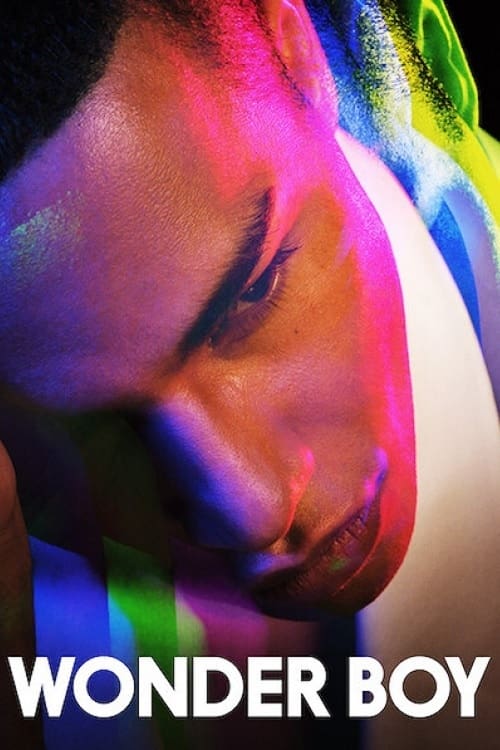
At age 25, Olivier Rousteing was named the creative director of the French luxury fashion house, Balmain. At the time, Rousteing was a relatively unknown designer, but in the decade since, he’s proven his business prowess and artistic instinct by leading Balmain to new heights. Wonderboy gives the viewer the rare opportunity to experience the inner sanctum of the fashion world, as we stand shoulder-to-shoulder with this extraordinary individual while he works.
No Trailers found.
Herself