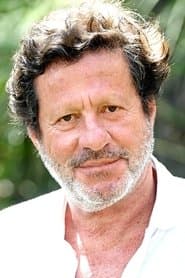
António-Pedro Vasconcelos, a man who lives and breathes cinema
A retrospective on the life and work of Portuguese director António-Pedro Vasconcelos.
Trailer
Self
An up-close look into the life of the often misunderstood movie director Grigori Kromanov through the lens of old friends and colleagues.
Interviews and archival footage weave together to tell the story of the Master of Suspense, one of the most influential and studied filmmakers in the history of cinema.
Fulton and Pepe's 2000 documentary captures Terry Gilliam's attempt to get The Man Who Killed Don Quixote off the ground. Back injuries, freakish storms, and more zoom in to sabotage the project.
In 1967, experimental filmmaker Jorgen Leth created a striking short film, The Perfect Human, starring a man and women sitting in a box while a narrator poses questions about their relationship and humanity. Years later, Danish director Lars von Trier made a deal with Leth to remake his film five times, each under a different set of circumstances and with von Trier's strictly prescribed rules. As Leth completes each challenge, von Trier creates increasingly further elaborate stipulations.
Actors work with a director to find the rhythm of a scene.
Paying homage to two of Hollywood's central icons, the film creates an unparalleled portrait of two very different personalities amidst the demise of the studio system.
Kevin Smith interacts in Q&A sessions throughout various college stops in the USA.
For over 20 years, film enthusiast and amateur filmmaker Anders Olofsson has worked on what quickly became his life project, "Stall-Erik och Snapphanarna". What he may lack in technical skill he makes up for with his genuine enthusiasm for the project, and perhaps this is how he has managed to convince an unbelievable roster of eighty well-known Swedish film actors to participate in this production. When he will actually finish his film, only time will tell.
What is anime? Through deep-dives with notable masterminds of this electrifying genre, this fast-paced documentary seeks to find the answers.
Jean-Luc Godard is synonymous with cinema. With the release of Breathless in 1960, he established himself overnight as a cinematic rebel and symbol for the era's progressive and anti-war youth. Sixty-two years and 140 films later, Godard is among the most renowned artists of all time, taught in every film school yet still shrouded in mystery. One of the founders of the French New Wave, political agitator, revolutionary misanthrope, film theorist and critic, the list of his descriptors goes on and on. Godard Cinema offers an opportunity for film lovers to look back at his career and the subjects and themes that obsessed him, while paying tribute to the ineffable essence of the most revered French director of all time.
No overview available.
A documentary analyzing the furore which so-called "video nasties" caused in Britain during the 1980s.
Film journalist and critic Rüdiger Suchsland examines German cinema from 1919, when the Republic of Weimar is born, to 1933, when the Nazis come into power. (Followed by Hitler's Hollywood, 2017.)
The Characters of Star Wars is a Video Documentary included in the 2004 DVD release of the Star Wars Original Trilogy. It explained the Mythos of many of the "Star Wars" Characters.
If cinema is the art of time, Linklater is one of its most thoughtful and engaged directors. Unlike other filmmakers identified as auteurs, Linklater’s distinction is not found on the surface of his films, in a visual style or signature shot, but rather in their DNA, as ongoing conversations with cinema, which is to say, with time itself. A visual essay produced by Sight and Sound.
The extraordinary life of playwright, singer, actor, composer, and director Noël Coward, who rose from poverty to stardom while keeping his sexuality a secret. Featuring Laurence Olivier, Maggie Smith, Frank Sinatra, Michael Caine and Lucille Ball. Narrated by Alan Cumming. With Rupert Everett as the voice of Noël Coward. Directed by Academy Award Nominee Barnaby Thompson.
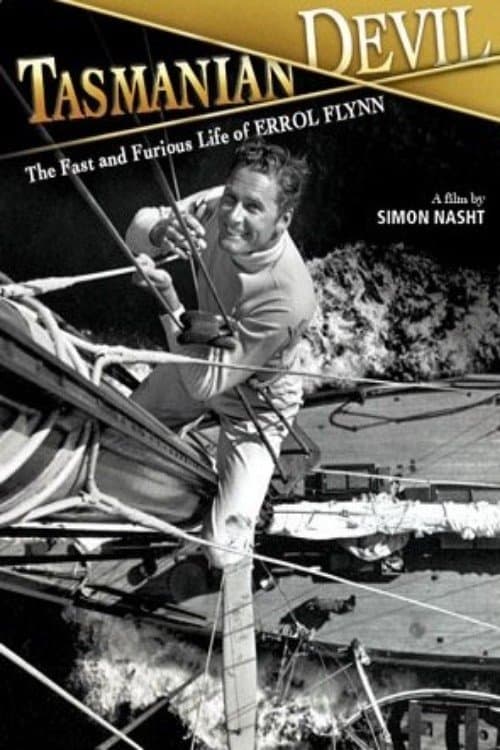
The story of Tasmanian-born actor Errol Flynn whose short & flamboyant life, full of scandals, adventures, loves and excess was largely played out in front of the camera - either making movies or filling the newsreels and gossip magazines. Tragically he was dead from the effects of drugs and alcohol by the time he was only 50 & the myths live on. But there is another side of Flynn that is less well known - his ambitions to be a serious writer and newspaper correspondent, his documentary films and his interest in the Spanish Civil War and Castro's Cuba
Roland Emmerich himself and many of his companions provide insights into his life. With films such as Independence Day, 2012, and The Day After Tomorrow, he probably became the most successful director of disaster movies. But there were also failures.