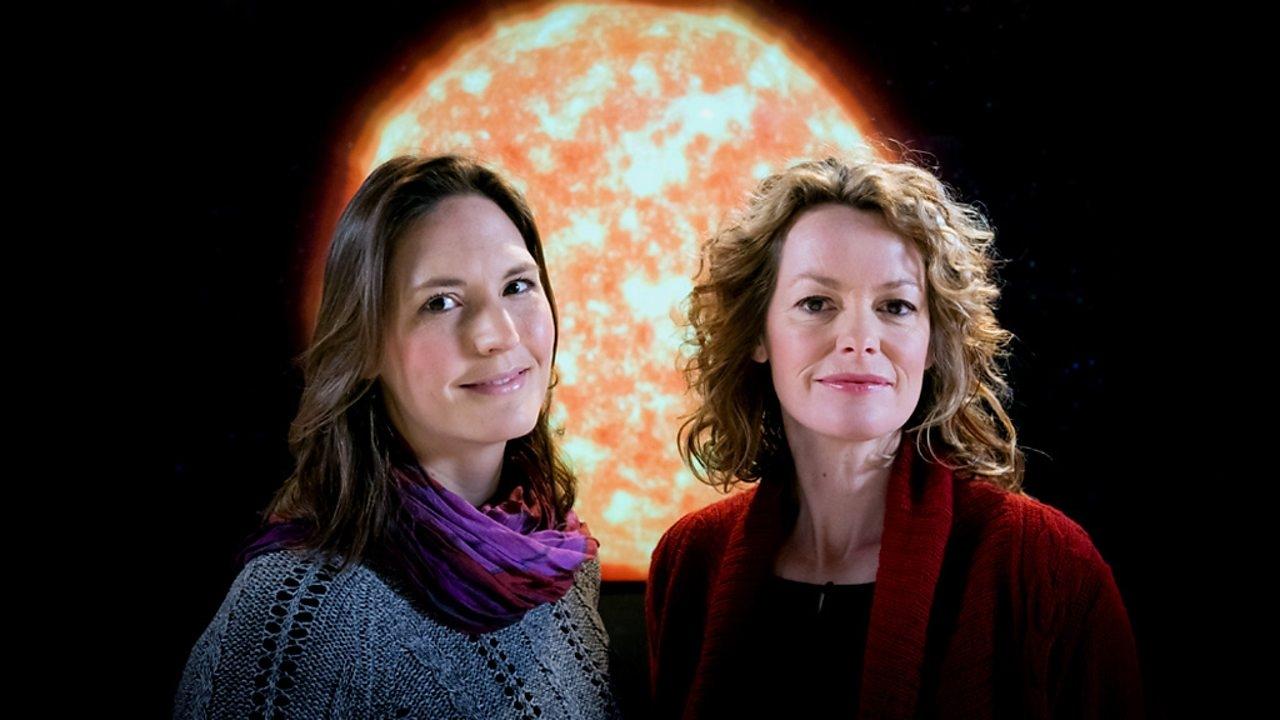
Kate Humble and Helen Czerski reveal the inner workings of the sun and investigate why scientists think changes in the sun's behaviour may have powerful effects on our climate.
Herself - Presenter
No Trailers found.
This feature-length documentary is a portrait of eclipse chasers, people for whom solar eclipses - among nature's more spectacular phenomena – are a veritable obsession. The film follows 4 of them as they travel incredible distances to witness the last total eclipse of the millennium as it sweeps eastward across Europe to India. At various points along the way enthusiasts Alain Cirou in France, Paul Houde in Austria, Olivier Staiger in Germany and Debasis Sarkar in India offer their impressions of the historic event.
Meet Nikola Tesla, the genius engineer and tireless inventor whose technology revolutionized the electrical age of the 20th century. Although eclipsed in fame by Edison and Marconi, it was Tesla's vision that paved the way for today's wireless world. His fertile but undisciplined imagination was the source of his genius but also his downfall, as the image of Tesla as a mad scientist came to overshadow his reputation as a brilliant innovator.
A documentary series from Channel 4, hosted by professor Richard Dawkins, well-known darwinist. The series mixes segments on the life and discoveries of Charles Darwin, the theory of natural selection and evolution, and Dawkins' attempts at convincing a group of school children that evolution explains the world around us better than any religion.
Why are you more likely to have a heart attack at eight o'clock in the morning or crash your car on the motorway at two o'clock in the afternoon? Can taking your medication at the right time of day really save your life? And have you ever wondered why teenagers will not get out of bed in the morning? The answers to these questions lie in the secret world of the biological clock.
No overview available.
Human action is often influenced by the desire for knowledge. This desire is in itself a positive impulse and could be said to be the basis of all progress. Let's move this statement to the ground of scientific research at CERN, and see if it applies here - and then test the common experience that human stupidity permeates every social stratum and, in the case of the elites, is a potential threat.
Documentary telling the little-known story of how Darwin came to write his great masterpiece, On the Origin of Species, a book which explains the wonderful variety of the natural world as emerging out of death and the struggle of life. In the twenty years he took to develop a brilliant idea into a revolutionary book, Darwin went through a personal struggle every bit as turbulent as that of the natural world he observed. Fortunately, he left us an extraordinary record of his brilliant insights, observations of nature, and touching expressions of love and affection for those around him. He also wrote frank accounts of family tragedies, physical illnesses and moments of self-doubt, as he laboured towards publication of the book that would change the way we see the world. The story is told with the benefit of Darwin's secret notes and correspondence, enhanced by natural history filming, powerful imagery from the time and contributions from leading contemporary biographers and scientists.
An incredible travel through space and time between the walls of the Paris Observatory, which is celebrating its 350th birthday. Place of discoveries such as speed of light or Neptune’s existence, it is still today one of the oldest operating observatories and the greatest hub in the world for astronomy and astrophysics researches, second only to Harvard.
Does infinity exist? Can we experience the Infinite? In an animated film (created by artists from 10 countries) the world's most cutting-edge scientists and mathematicians go in search of the infinite and its mind-bending implications for the universe. Eminent mathematicians, particle physicists and cosmologists dive into infinity and its mind-bending implications for the universe.
214 million years ago a gigantic meteorite broke up and impacted Earth. 65 million years ago, the impact that killed the dinosaurs occurred where the country of Belize stands today. 200 thousand years ago early humans were walking and died when they were hit by a 40 meter wide meteorite hit South Africa creating a 1.4 km wide crater. This meteorite fragment, the largest ever found hit Namibia 80 000 years ago and more recently a major impact occurred in Toungouska, Russia in 1908. Every year 10 000 tons of meteoritic matter fall onto Earth in much smaller but not necessarily less influential pieces. This film will explore how the impact of these meteorites big and small through the ages have changed our world and what they brought from outer space with them that may have been the seed of life itself on Earth.
Earth teems with a staggering variety of animals, including 9,000 kinds of birds, 28,000 types of fish, and more than 350,000 species of beetles. What explains this explosion of living creatures—1.4 million different species discovered so far, with perhaps another 50 million to go? The source of life's endless forms was a profound mystery until Charles Darwin brought forth his revolutionary idea of natural selection. But Darwin's radical insights raised as many questions as they answered. What actually drives evolution and turns one species into another? To what degree do different animals rely on the same genetic toolkit? And how did we evolve?
In this two-hour special, NOVA captures the turmoil that tore apart the community of Dover, Pennsylvania in one of the latest battles over teaching evolution in public schools. Featuring trial reenactments based on court transcripts and interviews with key participants, including expert scientists and Dover parents, teachers, and town officials, "Judgment Day: Intelligent Design on Trial" follows the celebrated federal case of Kitzmiller v. Dover School District.
When the U.S. trade embargo left Cuba isolated from medical resources, Cuban scientists were forced to get creative. Now they've developed lung cancer vaccines that show so much promise, some Americans are defying the embargo and traveling to Cuba for treatment. In an unprecedented move, Cuban researchers are working with U.S. partners to make the medicines more widely available.
Documentary about the Griffith Observatory, shown at their Leonard Nimoy Event Horizon Theater
The Future Circular Collider is the machine of the future. Thanks to it, we will finally be able to go back in time to the origin of our universe. But which way do we go to set up the largest scientific instrument of all time? Between metaphysics and underground tunnels, a story of the preparations or how men are ready to move mountains for more knowledge.
A documentary about the 1999 discovery of a Mastodon skeleton in a Hyde Park backyard.
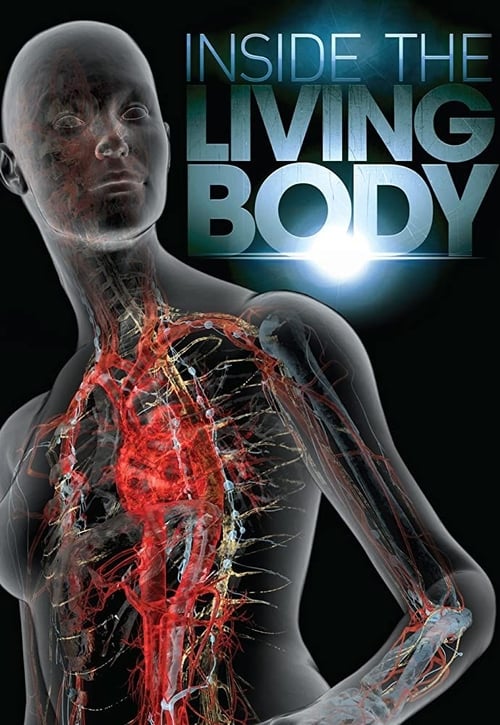
Take a fascinating journey inside the bizarre world of a living human being with this compelling documentary from National Geographic, where microscopic cameras and other state-of-the-art technologies reveal perspectives that will blow your mind. Tracking the body of a female from infancy to old age, viewers will observe the digestion of a meal, the development of the cardiac system and other mesmerizing aspects of the body's inner workings.
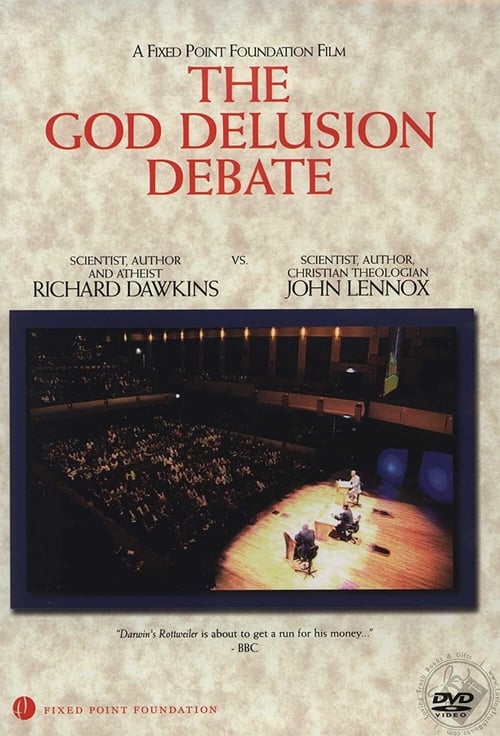
On October 3rd of 2007 in Birmingham, Alabama, Professor Richard Dawkins and his Oxford University colleague Professor John Lennox engaged in a lively debate over what is arguably the most critical question of our time: the existence of God. The debate centered on Dawkins's views as expressed in his best-seller, The God Delusion, and their validity over and against the Christian faith. Both presenters agreed to the format and topics of discussion. It was one of the great debates of the last 100 years and is well worth watching and studying.
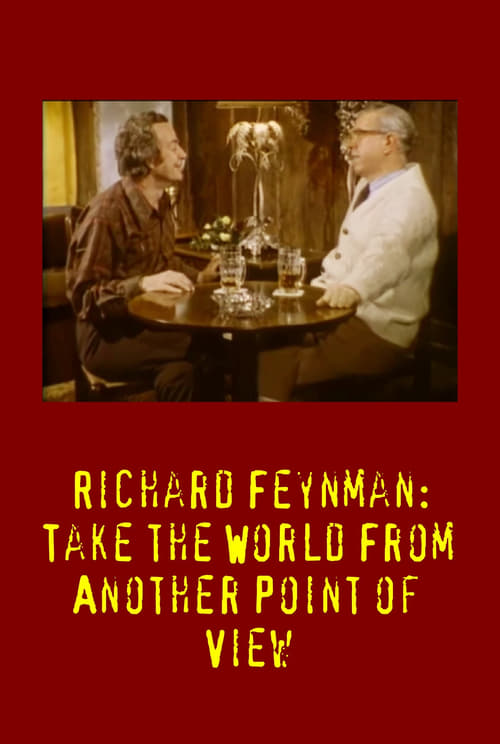
In 1973 Yorkshire public television made a short film of the Nobel laureate while he was there. The resulting film, Take the World from Another Point of View, was broadcast in America as part of the PBS Nova series. The documentary features a fascinating interview, but what sets it apart from other films on Feynman is the inclusion of a lively conversation he had with the eminent British astrophysicist Fred Hoyle.