Director Thomas Heise picks up the biographical pieces left by his family, and composes an epic picture of four generations of his family, of a country, of a century.
Narrator (voice)
Elem Klimov's tribute to his late wife, director Larisa Shepitko, killed in a car accident a year earlier. Features excerpts from all of her films, and archival audio of her discussing life and art.
Recalling his childhood and relationship with his mother, a film student tries to understand the origin of his love for cinema and tragedies.
The work of legendary actor François Simon, son of Michel Simon.
A tribute to the legendary Japanese film director featuring the reflections of filmmakers Lindsay Anderson, Claire Denis, Hou Hsiao-hsien, Aki Kaurismäki, Stanley Kwan, Paul Schrader, and Wim Wenders
Documentary about the life and career of Japanese actor Chishu Ryu.
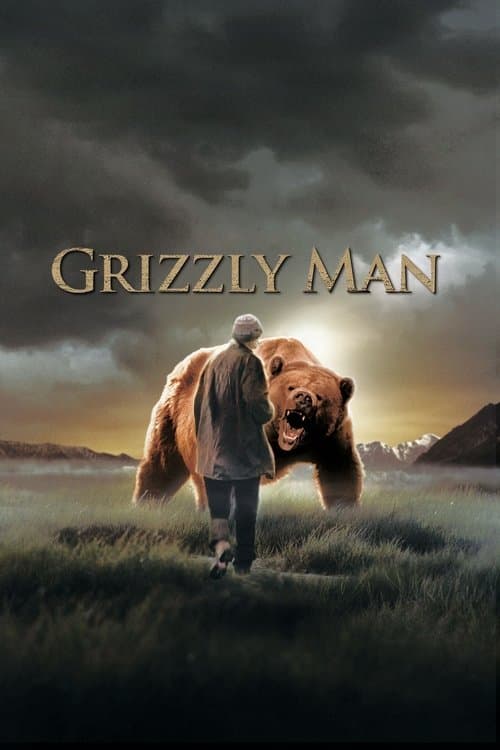
Follows the story of "Grizzly Man" Timothy Treadwell and what the thirteen summers in a National Park in Alaska were like in his attempt to protect the grizzly bears. The film is full of unique images and a look into the spirit of a man who sacrificed himself for nature.
A prominent Russian ballet dancer and teacher Alexander Shiryaev had another talent hidden for almost a century. Archive materials that date back to 1906 reveal his bold experiments at stop-motion and paper animation.
Emilie Busquant, a woman with an exceptional destiny, was born on March 3, 1901, in Neuves-Maisons, Lorraine. In 1923, she moved to Paris to find work and met Messali Hadj, who had also come seeking employment. A beautiful love story began; she fell in love with both a man and a cause: the independence of Algeria. Together, in 1926, they founded the first Algerian independence party, the North African Star (Étoile Nord-Africaine). She would support the Algerian people's struggle throughout her life.
No overview available.
A documentary about Edie Sedgwick featuring photos of her and clips from Factory Girl, narrated by her real-life friends and loved ones, including her brother Jonathan, cousin John Sedgwick, roommate Danny Fields, artists Richie Berlin and Gerard Malanga, photographer Nat Finkelstein, designer Betsey Johnson, and others.
Born in Berlin in 1896, Lotte Eisner became famous for her passionate involvement in the world of both German and French cinema. In 1936, together with Henri Langlois, she founded the Cinémathèque Française with the goal of saving from destruction films, costumes, sets, posters, and other treasures of the 7th Art. A Jew exiled in Paris, she became a pillar of the capital's cultural scene, where she promoted German cinema.
In an open letter to the most influential modern Indian political leader, the Late Mohandas Karamchand Gandhi, the filmmaker sequentially narrates the stories of three distinct individuals - that of a confused filmmaker who flows with time, a dedicated social reformer who guides the stratified masses into social upliftment and a divisive and regressive politician. The juxtaposition of their disfigured trajectories provokes a pertinent question: Did Gandhi ever foresee the dehumanized shape that his legacy has now dangerously morphed into?
The 90-minute documentary describes the rise of DJ and producer Robin Schulz from talented newcomer to internationally acclaimed superstar and takes a look behind the scenes of our world star's life.
Rob Reiner profiles Albert Brooks, comedic legend, acclaimed filmmaker, talented character actor and a lifelong friend, who Reiner first met in their high school drama club.
A personal meditation on Rumble Fish, the legendary film directed by Francis Ford Coppola in 1983; the city of Tulsa, Oklahoma, USA, where it was shot; and its impact on the life of several people from Chile, Argentina and Uruguay related to film industry.
The armies of Fascist Italy conquered Addis Ababa, capital of Abyssinia, in May 1936, thus culminating the African colonial adventure of the ruthless dictator Benito Mussolini, by then lord of Libya, Eritrea and Somalia; a bloody and tragic story told through the naive drawings of Pietro Dall'Igna, an Italian schoolboy born in 1925.
Trailer