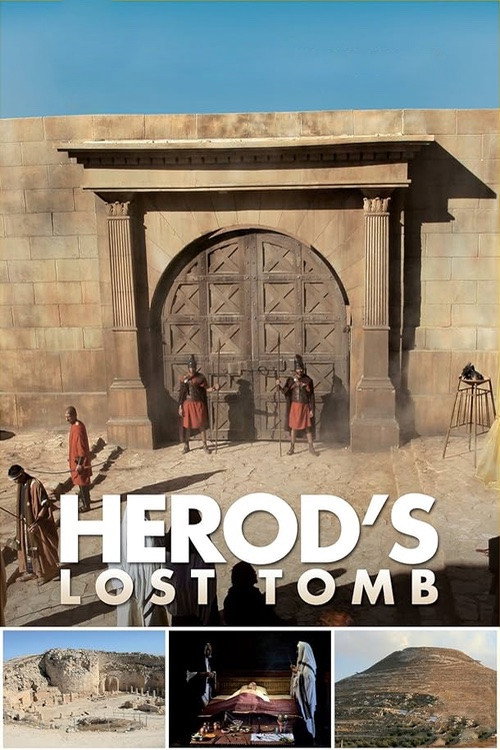
National Geographic follows archaeologist Ehud Natzer in his discovery of the tomb of Herod the Great.
Self
No Trailers found.
Joseph, favored son of Jacob and great-grandson of Abraham, is sold into slavery by his jealous brothers. Rising to become prime minister of Egypt. Joseph governed the country during a seven year famine, during which his brothers visit Egypt seeking grain, only to encounter their brother, presumed long dead.
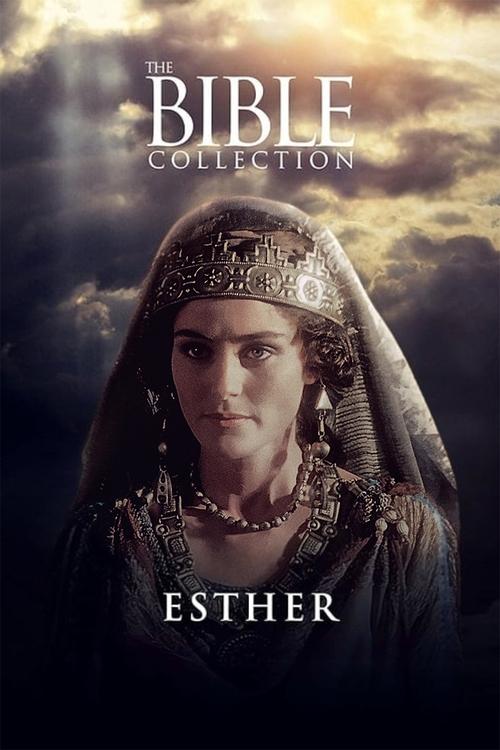
Esther, the beautiful queen of Persia, intervenes to save the Jewish people from a bloody massacre.
Rather than choosing a great leader or king, God chooses Abraham, an elderly shepherd from Mesopotamia, as the way to establish his Covenant with mankind... A man of great faith, Abraham continues to believe in God even when He seems to have abandoned him.
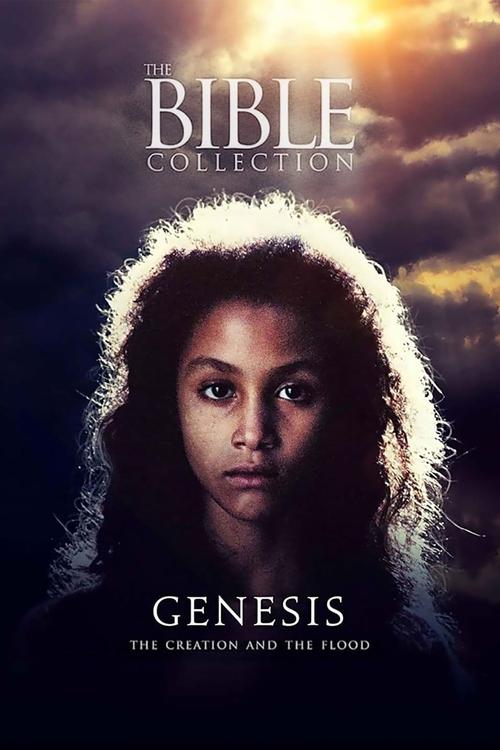
An all-enveloping darkness. Suddenly, a child's voice, frightened, questioning, pierces the darkness... The first flickering rays of light begin to sculpt mysterious shapes out of the darkness... Among them, a very old man. He reassures the child, exhorting him to see the wonders of the earth. And it is with this child's eyes that we will witness the creation of the world.
A biblical epic from the Book of Acts and Paul's epistles covering his conversion from Saul of Tarsus to his ministry to the Gentiles.
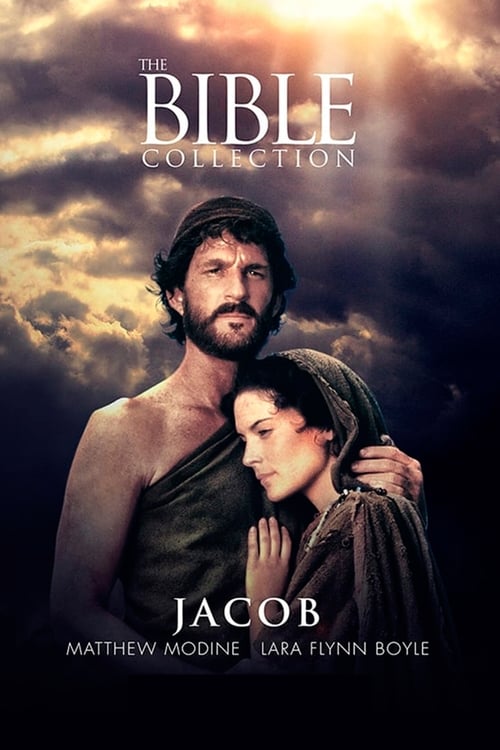
Isaac's son Jacob deprives his brother Esau of his birthright and has to flee for his life. He finds shelter with his uncle Laban, but is himself deceived. Finally, Jacob has to face both his uncle and brother.
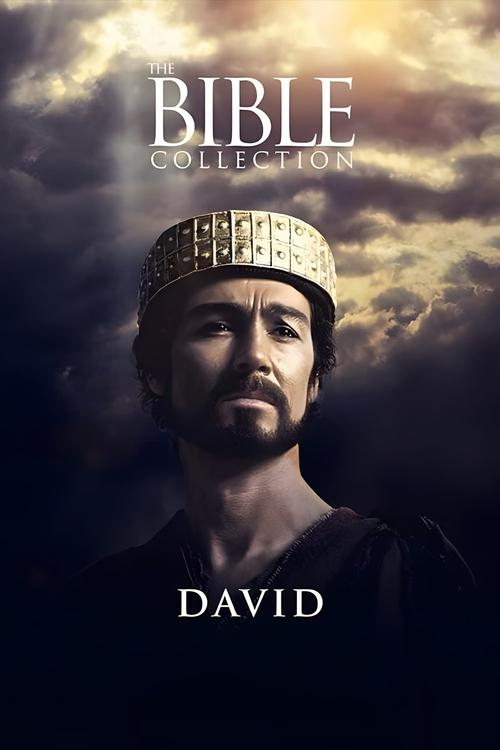
A distinguished military leader whose reign was touched by great scandal, shocking betrayals and rousing victories. A simple shepherd boy chosen to be king, under the watchful eyes of prophet Samuel.
Jesus, a carpenter living a simple life, discovers his destiny as the biblical Messiah.
In Israel, a joint French-Israeli scientific mission is set to unearth the secrets of the hill of Kiryath-Jearim (or Kiryat Ya’arim), converted to the site of a Catholic convent, where, according to the Bible, the Ark of the Covenant was kept for at least twenty years before being brought to Jerusalem by King David, father of King Solomon, who would eventually build the Holy of Holies inside the First Temple to house it.
In one of the most hostile lands on the planet, an ancient people called the Israelites forged an army and carved out an empire. Their ancient military exploits are described in one of history's most famous religious texts; the old testament of the Bible. But by reading between the religious lines, ancient military historians unlock the soldier's secrets of the bible by examining the weapons, the strategies; and the commanders, some of whom are unlikely warriors, like Abraham, Moses, and Deborah.
Film adaptation of Werner Keller's bestselling non-fiction book, which attempts to show in a "less spectacular way than the original" that archaeological finds and findings do not contradict biblical statements.
It is possible that only one per cent of the wonders of ancient Egypt have been discovered, but now, thanks to a pioneering approach to archaeology, that is about to change. Dr. Sarah Parcak uses satellites to probe beneath the sands, where she has found cities, temples and pyramids. Now, with Dallas Campbell and Liz Bonnin, she heads to Egypt to discover if these magnificent buildings are really there.
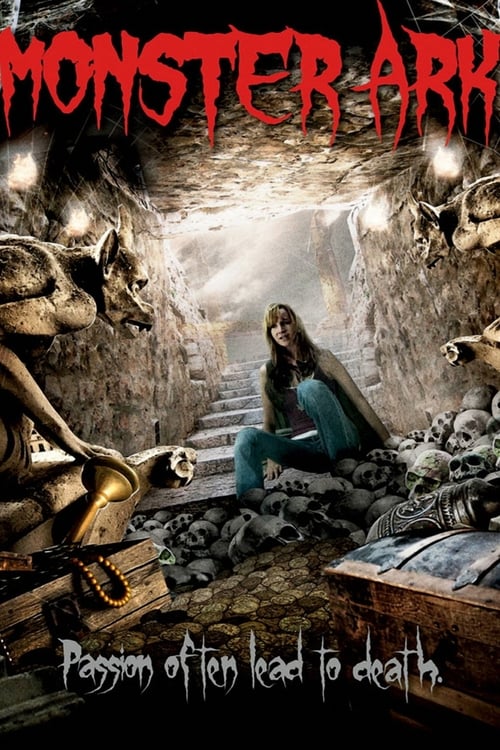
Archaeologist Nicholas Zavaterro and his student find an antique vase with an inscription that points to where Noah's Ark is hidden. They decide to go looking, but things get out of control when they encounter opposing forces, including a monster named Tama.
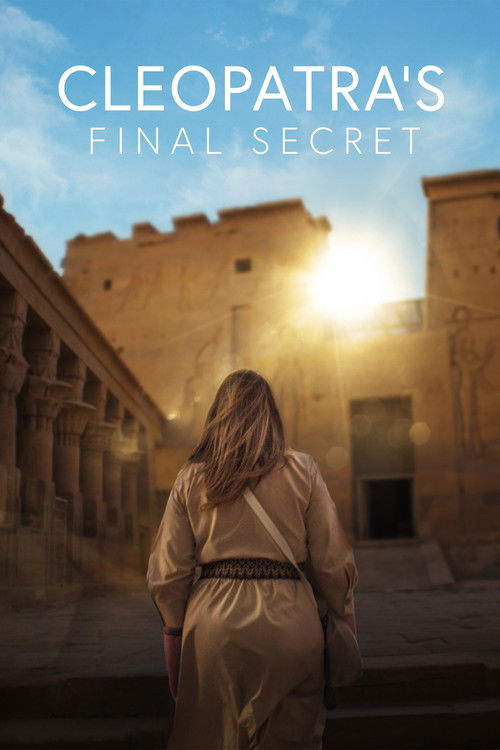
After 20 years seeking Cleopatra's tomb, archaeologist K. Martinez's search shifts to an underwater Mediterranean site. She's joined by Titanic finder Bob Ballard, Egyptian Navy and dive teams to explore the location.
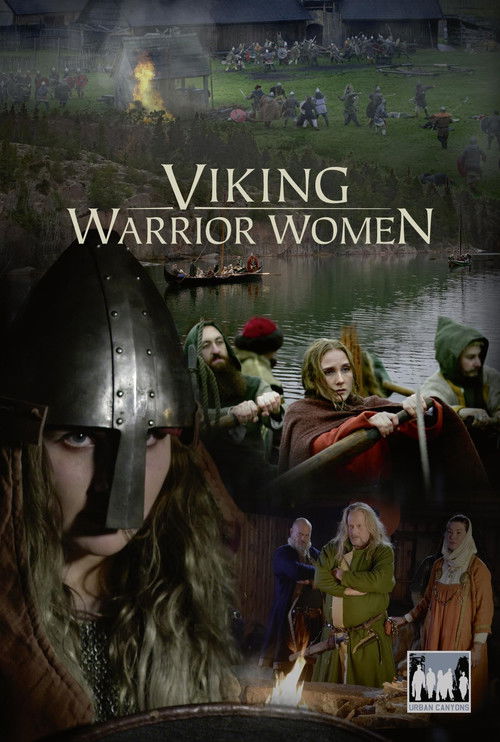
Drama-led documentary following the life of Signe, an orphaned Chief's daughter, who, driven by revenge, becomes an explorer and trader in the lands of the Rus Vikings.
In this DVD, Mr. Riddle shares the results of his much reading and research in the area of Carbon 14 dating, and explains the importance of Carbon 12 in conjunction with C-14. He explains in simple terms the molecular breakdown process. He also discusses other dating methods and the underlying assumptions the methods are based on, the correctness of which are brought into question. Mike is an interesting and dynamic speaker. His visual aids are excellent. Mike Riddle has degrees in mathematics and education. He's a former Marine, national decathlon champion, former technical specialist and manager for Microsoft, and teacher at ICR's graduate school.
What is true and what is false in the hideous stories spread about the controversial figure of the Roman emperor Gaius Julius Caesar Augustus Germanicus (12-41), nicknamed Caligula? Professor Mary Beard explains what is accurate and what is mythical in the historical accounts that portray him as an unbalanced despot. Was he a sadistic tyrant, as Roman historians have told, or perhaps the truth about him was manipulated because of political interests?
Boogie Man is a comprehensive look at political strategist, racist, and former Republican National Convention Committee chairman, Lee Atwater, who reinvigorated the Republican Party’s Southern Strategy to increase political support among white voters in the South by appealing to racism against African Americans. He mentored Karl Rove and George W. Bush and played a key role in the elections of Reagan and George H.W. Bush.
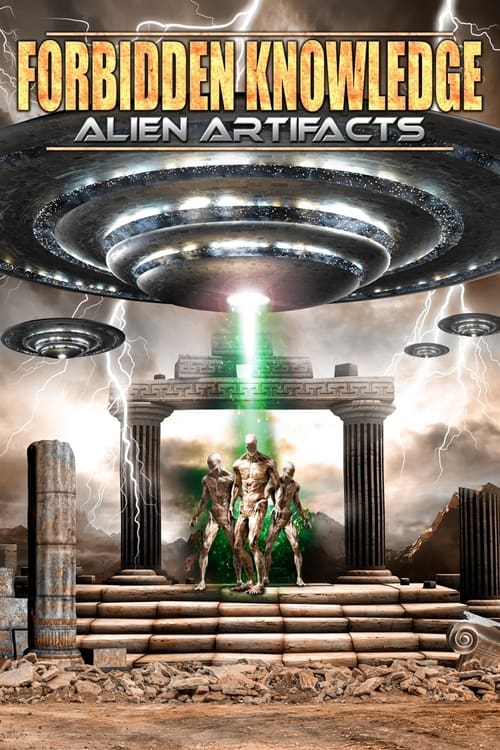
Shocking new evidence of highly advanced civilizations mounts as previously unexplored regions of the earth reveal mind boggling artifacts that defy all convention and utterly mystify today's academic and scientific factions. It's clear there are massive gaps between our current understanding of the cosmos and the origins of humanity and that of ancient civilizations that existed before "recorded history". Experience unprecedented relics and artifacts that force us to re-evaluate the mainstream dogma of who we are and where we came from.
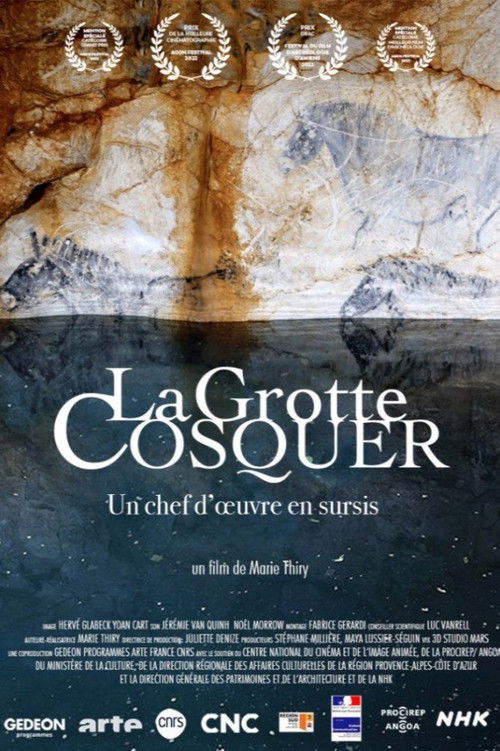
A short distance from Marseille, at Cape Morgiou, in the depths of the Calanques massif, lies the Cosquer cave, discovered only about thirty years ago by a diver, Henri Cosquer. With its bestiary of hundreds of paintings and engravings - horses, bison, jellyfish, penguins - the only underwater decorated cave in the world allows us to learn a little more about Mediterranean societies 30,000 years ago. Today, threatened by rising water levels accelerated by global warming, this jewel of the Upper Paleolithic is in danger of being swallowed up. To save the cave from disappearing, the Ministry of Culture has chosen to digitize it. From this virtual duplicate, a replica has been made on the surface to offer the public a reconstruction that allows them to admire these masterpieces.