An experimental film: layers of painted glass are photographed from above.
No Trailers found.
A sexual reverie unfolds over the course of one ethereal night. Characters wander through an erotic maze of love and lust, blurring the lines between wet dream and lucid nightmare as a macabre, erotic stage performance sends a ripple of lustful desires through its audience and performers.
Rosso Fiorentino's painting "The Deposition of the Cross" comes to life. The Christ is gradually removed from his cross by the biblical characters who surround him.
An erotic, witty and disturbing film. An intriguing mix of fact and fiction.
A showcase for the MCAD Animation Workshop 1972 where each student was given one of a series of cells to animate whatever they pleased.
Commissioned by David Bienstock, creator of the New American Film Series at the Whitney Museum of Art to raise funds for the second season of the series. The film was projected at the end of each program and a box to receive donations was placed at the exit of the theater. Whitney Commercial ran for two or three years until the Museum agreed to sponsor the series on its own which has continued to the present season. Preserved by the Academy Film Archive in 2015.
This film is composed of three sections created to accompany a piece of music (by Barbara Feldman) on a Homeric poem.
Italian immigrant kidnaps a wealthy British woman, and they fall in love.
A recollection of almost 40 years of career. A giant image-jukebox, from early 70s autoportrait to films for Alain Bashung / Elli Medeiros, private karaokes to “video sculptures” applied to John Travolta or Maria Callas, and much much more…
"Presenting, for the first time, a selection of the cathodic experimental works from the seminal Italo-American artist Aldo Tambellini; A selection of classic documents of one of the first pioneers of video art and audiovisual experimentation from New York east side scene of the '60s and '70s. Unreleased and classic works available for the first time." Works included: Black Video 1, Black Video 2, Black Spiral, Black Video Projections, 6673, Minus One, Clone, Interview at the Black Gate Theatre.
A triptych of short stereoscopic films by Peter Greenaway, Jean-Luc Godard and Edgar Pêra. Includes "The Three Disasters" by Godard, "Cinesapiens" by Pêra and "Just in Time" by Greenaway.
"After two years of massive didacticism in black-and-white [Hapax Legomena (1971-72)], I am surprised by Tiger Balm, lyrical, in color, a celebration of generative humors and principles, in homage to the green of England, the light of my dooryard… and consecutive matters." - HF
In this surrealist vignette-based film, a goldfish makes conversation with various objects. A TV becomes a writer, a triangle learns it is not a hexagon, and a goldfish sees themself without an audience. // \ / \ \\ \ / \ / /\/ /// \ / \ \\ \ / \ / /\/ /// \ / \ \\ \ / \ / /\/ /
Experimental short film by Michio Mihara.
Homeo is a mental construction made from visual reality, just as music is made from auditive reality. I put in this film no personal intentions. All my intentions are personal. I’ve made this film thinking of what the audience would have liked to see, not something specific that I wanted to say: what the film depicts is above all reality, not fiction. Homeo is, for me, the search for an autonomous cinematographic language, which doesn't owe anything to traditional narrative, or maybe everything. Cinema is, above all, part of a way of life which will become more and more self-assured in the years and century to come. We are part of this change, and that’s why I tried in Homeo to establish a series of perpetual changes, in constant evolution or regress, which tries, above all, to focus on things.
One of the very few films made by Etienne O'Leary, all of which emerged from the French underground circa 1968 and can be very loosely designated 'diary films.' Like the contemporaneous films by O'Leary's more famous friend Pierre Clementi, they trippily document the drug-drenched hedonism of that era's dandies. O'Leary worked with an intoxicating style that foregrounded rapid and even subliminal cutting, dense layering of superimposed images and a spontaneous notebook type shooting style. Yet even if much of O'Leary's material was initially 'diaristic,' depicting the friends, lovers, and places that he encountered in his private life, the metamorphoses it underwent during editing transformed it into a series of ambiguously fictionalized, sometimes darkly sexual fantasias. - Experimental Film Club
In the eyes of a foreigner practically any street of Mexico City’s Centro Histórico holds potential for a film. Life on the street deserves more than just the natural condition of observer anyone could have, it demands an extra attention. In a 100-meter radius, the sociological exuberance of the events going on is simply impossible to ignore. The street is a mise en scène in itself.
The Focus is the film about easy death on the Mediterranean sun.
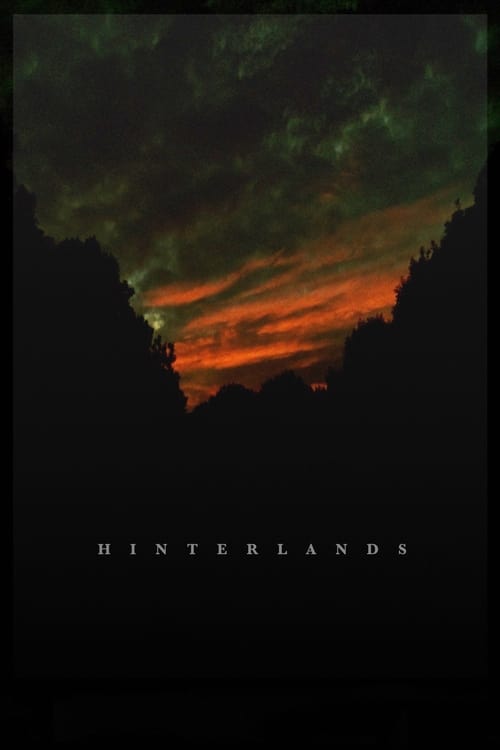
Through a structuralist and simultaneously ambiguous form, the image's reality treads closer to the abstract, leaving the sunset and trees behind. As we enter the image's gloaming, it reveals its true eye: reality's pure haptic energy, where there is nothing but sonorous light, and the dregs of the Unknown.
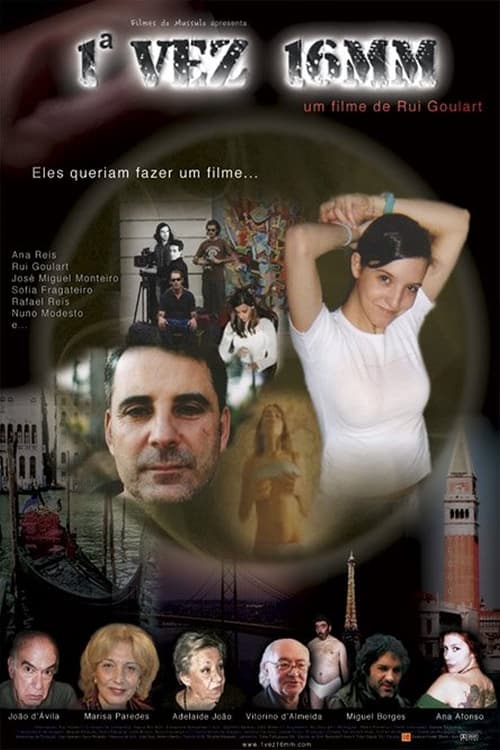
Miguel, a debutant director, and his young team live a series of tribulations during the shootings of their first film, which unrolls between Lisbon, Venice, Paris and Madrid.
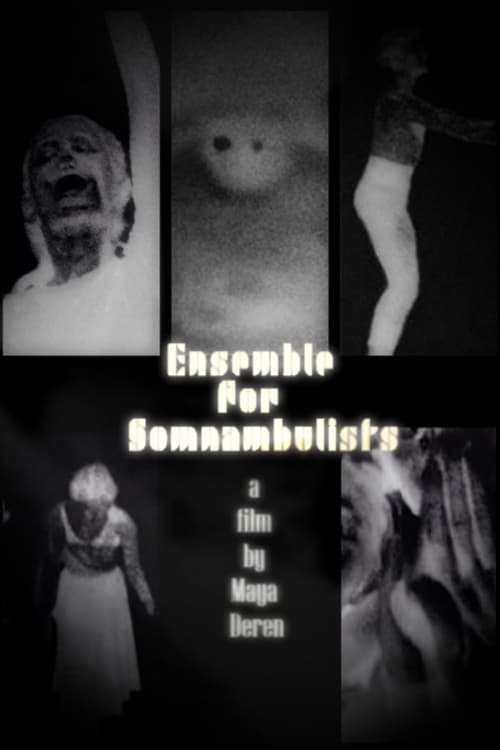
Ensemble for Somnambulists was a film Maya Deren made while teaching a workshop at the Toronto Film Society. It was never completed, and is officially "unpublished," but this title has been restored and it screens occasionally along with her other films. It is sort of a preliminary sketch for The Very Eye of Night. ~ David Lewis, Rovi
No Cast found.