An American tourist on a day trip to Sussex from London inadvertently finds himself at Glyndebourne Opera House in Sussex where he learns to appreciate Opera.
Virginia
Lady Falconbridge
Cornell
First Gentleman
Second Gentleman
No Trailers found.
No overview available.
Franco Zeffirelli's magnificient staging of Puccini's final opera - a fairy tale set in a mythical China - is one of the most popular in the Met repertory. In this Live in HD production, Maria Guleghina takes on the title role and Marcello Giordani is Calaf, the unknown prince. Marina Poplavskaya and Samuel Ramey co-star, and Andris Nelsons conducts in his Met debut.
The first words uttered by Carmen mark one of the greatest entrances in the history of opera and express all that need be said: “Love is a rebellious bird that no one can tame…” With a devilish sway of the hips and a hint of Andalusian flair, the beautiful cigar-maker sets her sights on a soldier: Don José. Fate will do the rest.
Lincoln Rhyme was the department's top homicide detective and leading expert in criminal forensics until an injury left him paralyzed, depressed, and incapable of working. But when a gruesome murder in Manhattan leaves detectives baffled, they call on Rhyme to help solve the mystery. Amelia Donaghy, a rookie cop whose quick thinking preserved a gruesome murder scene, is enlisted by Rhyme to be his on-the-scene forensics expert. With Amelia reluctantly acting as Rhyme's able-bodied go-between, the pair piece together cryptic clues the killer leaves behind at the scene of the crime, hoping to catch the grisly serial killer.
Opera lies at the heart of Rimsky-Korsakov's colourful idiom, but performances are few and far between; this realisation of his penultimate and grandest stage work is a very rare and special experience. Kitezh is known as "the Russian Parsifal", which encapsulates its mystical flavour and steady unfolding of a legend of redemption
Two strangers become dangerously close after witnessing a deadly accident. On a beautiful cloudless day a young couple celebrate their reunion with a picnic. Joe has planned a postcard-perfect afternoon in the English countryside with his partner, Claire. But as Joe and Claire prepare to open a bottle of champagne, their idyll comes to an abrupt end. A hot air balloon drifts into the field, obviously in trouble. The pilot catches his leg in the anchor rope, while the only passenger, a boy, is too scared to jump down. Joe and three other men rush to secure the basket. But fate has other ideas...
Beverly hills dowager leaves everything to Benny the Ball because her only rightful heir, her niece Amy, is missing. But that's only if Benny stays alive for 48 hours. If not, evil butler Snerdly and his mad Russian Wolfhound are next in line - and he's quick to pull every trick in the book to do poor Benny in and the troop sets off to rescue Benny and find the lost heir Amy.
Louis, the chef and Oscar, the head waiter, are in love with Mabel the pretty cashier. The Waiters' picnic is held, and Mabel is the cause of much trouble between Louis and Oscar.
Lal wants to start his tourist bus service and enlists the help of his brother-in-law, Das, who takes him to Chor Bazar, and for two Lakh Rupees assembles a hideous-looking bus to transport passengers from Bombay to Goa. Selling his tickets at a discount of 40 percent, Lal becomes the Conductor, while Das is the driver. Their passengers consist of Vetti Kutti Anna and his two bar dancer daughters, Deepa and Lajjo; writer Aditya Chopra; a runaway couple, Abdul Karim Telgi and Husna Khekeda; a diabetic patient, Charandas amongst others. On the way they pick up an elderly male, Harley Davidson, and Dr. Kushal Bhardwaj, as well as India's cricket team, and a four-person Nautanki group. After letting some passengers, including the cricket team and Harley, alight, they subsequently find Harley dying after meeting with an accident. Before dying, Harley tells them that 20 years ago he had robbed a fortune in diamonds and jewelry which he has hidden in Madgaon, and hands them a map. The ...
The film follows the staging of the opera Olimpiade while at the same time exploring the dramatic life of its composer Josef Mysliveček, a friend and teacher of W. A. Mozart.
May, 1980. Man-seob is a taxi driver in Seoul who lives from hand to mouth, raising his young daughter alone. One day, he hears that there is a foreigner who will pay big money for a drive down to Gwangju city. Not knowing that he’s a German journalist with a hidden agenda, Man-seob takes the job.
When Victor attempts to seduce Elena, all he gets for his trouble is a one-way, six-year ticket to prison, where he concentrates on strengthening his mind, his body... and his desire for vengeance on the man who put him there. After his release and still madly in love with her, Victor will stop at nothing to win her over even if means revenge, for Elena has married David, the cop who sent him to prison!
Disciplined Italian composer Antonio Salieri becomes consumed by jealousy and resentment towards the hedonistic and remarkably talented young Salzburger composer Wolfgang Amadeus Mozart.
Set in the callous streets of L.A., a group of sleep deprived cab drivers are changed forever by the arrival of a mysterious new cabbie and the events of one incredible week.
A quintet of cabbies in five cities and their remarkable fares on the same eventful night.
The mostly true story of the legendary "worst director of all time", who, with the help of his strange friends, filmed countless B-movies without ever becoming famous or successful.
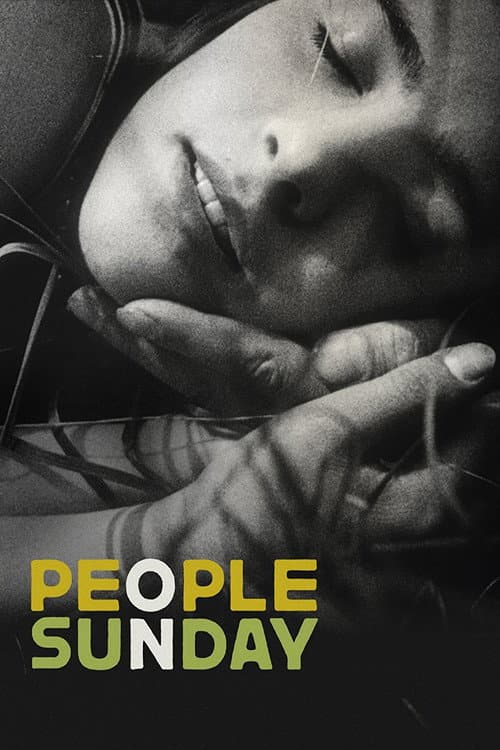
A semi-documentary experimental 1930 German silent film created by amateurs with a small budget. With authentic scenes of the metropolis city of Berlin, it's the first film from the later famous screenwriters/directors Billy Wilder and Fred Zinnemann.
Shows the perils of Mauricio Montoya’s passion for a fading opera singer.
Live broadcast of the opera performance held on November 10, 2012 at the Opéra national de Lorraine in Nancy, performed by five world-class countertenors.
During World War II, two French civilians and a downed British Bomber Crew set out from Paris to cross the demarcation line between Nazi-occupied Northern France and the South. From there they will be able to escape to England. First, they must avoid German troops – and the consequences of their own blunders.