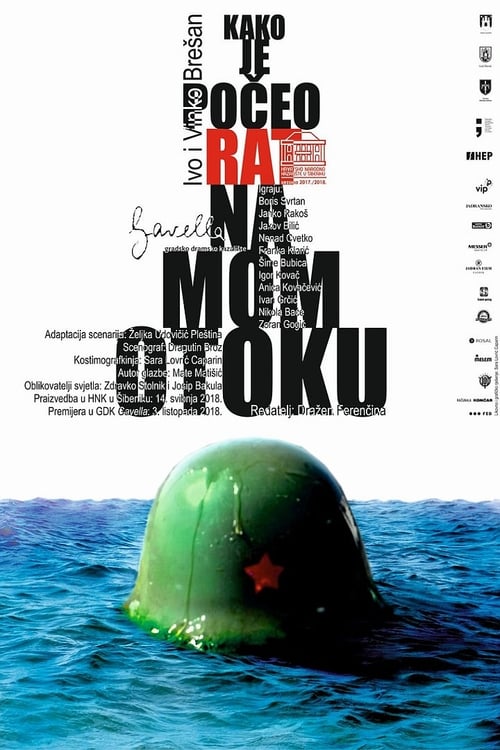
Destinies of few people from Dubrovnik, as well as Croatian fighters against Yugoslav People's Army in the battle of Srdj, mountain behind the town's walls.
No Trailers found.
Ana
Ivan
Miho
Tom
In this sun soaked adventure for the entire family, a group of five orphaned children form their own makeshift family while attempting to operate outside the rules of society. Though they must sometimes steal to survive, their loyalty to one another means that they will always have a brother or sister to count on.
A beautiful but ailing girl is married to a harsh man who doesn't care for her. Only after she dies does he realize that he actually loves her.
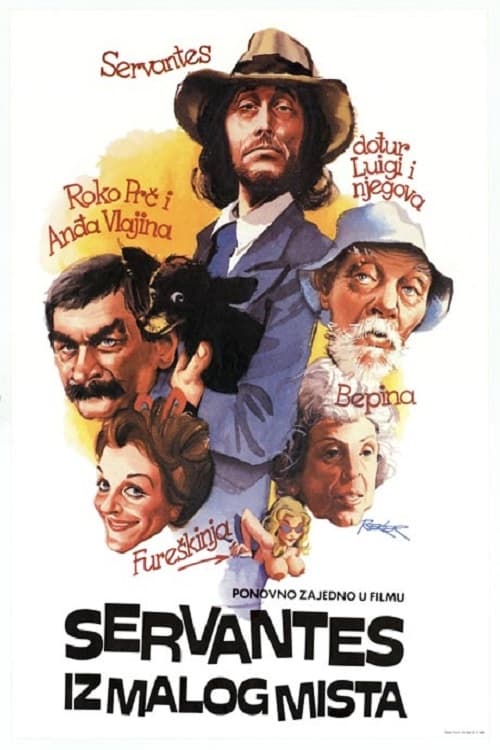
'Malo Misto' lives its own life, but not far behind the times. Hotel manager Roko Prč strives to organise tourism, so he introduces the first nudist beach. His wife Anđa brings two of her cousins from the Dalmatian hinterland and demands Roko to hire them. One of them, a young man named Ikan, earns the attention of a beautiful Swedish tourist. From Chile to Malo Misto returned Tonči, nicknamed Servantes, of course, without any money. He fell on the back of his hardworking aunt Keka, who even without him has enough problems of her own. Servantes also experiences an unexpected romance.
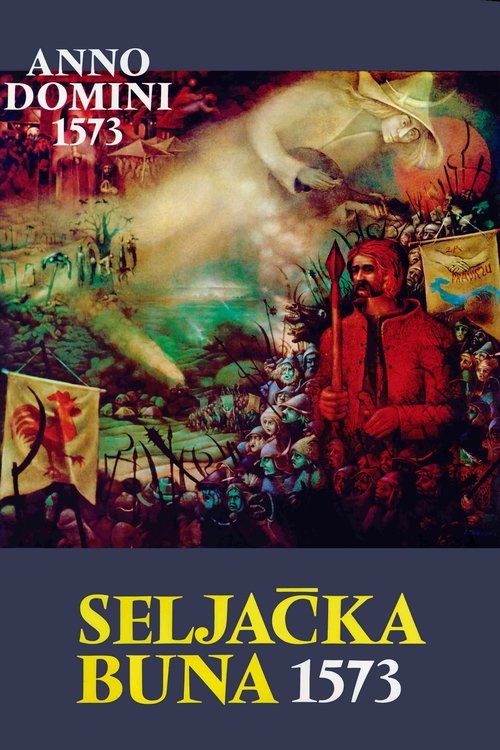
Europe in second half of 16th century was very rough place to live. Peasants of Slovenia and Croatia had even rougher times because of the constant threat of Turk raids and being taxed to death in order to provide defence against the Turks. But, the worst things were arrogant local feudal lords led by Franjo Tahi who were oppresing the common folk. All that led to the great peasant revolt of 1573. The movie is made for the 400th anniversary of the event.
The story of German minority members who, after escaping from Wehrmacht, form a partisan unit named "Ernst Thalmann" in eastern Croatia. The focus is a family whose members fight on different sides of the barricade.
Family tensions are slowly eroding what should have been a carefree summer for the young boy Jakov. A series of events ending in tragedy will incite his emotional revolt against the grown ups, but also his sense of guilt.
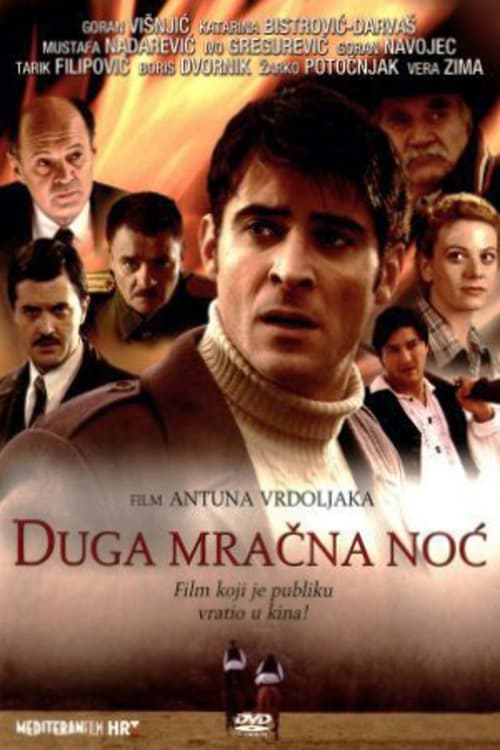
"Long Dark Night" follows the life of the fictional character Iva Kolar: his experiences as a Croatian University student, his role as a Partisan fighting Hitler's troops during W.W. II, his involvement in his nation's post-war government, and his eventual downfall.
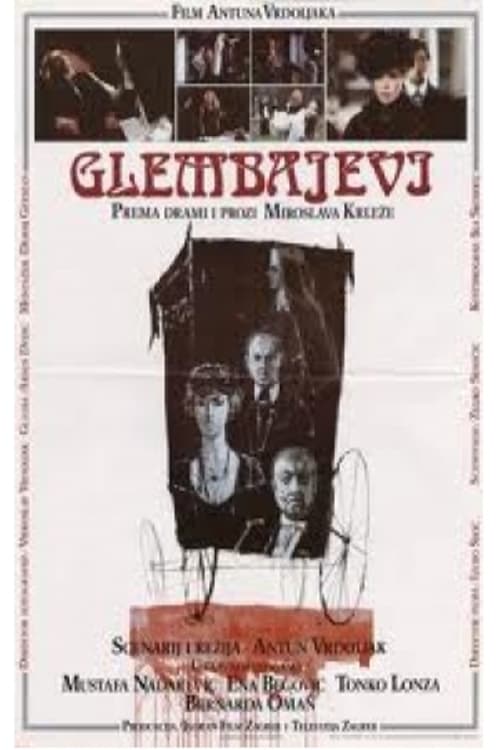
The Glembays of Zagreb are a rich family cursed with tragedies and haunted by sinister past. Leone Glembay, a rebelious son of the family patriarch, is becoming disgusted with hypocrisy, perversion and crime that runs in the family.
The adventures of a small town Croatian family during the 1960s. The decade will leave eternal marks on all of their members, but most of the story focuses on the youngest one, a boy, Frula, who discovers the love and fashion of the time.
A doctor opens an ordination in the abandoned house of his parents which is supposedly haunted by ghosts, as claimed by its only tenants - the old servant and two maids. He starts having nightmares in which a pretty and young girl shows up.
After her husband's death in Germany, an attractive young widow leaves his native village in Herzegovina to work abroad. There she starts an affair with an Italian worker that proves to be unsuccessful, yet she gets pregnant. She does an abortion, which is followed by another blow - her godfather Luka steals her hard-earned money.
A story about a forbidden love set in a village threatened by swollen rivers. Upon his return home for his father’s funeral, Slaven revives his relationship with his childhood friend, a young sportsman named Marko, his teenage love, and the reason his father kicked him out of the house. Now tempted to reunite, they need to make peace with their own decisions and struggle against the family restraints.
Next to a small Dalmatian town of Murvice oil was found, and politicians make a hasty decision to build a tanker port, although there is no oil in the quantities required for exploitation. Urged by his ambitious wife, the engineer Slobodan Despot becomes director of the port construction, which his wife's lover skillfully exploits to use Despot as scapegoat. The construction of unprofitable airport gradually destroys the patriarchal structure of Murvice, as well as Despot's personal life and ideals, which he tried to restore by having affair with the young and unspoiled girl.
Communist party commissar Ivica is sent to the lowland village to monitor the local partisan squad. Despite their disagreements he befriends their leader Dikan and they plan to evacuate the chief headquarters. Dikan also sees the opportunity to have his personal revenge on an enemy officer, responsible for death of one of his men.
At the beginning of 1991, Yugoslav army did not acknowledge Croatian's independence, and still holding few military barracks in Croatia. Gajski travels to an island to get his son out of the army. Locals have besieged the barracks and organized a festival to try with singing and recitals to get major Aleksa and his soldiers to surrender, but Aleksa has explosives thru the barracks and wants to blow up the island.
A young countess, Nera Keglević, is fighting against believing in witches by using witchcraft. But the problem is that local judge Krajačić is accusing Nera to be witch for revenge.
A trip to Croatia to celebrate Inger's 60th birthday. The whole thing sounded like a great idea until Inger caught her husband having an affair. When the plane takes off for Split the depressed Inger and her two daughters, much too sensible Malin (35) and chaotic Tove (32) are on board. Tove has to struggle to be included in Inger and Malin's circle, the sister's rivalry over their mother is so strong it quickly escalates into a competition of who can comfort Inger the best.
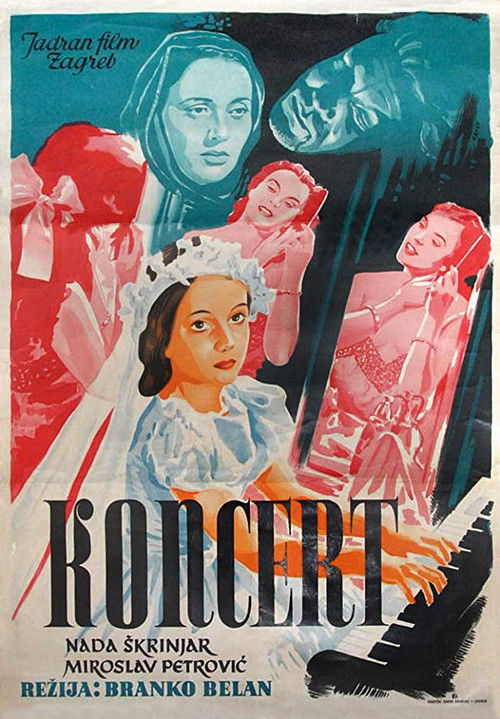
Celebrating the end of World War II and liberation of their city, a group of students is set on holding a cultural evening. They invite Ema, a reclusive piano teacher from the same building, to play for them. Ema declines, but starts reminscing back on her own life and the historical events that have seemingly overshadowed it.
Movie adaptation of the history novel by August Senoa, about Matija Gubec, the leader of peasant revolt of 1573.
The year is 1940, Croatian coast, Kingdom of Yugoslavia. Jakov, a poor peasant from hinterland, and his daughter Mala, go to the city, trying to find a job to repay a debt...