logologo
MovieVerse© 2024
Privacy PolicyTerms of ServiceContact Us
Made with ❤️ by Thathsara
movie poster
La máscara de la conquista
Sign in to create your own watchlist

La máscara de la conquista

Jan 1, 1986
1h 25m
★ 0.0

Overview

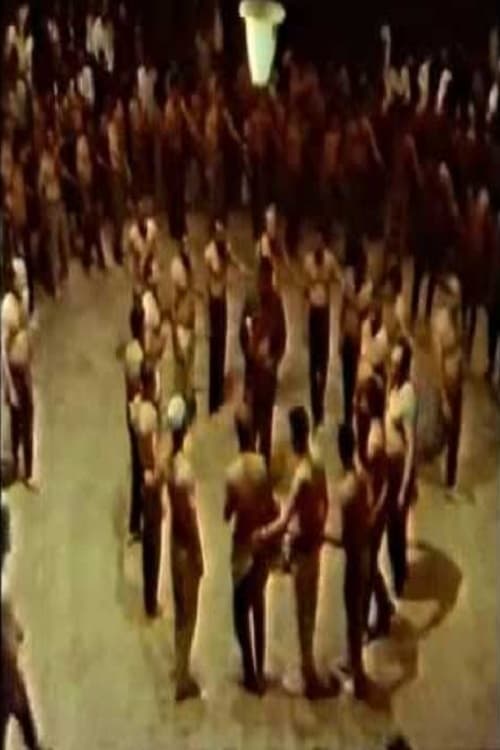
The film tells two parallel stories. One, set in the present, tells of a pagent about the conquest of America, while the other, set in the 15th century, tells of a group of conquistadors coming ashore searching for gold. The film takes place in an unnamed country.

Genres

Documentary

La máscara de la conquista Trailers

No Trailers found.

You may also like

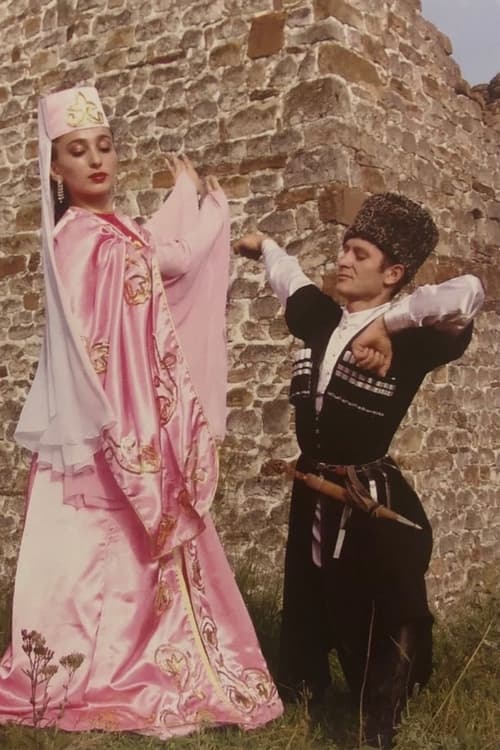
Melodies of the mountains
0.0

Melodies of the mountains

Jan 1, 2006

Film about the singing and dancing culture of the Ingush people

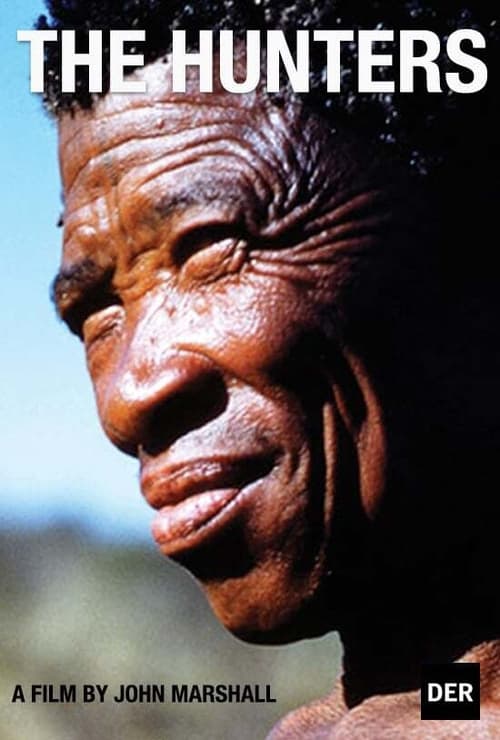
The Hunters
6.1

The Hunters

Jan 1, 1957

An ethnographic film that documents the efforts of four !Kung men (also known as Ju/'hoansi or Bushmen) to hunt a giraffe in the Kalahari Desert of Namibia. The footage was shot by John Marshall during a Smithsonian-Harvard Peabody sponsored expedition in 1952–53. In addition to the giraffe hunt, the film shows other aspects of !Kung life at that time, including family relationships, socializing and storytelling, and the hard work of gathering plant foods and hunting for small game.

Congo
5.8

Congo

Jan 1, 1972

An experimental ethnographic documentary that criticizes the colonizer view of anthropology.

Live, song, live!
0.0

Live, song, live!

Jan 1, 2022

The film tells the story of ancient Ingush lullabies - Ingush women and men tell the lullabies of their families and the stories associated with them: love, friendship, blood feud.

Naked Spaces: Living Is Round
5.0

Naked Spaces: Living Is Round

Oct 1, 1985

Shot with stunning elegance and clarity, NAKED SPACES explores the rhythm and ritual of life in the rural environments of six West African countries (Mauritania, Mali, Burkino Faso, Togo, Benin and Senegal). The nonlinear structure of NAKED SPACES challenges the traditions of ethnographic filmmaking, while sensuous sights and sounds lead the viewer on a poetic journey to the most inaccessible parts of the African continent: the private interaction of people in their living spaces.

No Image Available
5.1

Kwaheri

Dec 9, 1964

Early Mondo film featuring primitive rituals, animals being butchered, unusual birth defects, and a legit trepanation scene.

La Nación Oculta
0.0

La Nación Oculta

Jan 1, 2011

Ñaalec (Fabián Valdez) is a Moqoit college student disenchanted with formal ways of learning and embarrassed by his drunken classmates. He seeks to recover his people's culture by learning from elders who still remember the old ways. Ñaalec travels to the Nanaicalo Nqote ("eye of the dragon"), a sacred lake whose water gave people the power of the gods. This docudrama is part of a series of community-created films supported by CEFREC (led by Iván Sanjinés, son of legendary Bolivian filmmaker Jorge Sanjinés).

Funeral Chants from the Georgian Caucasus
0.0

Funeral Chants from the Georgian Caucasus

Jan 1, 2007

A short film set in the mountainous province of Svaneti, documents the performance of polyphonic men’s funerary laments common to the region.

No Image Available
0.0

Choqela: Only Interpretation

Jan 1, 1987

This provocative and profound film documents the Choqela ceremony, an agricultural ritual and song of the Aymara Indians of Peru. By offering several different translations of the proceedings, the film acknowledges the problems of interpretation as an inherent dilemma of anthropology.

No Image Available
0.0

Untitled

Mar 21, 2010

A revealing one-shot portrait of two Nepali newlyweds in a moment of rest and playful interaction, Stephanie Spray's Untitled challenges our perception of two themes at the very core of ethnographic filmmaking: human relationships and the ways in which they can be experienced by the viewer. Only fourteen minutes long, Untitled is uncut, rejecting the implications of edited sequences and also purposefully excluding subtitles over the couple's conversation. The style of the film confronts the history of ethnography as a controversial study of the "other" by refusing us any clear messages or meanings behind what is being presented, challenging the viewer to come up with their own answers to any questions that may arise.

No Image Available
0.0

Burial among the Tetela

Mar 22, 2023

Short ethnographic documentary on the Tetela tribe in Congo based upon footage and commentary by director Luc de Heusch from 1953 reassembled by Damien Mottier (Université Paris Nanterre) and Grace Winter (CINEMATEK).

He Is God
0.0

He Is God

Jan 1, 1965

About the "concheros", dancers in México City that keep aztec traditions alive.

Ghostland: The View of the Ju'Hoansi
8.3

Ghostland: The View of the Ju'Hoansi

Nov 2, 2017

Remember the culture clash in THE GODS MUST BE CRAZY? This time it's real. One of the most ancient cultures on our planet is undergoing a major change. The Ju/Hoansi Bushmen in Namibia are not allowed to hunt anymore and need to converge with our so called “civilized” lifestyle. For the first time the Ju/Hoansi Bushmen travel through the Kalahari and then right into the heart of Europe. What starts as a look at their fascinating culture becomes an even more fascinating look at our Western lifestyle. A warm and humorous reflection of our habits through the eyes of people who are about to give up their million year old traditions.

Banks of the Nile
5.0

Banks of the Nile

Jan 1, 1911

With a dual motion a cruise ship and a fishing boat pass one another on the Nile and butlers in turbans set up a wooden gangway. Thanks to a rope and pulley system cows climb skywards then disappear into the hold of the sailing vessel. On the bank, black-haired women rock back and forth, bursting out laughing and showing the first signs of going into a state of trance. Never-before filmed gestures and faces of the people of the Nile succeed one another, uprooted to an unknown, magical world. The Banks of the Nile is one of the first experiments of film in colour that uses the Kinemacolor process.

No Image Available
0.0

L'île de Pâques

May 24, 1935

The first Easter Island documentary, filmed in 1935 when the Belgian naval ship Mercator came to collect Drs. Henri Lavacherry and Alfred Métraux, who had arrived six months before to carry out archaeological and ethnological work. The film, directed with melodramatic gusto and featuring a full orchestral score by Maurice Jaubert (who also did the narration), shows islanders, the monuments, and a public dance. A theme of decay and decadence characterizes the film, the motif portrayed gruesomely by extensive close-ups of the inhabitants of the leper colony there at the time. The film suited a romantic image of a mysterious lost civilization, the survivors eking out a pitiful existence on a barren rock. (Grant McCall)

No Image Available
5.7

Moulin à homme pour l'arrosage des rizières

Jul 14, 1899

A man demonstrates a human-powered water wheel that irrigates a rice field.

No Image Available
4.3

Nègres Ashantis: Toilette d'un negrillon II

May 16, 1897

A woman from the Ashanti tribe bathes her child in a shallow bowl.

Barrage du Nil
4.8

Barrage du Nil

Apr 18, 1897

Travellers, nomads and salesmen make their way along a dam next to the Nile.

No Image Available
5.0

Esquimaux Game of Snap-the-Whip

Aug 8, 1901

“The picture [shows] a number of Esquimaux picking nickels from cracks in a board with their dog whips, in which sport they are very expert. In the background will be seen one of their "Topeks," a sealskin tent in which they live during their short summer.” (Edison catalog)

No Image Available
5.2

Japonaise faisant sa toilette

Jul 14, 1899

A young woman in traditional Japanese attire fixes her hair and kimono while her servants assist her.

Cast

Victor Schajovitsch

Victor Schajovitsch

Ricardo Antuña

Ricardo Antuña

Walter Becker

Walter Becker

Rudy Lostra

Rudy Lostra

Jorge Paz

Jorge Paz

Eduardo Cid

Eduardo Cid

Pablo Igol

Pablo Igol

Enrique Marinoff

Enrique Marinoff

Nico Miraviglia

Nico Miraviglia

Janet Simonetta

Janet Simonetta

Graciela Pignataro

Graciela Pignataro

Luis María Carrizo

Luis María Carrizo