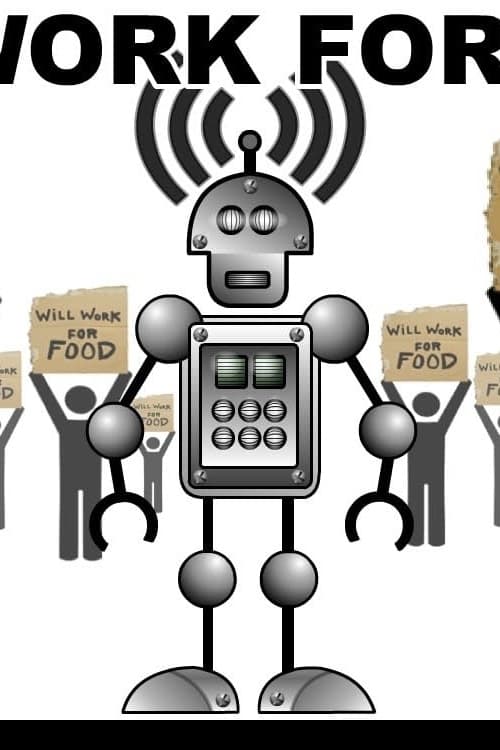
The film explores the potential for automation in every sector of employment and questions the integrity of our methods of resource distribution going into the future.
No Cast found.
No Trailers found.
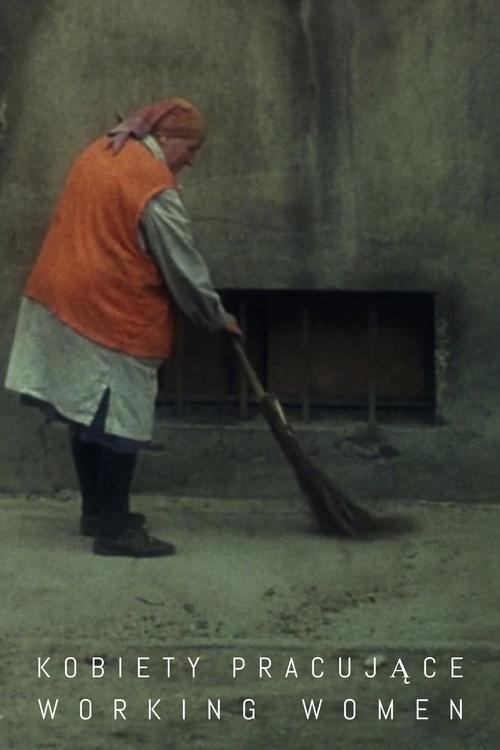
This documentary follows a group of women on a typical workday as they prepare meals for a dockyard in Rostock. The viewer never learns their names - there are no interviews. The women are presented simply as workers: cooking, cleaning, hauling, and serving dishes amid clanking pots and hot steam.
No overview available.
Short film for Vice Media about the illusion of stability, freedom, and prosperity in the West, comparing it to life in the Soviet Union during the 1970s. Ends with a trailer for HyperNormalisation.
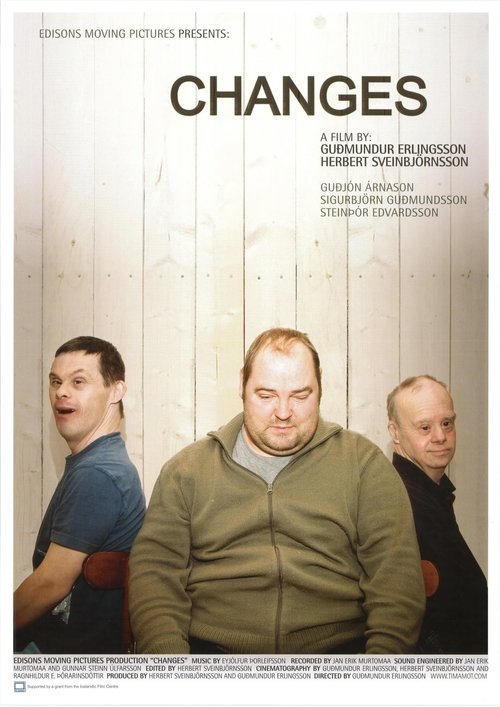
Tímamót, or Changes in English. An upbeat, heartwarming story about Gudjon, Sigurbjorn and Steinthor who lived together for decades along with several other inhabitants in the Tjaldanes Institution, in a peaceful valley close to Reykjavik. When a decision is made to close down the institution, their life takes an unexpected turn and they discover a new side to life and to themselves.
A feature-length documentary about being in corporate America... but as a catfish? A corporate catfish? A white corporate catfish?
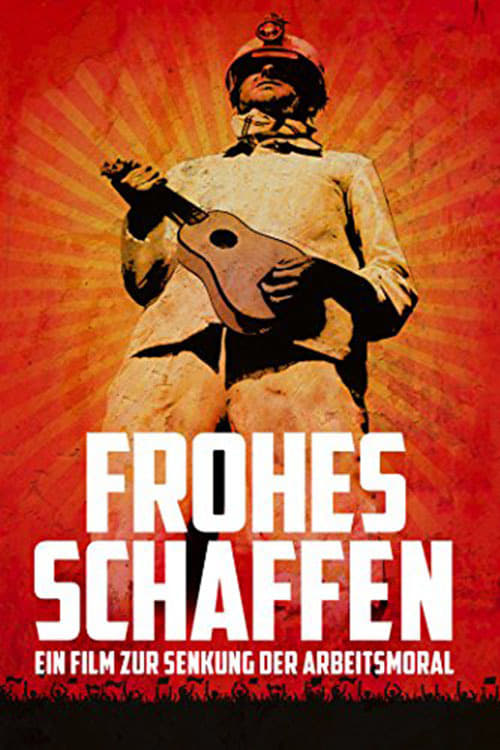
It is a fetish, a mantra, a secret religion to modern man: work. In times of the financial crisis and massive job reductions, this documentary movie questions work as our 'hallow' sense in life in a way that both humors and pains us.
Narratives are tales that unintentionally define our personality. In the case of women, being beautiful is the only way. The film shows how we learn to be obsessed by the visual itself, and how the highest compliment to a woman is always beauty.
You've never heard of Jonathan Hoefler or Tobias Frere-Jones but you've seen their work. They run the most successful and respected type design studio in the world, making fonts used by the Wall Street Journal to the President of the United States.
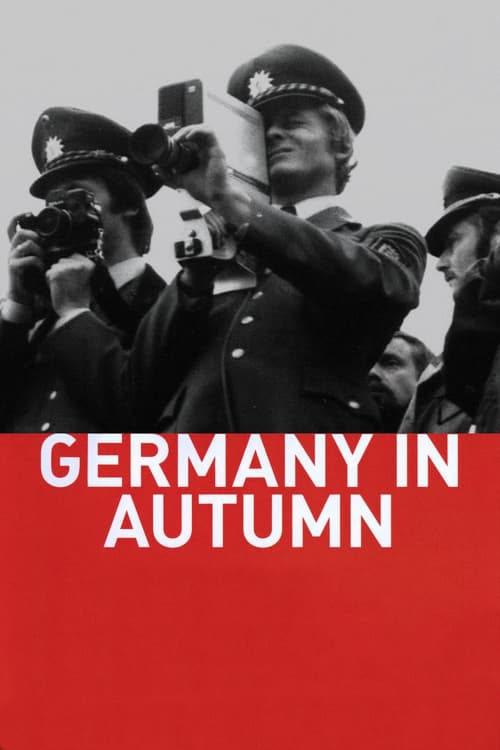
Nine fictitious documentaries and films reflect the mood of late 1970s Germany, particularly the two-month period in 1977 when a businessman was kidnapped by the RAF (Red Army Faction). The kidnap had been made to orchestrate the release of the original leaders of the RAF, aka the Baader-Meinhof.
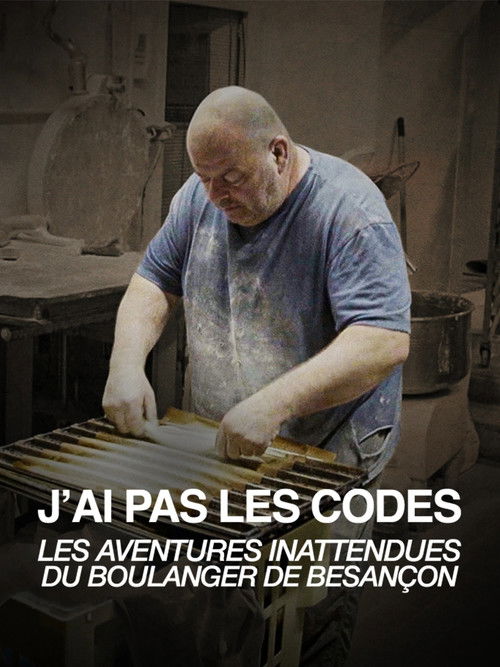
This is the story of an ordinary man transformed by history. A simple baker from Besançon who became a political symbol of resistance. That of a France that knows how much it needs others to grow. Of working classes rejecting the siren calls of populism. He says: "I was nothing and I became a monster" to express the vertigo of his transformation. And so the baker entered politics, visited the United States in the footsteps of Martin Luther King, brought aid to the Ukrainians, and ran for legislative elections. Fearless. Fighting with all his heart. It is this inspiring, touching, and funny human epic that Pedro da Fonseca's camera followed closely, capturing his doubts, his hesitations, and his emotions.
Why do people vent such toxic opinions online? Filmmaker Kyrre Lien spent three years travelling the world to find out who these anonymous ‘internet warriors’ are and why they do it.
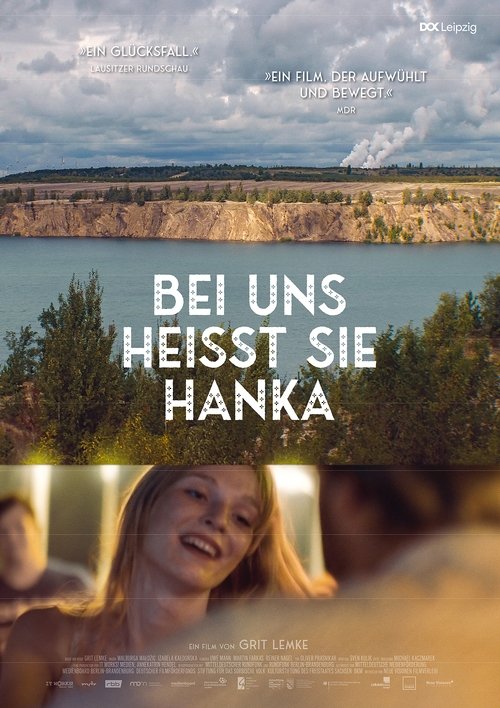
A green lawn like an unused carpet, encircled by a neat forest edge, in the background the steaming cooling towers of a coal power station – impressionistic camera images from Lusatia. They summarise in one pan how a used-up utilitarian landscape is trying to recultivate itself. Can ancient identity and language be re-discovered amid this strange artificiality? The director travelled through this region in search of her origins. She was born here, in Lusatia. This is her home and that of the smallest of all Slavic peoples: the Sorbs.
Stylized with dramatic interiors and a distorted frame rate, this early documentary miniature from Szulkin depicts six sequences of solitary, repetitious labor.
This film is part of a project that has listened to over 40,000 people on masculinity issues and has resulted in a documentary and a tool book based on this publicly available study through an agreement with the Social Information Consortium (CIS) of the University of São Paulo.
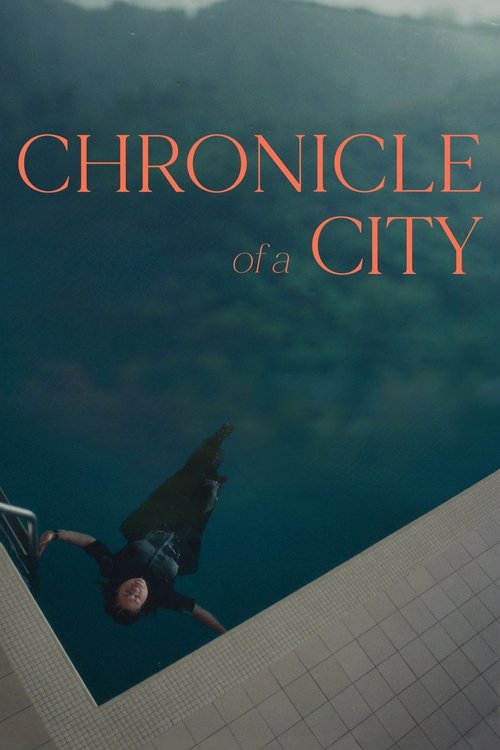
A patchwork of millions of lives, urban spaces are not only streets and concrete. They are where our dreams and deepest worries unfold. Chronicle of a City drifts and strolls through time and chance encounters, moving between fantasy and reality, echoing the intimate and ghostly voices of our metropolises, reminding us that we inhabit The City as much as it inhabits us. This roaming essay is a visual and sonic meditation that invites us to see urban life as a web of sensations that move through us and draw us closer to one another, even in the midst of solitude.
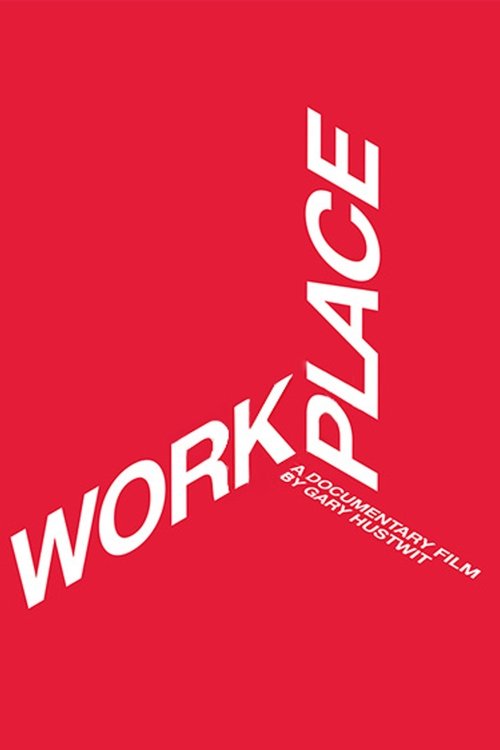
Workplace is a documentary made by Gary Hustwit, in association with R/GA, for the 2016 Venice Architecture Biennale.Workplace is about the past, present, and future of the office. It looks at the thinking, innovation, and experimentation involved in trying to create the next evolution of what the office could be. The film follows the design and construction of the New York headquarters of digital agency R/GA (in collaboration with architects Foster + Partners) who have been experimenting with how physical and digital space can better interact. Digital technology has radically changed how and where most of us work, but the physical spaces we work in haven’t kept up with that transformation.
Claude Lelouch was a Jewish child in occupied France. In this documentary, he talks about the trauma he still feels from that experience, but also how it inspired him to become a filmmaker. The 1940s appear to be a formative period, key to understanding the work and career of this famous director, whose films and life have always been inseparable.
A young man, convicted murderer, has a chance of redemption when he enters the best Italian university of economics, going back and forth from prison to university every day.