No Trailers found.
Pavel Soukup
Vlasta Švecová
Otakar Švec
Jirka Hušek
Klára
Jitka
Jan Lauda
Václav Kopecký
Dr. Klíček
Zdeněk Nejedlý
Honza Pavlinec
Šmíd Jr.
This story starts in 1980 in Paris as the memories of Andrei Borodin, a Soviet agent, take the action back to 1943 during the Teheran meetings of Stalin, Roosevelt and Churchill. A high-ranking Nazi officer developed a plan to assassinate the three world leaders in order to undermine the Allied forces. He commissioned the German agent Max Richard to carry out his plan, but it failed miserably due to the quick action and thinking of Andrei. While in Teheran, Andrei met a French woman, Marie Louni, living in the city and they had a brief but intense affair. Nearly four decades later, the Nazi officer has been captured - but not for long. Freed by terrorists, the officer is hunting down the German agent who failed to carry out the planned assassinations. Max lives at Françoise, a young French woman, who hides him.
When two teenage girls plot to steal liquor for themselves, their plan goes awry when they decide to visit their old piano teacher who's developed dementia.
Hugh Whitemore adapted Bruce Chatwin's novel for this tale of a New York antique dealer who travels to Prague to buy the porcelain collection of the late Baron Utz, only to become embroiled in the wreckage of the dead man's unusual life history after he discovers that the collection is missing.
After his father is murdered by the Nazis in 1938, a young Viennese Jew named Ferry Tobler flees to Prague, where he joins forces with another expatriate and a sympathetic Czech relief worker. Together with other Jewish refugees, the three make their way to Paris, and, after spending time in a French prison camp, eventually escape to Marseille, from where they hope to sail to a safe port.
The film depicts the fate of the residents of an apartment block in Prague’s Jewish quarter following the invasion by German troops in 1939. Among them is an elderly widow who had once disowned her son and now wishes to bring him to Brazil; there are also the owners of a stationery shop, who are driven to ruin by the German occupiers. The caretaker Glaser, who is of German descent, also comes under pressure when his son is arrested in a communist pub. To save his own skin, he informs on two young people who are active in the resistance.
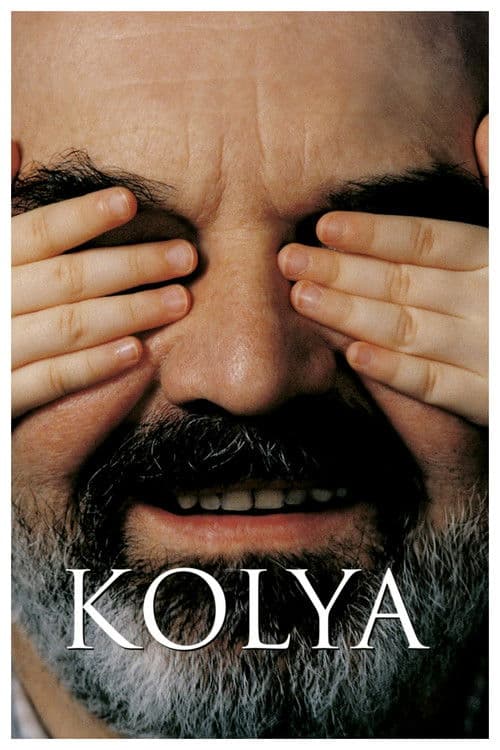
After a fictitious marriage with a Russian emigrant, Cellisten Louka, a Czech man, must suddenly take responsibility for her son. However, it’s not long before the communication barrier is broken between the two new family members.
Xander Cage is your standard adrenaline junkie with no fear and a lousy attitude. When the US Government "recruits" him to go on a mission, he's not exactly thrilled. His mission: to gather information on an organization that may just be planning the destruction of the world, led by the nihilistic Yorgi.
Christoffer and Maja's trip to Prague to bring back Chistoffer's deceased father, evolves into the story of a break-up. With the dead father lurking in the background, secrets gradually emerge threatening to destroy their marriage.
A married couple working together at a pinball museum explore the state of pinball and what it means to them.
A disturbing chapter in Russian history is explored in this documentary. In 1933, Joseph Stalin sent 6000 "unwanted" citizens of Moscow and Leningrad to a desolate Siberian island - with no food or clothes to speak of. Decades later this documentary returns to the island.
A man (Richard Roxburgh) the Australian government blames for 1990s political woes blames his mother (Judy Davis), a communist Stalin seduced in 1951.
Successful surgeon Tomas leaves Prague for an operation, meets a young photographer named Tereza, and brings her back with him. Tereza is surprised to learn that Tomas is already having an affair with the bohemian Sabina, but when the Soviet invasion occurs, all three flee to Switzerland. Sabina begins an affair, Tom continues womanizing, and Tereza, disgusted, returns to Czechoslovakia. Realizing his mistake, Tomas decides to chase after her.
On the stormy night of July 5th, 1995, Trick Stuart works the graveyard shift with his plus-sized pal Meathead at the Delta Kream, a 24HR fast food joint. As they practice their brass band routine, a very unexpected visitor arrives.
A short film by Barry Lowe and Dino Mahoney, starring Pauline Burton as Anna. The film is an introduction to the great Soviet era modernist poet, Anna Akhmatova; shot in winter in Saint Petersburg (Leningrad), it contains rare interviews with people who knew her, academics, and dramatized readings of some of her poems.
A historical drama about the tragic fate of Nadezhda Alliluyeva, a woman who remained in the shadow of her husband Joseph Stalin. In 1918, 16-year-old Nadezhda married 38-year-old Joseph Stalin, a close friend of the Alliluyev family. The love of Nadezhda and Joseph develops against the backdrop of important historical events - revolutions, wars, arrests, and every year Stalin seizes more and more power. Realizing the terrible essence of her beloved husband, Nadezhda still remains faithful to him. But how long can she withstand this struggle with herself?
Czech painter and illustrator Alphonse Mucha (1860-1939) ranks among the pioneers of the Art Nouveau movement at the end of the 19th century. Virtually overnight, he becomes famous in Paris thanks to the posters that he designs to announce actress Sarah Bernhardt’s plays. But at the height of his fame, Mucha decides to leave Paris to realize his lifetime project.
The lives of many people in one Serbian town are changed after Tito's breakup with Stalin.
Otakar Vávra walks through Prague in front of the camera and with the camera, and remembers those who in the 1930s determined the pulse of the cultural and political life of that time.
A dance troupe from the autonomous region of Abkhazia in western Georgia perform for Stalin, Lavrentiy Beria, Abkhaz leader Nestor Lakoba, and other high-ranking party officials in the Black Sea coastal town of Gagra.
In late 1952, an aging and increasingly paranoid Stalin puts in motion a purge against his doctors, with antisemitic overtones. His lackeys, including Khrushchev, Molotov and Beria, fear it will spread to the Politburo, and plan to strike first.