Chronicles of a male homosexual drug addict in 1980's in voice-over with long take scenes from Rome, television snippets of news of Gulf War and commercials.
No Trailers found.
Man (voice-over)
What's it like starting a family when you're both transgender? This intimate film follows Hannah and Jake Graf on a journey through prejudice and surrogacy to birth during lockdown.
Paco and Manolo are two Catalan photographers from the outskirts of Barcelona who have been working together for thirty years as if they were a single person, capturing their images in Kink magazine, a very personal photography fanzine with a homoerotic aesthetic of Mediterranean essence.
This documentary aims to register this unknown side of James Joyce: His Greek Notebooks. Trieste. Bloomsday, 2013. Dance in slow motion, accompanied by text. By deconstructing the body, we turn it into a memory: of the body, of life, of texts. The biographical references to Joyce and Mando Aravantinou, combined with the diagonal slicing of the image, cancel the realism of the landscape, including that of the Narrator’s space/study. As a culmination, Joyce’s letter “A request for a loan in Greek” functions as a timely denunciation. Various routes through cities, such as Trieste, London, New York, and Athens; languages such as Greek and English. In addition to the primal myth of Ulysses, there is another issue: Greek is “the language of the subject of Ulysses”
A video-letter to Thomas Hoving, former director of the Metropolitan Museum of Art in New York and author of the unforgivable "Art for Dummies".
A documentary that brings to light the extraordinary story of the Sacred Band of Thebes – an elite military unit composed of 150 pairs of male lovers that became one of the most formidable forces of the ancient world. It delves into the history of this little-known chapter of classical antiquity through forensic archaeology, rare archival material, ancient art, and animation. It explores how the Sacred Band rose to prominence, met its tragic end, and continues to resonate in modern discussions of identity, heroism, and love.
German iconoclast filmmaker and gay-rights activist Rosa vonPraunheim examines his own life and career in the documentary Phooey Rosa! With a quickly paced editing style, the film is a mix of personal banter, candid interviews, and clips from his filmography. It also includes footage from his early film Bed Sausage to his later work Neurosia. At the age of 60, vonPraunheim reveals intimate details about his past relationships and his childhood growing up after WWII. He also implicates some of his friends and inspirations, including Luzi Kryn and Rainer Kranach.
A young man tired of writing and rewriting a screenplay decides to begin a Super 8mm film diary. He films his parents and those close to him and determines to tell the about his homosexuality.
No overview available.
Since they were children, every summer they used to participate together in the traditional carnivals of their hometown. This magical celebration, transform men of the community into dionysiac figures with makeup, coloured costumes, glitter and feathers. Alcohol, friendship and parties out of control become the limelight. Boundaries get blurred with the heat of the sun at the edge of the imposing Paraná River.
This film explores what life was like for LGBTQ+ Royal Navy personnel serving under the ban on homosexuality in the military and how things have changed since the ban was lifted in 2000. We speak to Duncan who led the fight to overturn the ban; Ann who served during and after the ban was lifted; and Danny and Cole who both served after the ban was lifted. This collaboration was between filmmaker David Graham, the National Museum of the Royal Navy and the Royal Navy LGBTQ+ Network. The National Museum of the Royal Navy commissioned the film.
Second attempt to create a feature film out of the 200,000-plus feet of film which Soviet film-maker Sergei Eisenstein shot during 1931-32 in Mexico for American socialist author Upton Sinclair, his wife and a small company of investors. The projected film, to be called "Que Viva Mexico", was never completed due to exhaustion of funds and Stalin's demand that Eisenstein return to the USSR (he had been absent since 1929). The first attempt at editing the footage, in the USA, resulted in "Thunder Over Mexico", released in 1934. In 1940, Marie Seton, from the UK, acquired some of the footage from the Sinclairs in an attempt to make a better cutting according to Eisenstein's skeletal outline for the proposed film. This film has apparently been lost.
Stories of 12 gay and lesbian survivors of Nazism and the Holocaust.
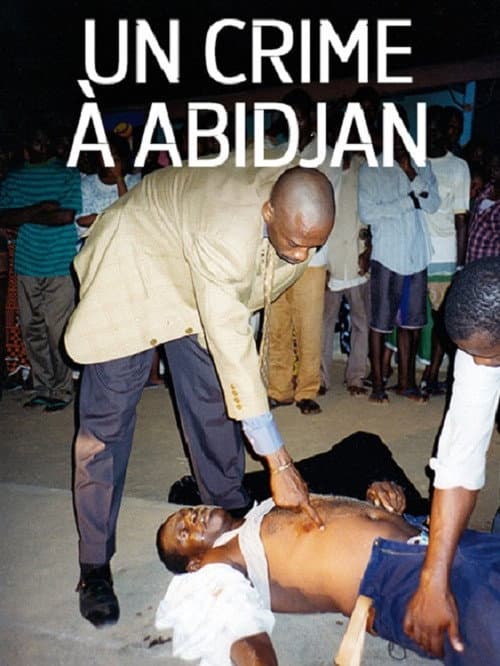
1995. On the outskirts of Abidjan, the largest city in Ivory Coast, a policeman is murdered. Shot outside his vehicle, while his fiancée sits in the car, terrified. Superintendent Kouassi is the detective in charge of the investigation. Tall and lanky, he moves with the tired energy of a man who has seen it all. Drawing on a network of underworld characters with dubious information, Kouassi’s team begins bringing in potential suspects and subjecting them to horrific brutality: beating them with sticks, hanging them upside-down, threatening their lives. Some of the men are left so broken they have to literally drag themselves into Kouassi’s office later, to be interrogated while lying on the floor, their bodies a mess of bruises, broken bones, and lacerations.
Trans man Stafford candidly tells the story of a memorable encounter he had at a sex club.
Imposed under the British colonial rule in 1860, Section 377 of the Indian Penal Code criminalise any sexual acts between consenting adults of the same sex, stigmatising them as 'against the order of nature'. On July 2, 2009 the Delhi High Court passed a landmark judgment scrapping this clause, thus fulfilling the most basic demand of the Indian LGBTQ community, which had been fighting this law for the past 10 years. Three characters, Beena, Pallav and Abheena travel through the city of Bombay heading to the celebrations for the first anniversary of the historic verdict. '365 without 377' is the story of their journey towards freedom.
Is culture accepting of difference? This is the vital question that Nova Scotia filmmaker Paul Émile d'Entremont asks in his film about difference and identity. Alone, Together charts the quest of two Acadians: Simon, who is trying to come to terms with his sexuality, and Cynthia, who is searching for for her biological mother.