Tells the story of the tragic events in Ukraine in 1932-33, the genocidal Great Famine or the Holodomor, and one Welshman's attempts to tell the world what was happening.
Dramatization of the time around the first Danish Social Democrats and the Battle of Fælleden. A social blockbuster produced for AOF.
The story of black and mixed race people in Nazi Germany who were sterilised, experimented upon, tortured and exterminated in the Nazi concentration camps. It also explores the history of German racism and examines the treatment of Black prisoners-of-war. The film uses interviews with survivors and their families as well as archival material to document the Black German Holocaust experience.
Five young Ukrainians discuss life following the Maidan Revolution of 2014. Not all fought in the Russian-Ukrainian war, but it, regardless, shattered their life plans. Representing 'Generation Maidan', they face the question of how to cope with experiences of violence, how to go on. A local theatre director produces Hamlet, wherein they can use Shakespeare’s tragic character as a mirror and face their traumas onstage. For them, 'to be or not to be' is not simply text but an existential dilemma with no clear answer.
Made refugees by the war in Ukraine, Olga and her granddaughter Milana travel to a summer camp in the Austrian Alps to test the limits of their own bravery, and to strengthen their growing bond.
They call each other Emmanuel and Vladimir - but despite the informal tone, a fateful negotiation is taking place. During France's presidency of the EU, President Macron takes on the task of negotiating with President Putin in an attempt to prevent an invasion of Ukraine. For the first time, we get to follow the diplomatic game behind the scenes and hear parts of their phone conversations.
The story of the Bugattis of Milan and Molsheim, the eccentric family behind the brand: Carlo, the patriarch and furniture designer; Rembrandt, the troubled sculptor; Ettore, the gifted engineer; Jean, the unfortunate heir. Art and design. Beauty and luxury. The fastest cars. Races. The need for speed.
An account of the life and work of Russian filmmaker Andrey Tarkovsky (1932-86) in his own words: his memories, his vision of art and his reflections on the fate of the artist and the meaning of human existence; through extremely rare audio recordings that allow a complete understanding of his inner life and the mysterious world existing behind his complex cinematic imagery.
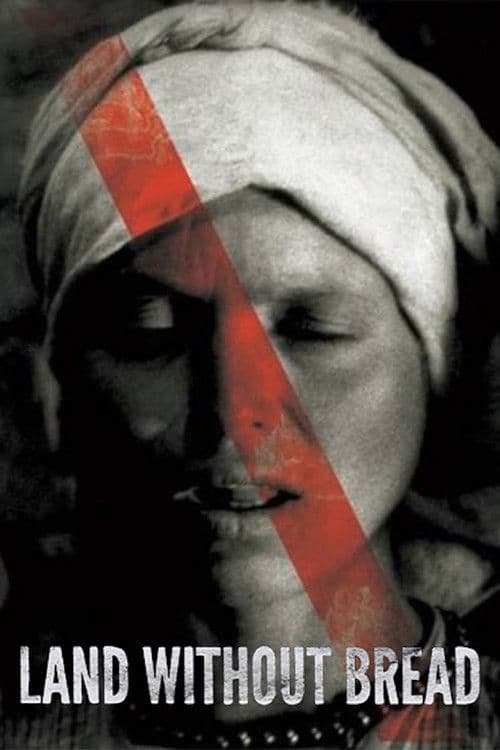
An exploration —manipulated and staged— of life in Las Hurdes, in the province of Cáceres, in Extremadura, Spain, as it was in 1932. Insalubrity, misery and lack of opportunities provoke the emigration of young people and the solitude of those who remain in the desolation of one of the poorest and least developed Spanish regions at that time.
Checkpoint Zoo documents a daring rescue led by a heroic team of zookeepers and volunteers, who risked their lives to save thousands of animals trapped in a zoo behind enemy lines in the Russian Invasion of Ukraine.
Two and a half years after the start of the full-scale invasion, Ukrainian artists and volunteers are heading to Burning Man to create a large-scale installation. Using road signs from deoccupied territories, they spell out the phrase "I'M FINE" — a symbol of how people hide their pain and try to persevere despite the circumstances. The sculpture becomes a place for meeting, reflection, and dialogue about war, trauma, and the strength of the Ukrainian spirit, demonstrating how art can become a platform for open conversation about painful experiences.
Charlie Marx and the Chocolate Factory started as an investigation of the link between politics and chocolate, at the Karl Marx Confectionary Factory in Kiev, Ukraine. Since access to the factory was denied, the project had to be re-considered, re-invented or re-enacted. Mostly made of archival footage and re-enacted performances based on the company's website, the film merges what was left of the initial idea with what has been collected and realized instead. It borrows from the genres of video art, 'Man on the street' interview, direct address, corporate film, essay, and music video, without legitimately belonging to any of them. The film unravels as a reflection on its own failure, and yet keeps on investigating what has always been at stake: the shift from public to private property (and from analog to digital technology), dialectics of permanence and change, language as a mirror of ideology, and post-Soviet oligarchy culture.
When a devastating famine descended on Soviet Russia in 1921, it was the worst natural disaster in Europe since the Black Plague in the Middle Ages. Examine Herbert Hoover’s American Relief Administration—an operation hailed for its efficiency, grit and generosity. By the summer of 1922, American kitchens were feeding nearly 11 million Soviet citizens a day.
This is a rare look at one of the worst horror stories in the long infamous history of warfare. This series features captured German and Russian film footage, much of which has never been seen before. For decades the Cold War prevented us from looking closely at what really happened between the Russians and the Germans on the Eastern Front during World War II. More than a struggle between nations, it pitted maniacal tyrant against maniacal tyrant, evil ideology against evil ideology. The lives of tens of millions of human beings were consumed by its raging hatreds and appalling indignities. One in every ten Russians died. One in every four Poles died. Whole divisions of Italians, Romanians, Hungarians disappeared with barely a trace. An average of 17,800 people died on every single day and this, the war on the Russian German Front, lasted for 1,400 days. This series features captured German and Russian film footage, much of which has never been seen before.
A year has passed since the attacks on the Nord Stream gas pipelines, and it is still unclear what actually happened at the bottom of the Baltic Sea at that time. ARD, Süddeutsche Zeitung, and DIE ZEIT have joined forces for a large-scale investigation and set out to find the alleged perpetrators. An investigation into one of the most spectacular criminal cases of our time, an attack of historic proportions.
A docu-art film about Kyiv and the contemporary problems of the capital. The film raises the issue of the dilapidated state of Kyiv's old buildings and the search for effective mechanisms to preserve the city's architectural heritage.
No overview available.
In 1944 Crimean Tatars has suffered a long road in exile. It was accompanied by famine, illness and loss. In the first years of exile, almost half of deported Crimean Tatars died. But those, who survived, dreamed of only one thing - to return to Crimea. The documentary 1944 tells about the tragedy of all Crimean Tatars through several separate life stories. They are cherished by each Crimean Tatar family and must be remembered by all generations to come.
The film tells the stories of three protagonists, which are intertwined in one story about the Master: a rural school pupil who dreams of ballroom dancing – Makar, world champion in ballroom dancing – Alex Ivanets, and his first teacher – Petro Horhol, who lives in a small Ukrainian town of Poltava.
The story of the rape of Nanking, one of the most tragic events in history. In 1937, the invading Japanese army murdered over 200,000 and raped tens of thousands of Chinese. In the midst of this horror, a small group of Western expatriates banded together to save 250,000. Nanking shows the tremendous impact individuals can make on the course of history.
No Trailers found.
No Cast found.