logologo
MovieVerse© 2024
Privacy PolicyTerms of ServiceContact Us
Made with ❤️ by Thathsara
movie poster
The Mark of the Day
Sign in to create your own watchlist

The Mark of the Day

Apr 6, 1949
1h 41m
★ 6.8

Overview

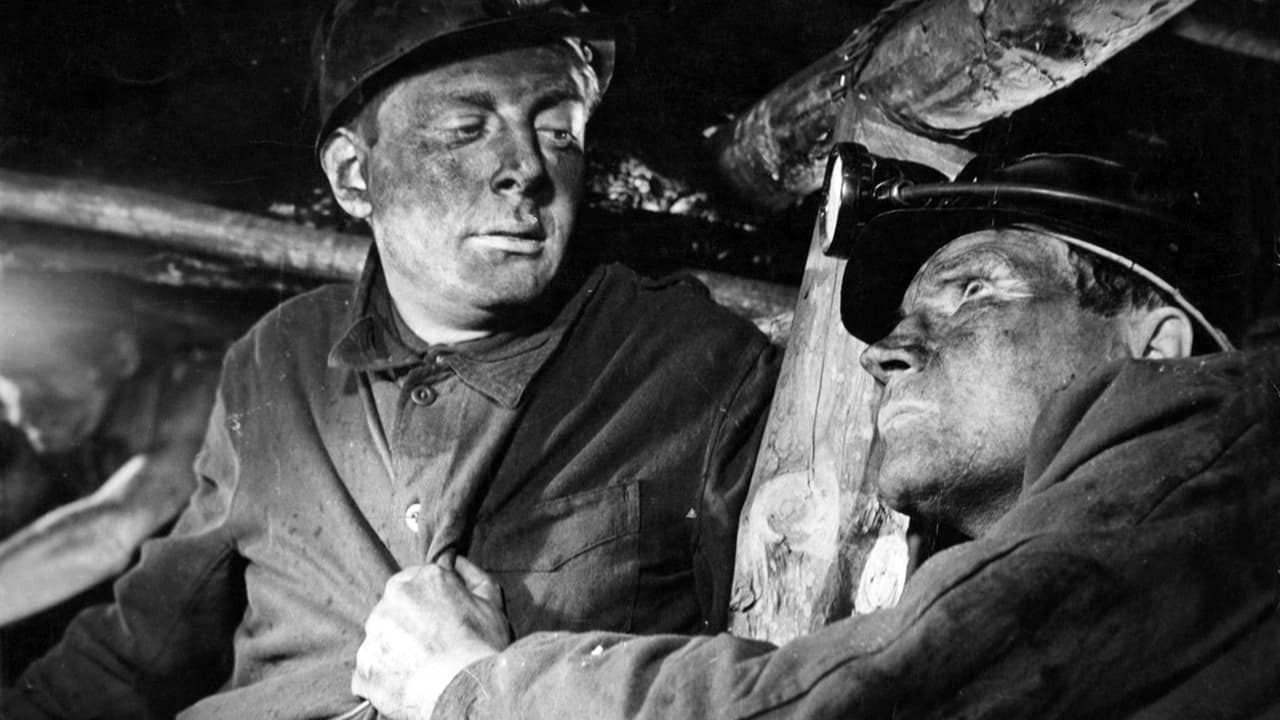
In a settlement in the northern mining country. The Marles, Bréhard and Gohelle families wake up and prepare for a new day at work. The young engineer Larzac, newly appointed to the mine, will soon oppose the authoritarian and conservative methods of his superior Dubard. Georges Gohelle would like to marry Marie Bréhard, but housing difficulties thwart their plans. Brezza, a Polish immigrant, who must return to his country, would like to hate his marriage to Louise Gohelle. Roger, Marie's little brother, has just turned 14. He does not want to go down to the mine as his elders have always done. He will however have to resign himself to it. Marles evokes for him the social struggles of 1906. Roger is injured during a landslide. In front of his family and his friend Marles, who had come to the hospital, he announced his decision to continue his profession. Larzac, invited to the Marles, reveals that he refused a quiet position at the Charbonnages de Paris. He too stays.

Genres

Drama

Production Companies

Ciné France

The Mark of the Day Trailers

No Trailers found.

Cast

Jean Desailly

Larzac

Jean Desailly

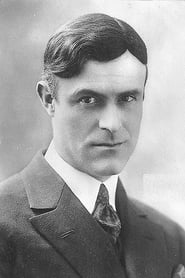
René Lefèvre

Dubard

René Lefèvre

Marie-Hélène Dasté

Madame Bréhard

Marie-Hélène Dasté

Pierre Français

Brezza

Pierre Français

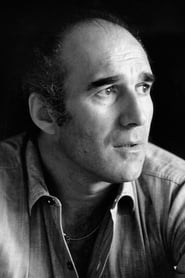
Michel Piccoli

Georges Gohelle

Michel Piccoli

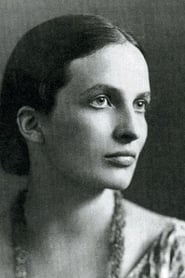
Loleh Bellon

Marie Bréhard

Loleh Bellon

Jean-Pierre Grenier

Marles

Jean-Pierre Grenier

Gaston Modot

Tiberghien

Gaston Modot

Guy Sargis

Roger

Guy Sargis

Catherine Monot

Louise

Catherine Monot

Paul Frankeur

Bac (uncredited)

Paul Frankeur

Serge Grave

Corentin (uncredited)
Serge Grave

You may also like

Pueblerina
7.0

Pueblerina

Jul 6, 1949

Aurelio Rodríguez is released from jail, and tries to start a new life by marrying Paloma and working his land. But the local landowners, the brothers González, interfere with his plans.

Viennese Girls
6.0

Viennese Girls

Aug 18, 1949

Begun in Austria in 1944/45, finished and released in 1949, this is a biography of the minor Austrian composer Carl Michael Ziehrer, who overcomes hypersensitivity in competitive situations which leads initially to failures in both career and romance.

The Prince of Pennsylvania
5.5

The Prince of Pennsylvania

Oct 10, 1988

Set in a remote Pennsylvania coal-mining town, this off-beat comedy follows the relationship between Carla, a hippie woman, and Rupert, a young punk rocker who feels like a pariah. Hoping to leave their current lives behind, the two conspire to kidnap Rupert's father and hold him for ransom.

Last of the Pagans
6.0

Last of the Pagans

Dec 20, 1935

Two South Sea Islanders fall in love, followed by a hurricane.

The Men in Her Life
6.2

The Men in Her Life

Oct 30, 1941

A circus performer becomes a ballerina and then begins her life of a career versus marriage and a home-life. She marries her first husband, her mentor and instructor, primarily out of gratitude. After his death, she marries an American thinking that can be her escape from the world of ballet. But she leaves him to return the dancing. She has a child but does not tell her husband. When her daughter is two-years-old, the husband finds out and takes the child to America. The ballerina continues to dance until her best dancing days have gone by.

Le Rouge et le Noir
6.2

Le Rouge et le Noir

Oct 29, 1954

It's no holds barred for Julian in pursuit of upward mobility. Although expected to channel career aspirations into the Church of the post-Napoleonic era, his intensely romantic liaisons propel him forward at a pace he cannot control.

Song of Russia
8.0

Song of Russia

Feb 10, 1944

American conductor John Meredith and his manager, Hank Higgins, go to Russia shortly before the Nazi invasion of the Soviet Union. Meredith falls in love with beautiful Soviet pianist Nadya Stepanova while they travel throughout the country on a 40-city tour. Along the way, they see happy, healthy, smiling, free Soviet citizens, blissfully living the Communist dream. This bliss is destroyed by the German invasion.

Hidden River
6.0

Hidden River

Feb 12, 1948

Called by the Mexican President himself, a rural teacher goes to work in a village that is dominated by a malevolent chieftain.

Der Komödiant von Wien
0.0

Der Komödiant von Wien

Oct 8, 1954

With a certain degree of audacity, Girardi from Graz manages to gain a foothold at the Strampfertheater, a well-attended traditional theater in Vienna. However, his engagement as a new comedian leads to fierce competition with the theater's established star, Felix Schweighofer. Girardi's plans to entertain the audience at a high level are ultimately crowned with success, even though he is long underrated. He is hired by the Theater an der Wien, where, during rehearsals for a new operetta, he even persuades the strict Johann Strauss to compose an additional waltz for him. Girardi distills his special brand of comedy from events beyond the stage, from his own experiences. Confidently, the actor rises to become a favorite with the audience, against all odds. All of Vienna is enthusiastic about Girardi, singing his songs and applauding his shows.

Merry-Go-Round
7.6

Merry-Go-Round

Feb 2, 1956

In a rural scenery in the throes of difficult changes lives a humble but promising young farmer girl called Mari Pataki. Her father forbids her from seeing the man she loves. The father, above all preoccupied by work on the fields and prospective wealth, decides to give his daughter in marriage to an old but rich man with whom he does business. Land marries land, he says. This seems to be the unyielding rule of the Hungarian peasantry. But the young lover is ready to stand up to any challenge to keep Maris love.

Men of the Blue Cross
6.0

Men of the Blue Cross

Oct 12, 1955

The final film produced by Warsaw’s Documentary Film Studio is an epic re-enactment of a treacherous mission by the Voluntary Tatra Mountain Rescue Service to aid colleagues stranded behind enemy lines at the close of World War II (several real participants feature in the film). Based on a short story about the rescue by Adam Liberak, Munk’s final “documentary” is also arguably his first major exercise in the craft of narrative filmmaking.

Espaldas mojadas
6.3

Espaldas mojadas

Jun 16, 1955

Mexican worker Rafael Améndola runs from the police and cross the Mexican-American border, helped by Frank Mendoza, a partner of an American called Mr. Sterling, who gives work to illegal migrants. Once in the United States, Rafael does not adapt to his new life. English translation of title is “Wet Backs”.

Savage Island
3.5

Savage Island

Sep 1, 1985

Women who have been captured and sold as slave labor to a South American emerald mine hatch a plan for revolution and revenge.

Underground Colony
4.0

Underground Colony

Sep 15, 1951

In 1948, when Hungarian industry counts on almost every liter of fuel, the production of Makert, an American oil company in Hungary, is declining by the day. The firm's American owners claim that the oil field is depleted. However, the new government controller, Nerges, discovers that this is sophisticated sabotage by which representatives of American industrial circles want to disrupt socialist construction in the country. With the help of Hungarian state security officers, Nergesz uncovers and neutralizes the saboteurs at the mine and hastens the Hungarian people's decision to nationalize Makert.

Compartment No. 6
6.9

Compartment No. 6

Oct 29, 2021

A young Finnish woman escapes an enigmatic love affair in Moscow by boarding a train to the arctic port of Murmansk. Forced to share the long ride and a tiny sleeping car with a larger than life Russian miner, the unexpected encounter leads the occupants of Compartment No. 6 to face major truths about human connection.

Bel Ami
6.7

Bel Ami

Mar 20, 1955

In the 1880s, Georges Duroy, back from the Colonies, arrives in Paris with the firm intention of conquering the capital through his power of seduction, his selfishness and cynicism. Entering into journalism through the back door he will soon rise to the top with the support of several women: Madeleine Forestier, the wife of his journalist friend Charles; Clothilde de Marelle, his first mistress; Virginie Walter, the wife of a newspaper owner; Suzanne Walter, her daughter who eventually marries Duroy.

Giuseppe Verdi
6.5

Giuseppe Verdi

Dec 22, 1953

The life and loves of great composer Giuseppe Verdi are played against a background of the great operas of the 19th Century. A tender love story of his successful and turbulent life, with more than 20 excerpts from his acclaimed operas.

Suez
5.2

Suez

Oct 28, 1938

Ferdinand de Lesseps, disappointed in love, is sent as a junior diplomat to the Isthmus of Suez, and realizes it's just the place for a canal.

Kalin The Eagle
7.0

Kalin The Eagle

Mar 20, 1950

Constantinople, 1883. During an outing to the Black Island Edith, the adopted daughter of the French ambassador, is saved by Kalin the Eagle. She learns that he is a Bulgarian revolutionary from the April Uprising of 1876. With her help Kalin the Eagle escapes and returns to the liberated Bulgaria, where he is drawn to the socialist movement. Edith finds out that Kalin is in fact her father, and sets out in search of him. Kalin the Eagle is notable as the first movie made by the nationalized film industry after World War II in the newly formed People's Republic of Bulgaria.

The Heroes of September
0.0

The Heroes of September

Apr 26, 1954

The film is dedicated to the uprising, which broke out in Bulgaria in September 1923. All characters, with the exception of the leaders of the uprising Georgi Dimitrov and Vasil Kolarov, are symbolic characters. The central figures, Stefan and Peter, impersonate the motive forces behind the uprising - the workers and the peasants. They are involved in worker's strikes, in the stormy events of the First World War and the Soldier's uprising in 1918. They also participate in the bloody clashes of the September uprising and suffer its defeat after they have seen too late the need for concerted action by communists and agrarians.