This cine-portrait of New York City uses digital effects to turn the countless riders of the subway system into living, breathing paintings.
No Cast found.
Culled from four rolls of Super-8 film shot while the maker was a development worker in a small South American village, Daumë is at its center a film about ritual, power, and play. Daumë is both ethnography and critique; it is an interrogation into how to represent a place that can't be represented.
The Displaced View traces a personal search for identity and pride, within the unique and suppressed history of the Japanese in Canada. Through an examination of the emotional and cultural links between the women of one family, the processes of the construction of memory and the re-construction of history, are revealed. Utilizing an innovative combination of experimental, dramatic and documentary forms, the film emerges as a deeply moving and compassionate love letter. Just as the official history of the Japanese Canadians has been thrown into question, so does the film’s fictionalized narrative, question documentary as truth.
One of Han Ok-hee’s renowned pieces called The Hole uses the flicker, oblique angles, the cross-cutting of reality and fantasy to express inner entrapment and the desire for liberation. Han Ok-hee’s The Hole, The Rope and Untitled not only experimented with cinematic forms of expression, but also played an important role in the protest against forms of expression in experimental films and the artistic protest against the social suppression and censorship in 1970s Korea. (Art Cinema OFFoff)
In 1992 the Universal Exhibition in Seville was held in Spain. Chile participated in this exhibition by displaying in its pavilion an ice floe captured and brought especially by sea from Antarctica. In these true facts is based the fantasy narrated in Dreams of Ice. Filmed between November 1991 and May 1992 on board the ships Galvarino, Aconcagua and Maullín, in a voyage that goes from Antarctica to Spain, in this documentary film in which dreams, myths and facts converge towards a poetic tale turned into a seafaring saga, in the manner of the legends of the seafarers that populate the mythology of the American continent and universal literature.
An experimental sports film made partly during the Scandinavian Open Championships in Halmstad in 1970, partly during the Chinese players' exhibition tour in Denmark immediately after the SOC. First of all, it is a film about their style, about the artistic culmination that is ping-pong at its best, it records China's comeback into the international sports world.
Clouds 1969 by the British filmmaker Peter Gidal is a film comprised of ten minutes of looped footage of the sky, shot with a handheld camera using a zoom to achieve close-up images. Aside from the amorphous shapes of the clouds, the only forms to appear in the film are an aeroplane flying overhead and the side of a building, and these only as fleeting glimpses. The formless image of the sky and the repetition of the footage on a loop prevent any clear narrative development within the film. The minimal soundtrack consists of a sustained oscillating sine wave, consistently audible throughout the film without progression or climax. The work is shown as a projection and was not produced in an edition. The subject of the film can be said to be the material qualities of film itself: the grain, the light, the shadow and inconsistencies in the print.
A vehicle of consciousness navigates the vertiginous labyrinths of San Francisco. ROMAN CHARIOT was filmed over several months with a spy camera mounted on filmmaker David Sherman's son's baby carriage.
First part of the collaborative project "Brise-Glace" showing the diverse travels on the icebreaker "Frej". Directed by Jean Rouch.
The film is a study of nature and significance of the hands in cinema. Besides review of movements and actions, which creates an independent story, it reveals interactions and interdependence of cinematic traditions of various authors, countries and periods
Filmmakers use archival footage and animation to explore the culture surrounding nuclear weapons, the fascination they inspire and the perverse appeal they still exert.
Found footage anti-war film comprising film documents of the Austro-Hungarian and Italian army on the Alpine front, and from first generation picture material by war-film pioneer Luca Comerio.
This documentary aims to register this unknown side of James Joyce: His Greek Notebooks. Trieste. Bloomsday, 2013. Dance in slow motion, accompanied by text. By deconstructing the body, we turn it into a memory: of the body, of life, of texts. The biographical references to Joyce and Mando Aravantinou, combined with the diagonal slicing of the image, cancel the realism of the landscape, including that of the Narrator’s space/study. As a culmination, Joyce’s letter “A request for a loan in Greek” functions as a timely denunciation. Various routes through cities, such as Trieste, London, New York, and Athens; languages such as Greek and English. In addition to the primal myth of Ulysses, there is another issue: Greek is “the language of the subject of Ulysses”
An experimental journey through a year in the life of the director, using his always playing playlist to cross the boundaries of fiction and documentary. Through scenes of both comedy and tragedy, realistic documentary footage and experimental sequences of the director's environment and daily life we get a sometimes estranging image of a young man and also an intriguing insight in his mindset and how this translates to the imagery on screen.
In 1967, experimental filmmaker Jorgen Leth created a striking short film, The Perfect Human, starring a man and women sitting in a box while a narrator poses questions about their relationship and humanity. Years later, Danish director Lars von Trier made a deal with Leth to remake his film five times, each under a different set of circumstances and with von Trier's strictly prescribed rules. As Leth completes each challenge, von Trier creates increasingly further elaborate stipulations.
This is a 1991 documentary film about the legendary artist and filmmaker, Joseph Cornell, who made those magnificent and strange collage boxes. He was also one of our great experimental filmmakers and once apparently made Salvador Dali extremely jealous at a screening of his masterpiece, Rose Hobart. In this film we get to hear people like Susan Sontag, Stan Brakhage, and Tony Curtis talk about their friendships with the artist. It turns out that Curtis was quite a collector and he seemed to have a very deep understanding of what Cornell was doing in his work.
An experimental ethnographic documentary that criticizes the colonizer view of anthropology.
Mostly dark, rejecting images which are repeated. A stone wall, the chamber of a revolver which is, at first not recognizable, a close-up of a cactus. The duration of the takes emphasises the photographic character of the pictures, simultaneously with a crackling, brutal sound. (Hans Scheugl)
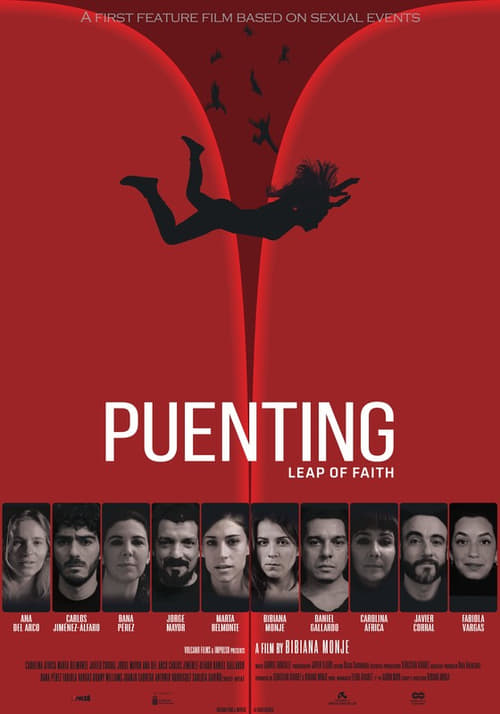
A first feature based on sexual events. An actress undertakes her desire of directing her first movie, without a budget or any production company funding her project. She gathers a group of professional actors and actresses, and proposes a project based on a very particular experience: stepping on their fears through a metaphorical 'leap of faith'. As the project advances, individual conflicts will arise affecting the shoot, making the movie crew wonder whether or not they should go on. Will they take the leap of faith with all its consequences?
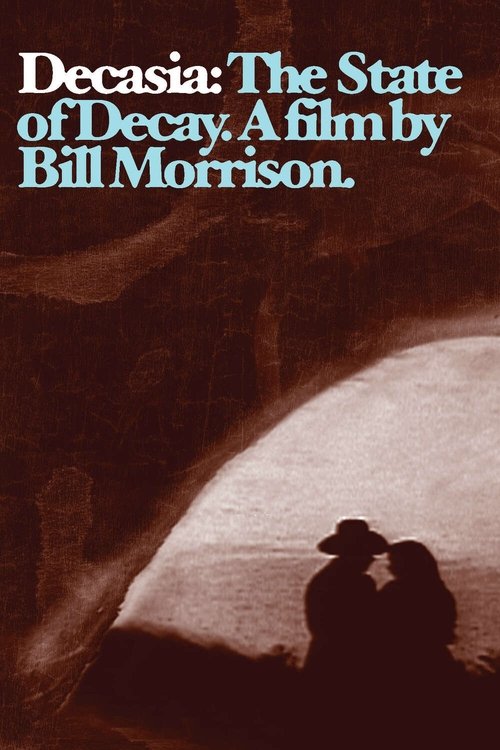
A meditation on the human quest to transcend physicality, constructed from decaying archival footage and set to an original symphonic score.
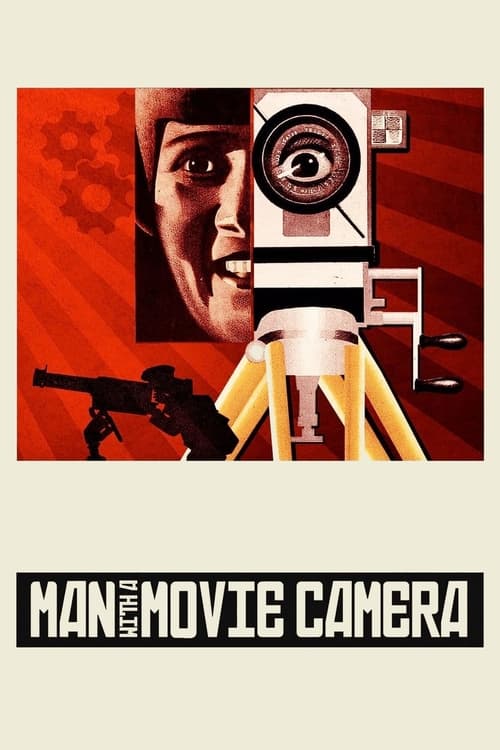
A cameraman wanders around with a camera slung over his shoulder, documenting urban life with dazzling inventiveness.
No Trailers found.