No Cast found.
No Trailers found.
Pro-intelligent design scholars and scientists are often chastised, fired or denied tenured positions by those who believe in Darwin's theory of evolution.
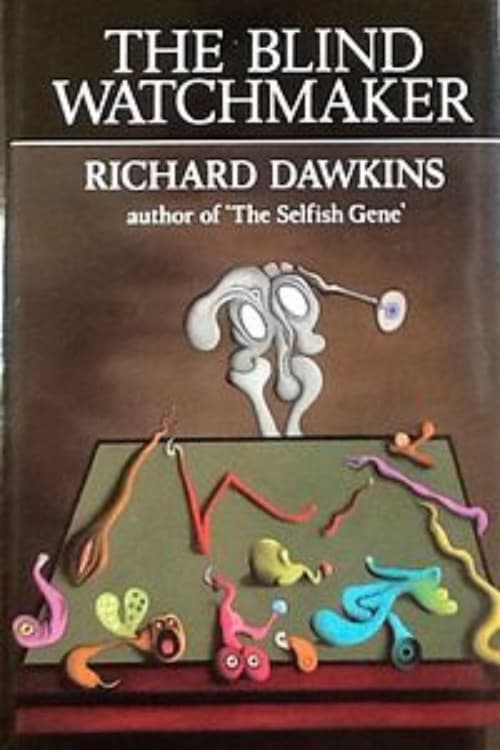
Richard Dawkins in a 1980's television special based on his book The Blind Watchmaker.
Earth teems with a staggering variety of animals, including 9,000 kinds of birds, 28,000 types of fish, and more than 350,000 species of beetles. What explains this explosion of living creatures—1.4 million different species discovered so far, with perhaps another 50 million to go? The source of life's endless forms was a profound mystery until Charles Darwin brought forth his revolutionary idea of natural selection. But Darwin's radical insights raised as many questions as they answered. What actually drives evolution and turns one species into another? To what degree do different animals rely on the same genetic toolkit? And how did we evolve?
In this two-hour special, NOVA captures the turmoil that tore apart the community of Dover, Pennsylvania in one of the latest battles over teaching evolution in public schools. Featuring trial reenactments based on court transcripts and interviews with key participants, including expert scientists and Dover parents, teachers, and town officials, "Judgment Day: Intelligent Design on Trial" follows the celebrated federal case of Kitzmiller v. Dover School District.
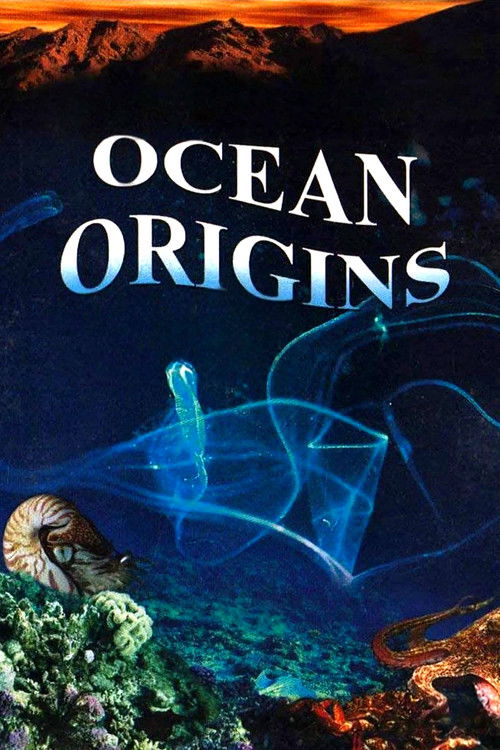
A documentary that explores the natural world of the sea, from the single-celled organism to more complex forms of life, OCEAN ORIGINS was originally filmed in the IMAX large format, which adds a crispness and clarity to the images. This documentary film seeks to examine the process of evolution by looking at the many creatures of the sea that can illustrate the way multi-cellular life emerged over the course of four billion years. OCEAN ORIGINS is a creative film that uses fascinating documentary footage to look at scientific theories and principles in an interesting manner
A mind-bending, thrilling journey exploring the fragility and wonder of planet Earth, one of the most peculiar, unique places in the entire universe, brought to life by the only people to have left it behind – the world’s most well known and leading astronauts. This edit combined episodes one and ten to create a new movie.
The documentary depicts the birth of eugenics - a pseudo-science created in the 19th century that propounded the theory of perfecting the human race. According to the views of eugenicists, only healthy and creative individuals should reproduce. The film shows how these controversial ideas influenced the intellectual and political elite of the West in the 20th century, including the dictator of the Third Reich, Adolf Hitler. Eugenics is a pseudoscience created in the 19th century and treating the improvement of the human race. According to eugenicists, only healthy and creative individuals could procreate, and the procreation of the sick or disabled and racially unworthy (prostitutes, the poor, beggars) should be forbidden. The author of the film posits that modern genetics, the killing of unborn children and euthanasia have their roots in this infamous pseudoscience.
No overview available.
A whale existed 5 million years ago. Mark found her skeleton and decided to reassemble the pieces in a dusty basement of the Science Museum in Brussels. A filmmaker found Mark and decided to film him, the whale, and the dust. While these bones are put back together, like pieces from a puzzle, we try to imagine how life was 5 million years ago, a time before humans existed, but the sea and the sun were already here.
Are there dinosaurs living on earth today? In this video Lead Pastor of CSE Dr. Kent Hovind talks about how Dinosaurs lived in the Garden of Eden with Adam and Eve and how they are still around today!
Understanding mankind's true origin is essential in determining one's final destiny. This visually rich, full production presents conclusive evidence that the universe and all life were created. In addition, scientific foreknowledge found only in the Bible reveals that the God of the Bible is the Creator. A Question of Origins is essential viewing for anyone who has questions or doubts concerning the scientific accuracy of the Word of God. A great witnessing tool intended for our current generation.
Unmasks fraudulent cover-ups, wild speculations, and deceitful myths that have been presented as the absolute "facts" of evolution. Should evolutionism, the foundational faith of eastern mystical thought, be taught in schools as science, when Creationism, the foundational belief of Judeo-Christianity, has been expelled?
Oceanographers have been gripped by a new spirit of discovery and have undertaken the biggest population census of ocean species ever conducted - a "Census of Marine Life". The quest: to find out when and where it all began. Where did the water come from? How was life created in the oceans? And how did it evolve to the enormous diversity we see today? Join National Geographic as we travel more than 4 billion years into the past to uncover how oceans and marine life came to exist.
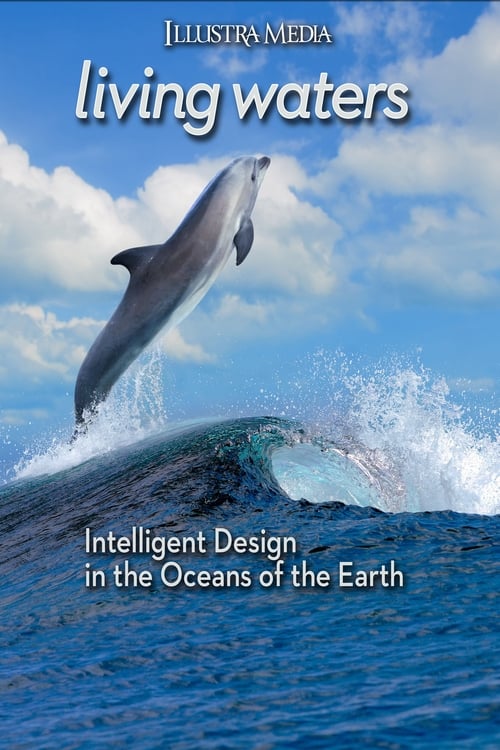
LIVING WATERS: Intelligent Design in the Oceans of the Earth is a fascinating exploration of life in the liquid universe that covers more than 70% of our planet. Filmed in Canada, Bermuda, Polynesia, Mexico, and the United States, this remarkable documentary celebrates the beauty and brilliance of the biological systems that make life in the oceans possible. A spectacular tour of a dolphin’s internal sonar system—a mechanism so powerful and precise, the animals can locate and capture small fish buried in the sand. The magnetic compass embedded in the head of a sea turtle—a biological wonder that guides these long-distance travelers as they journey across thousands of miles of open sea. A Pacific salmon’s amazing sense of smell—an elaborate navigational aid that leads the fish back from years in the ocean to the gravel stream bed where it was born. The power and majestic grace of a humpback whale—a creature whose existence defies the theory of Darwinian evolution.
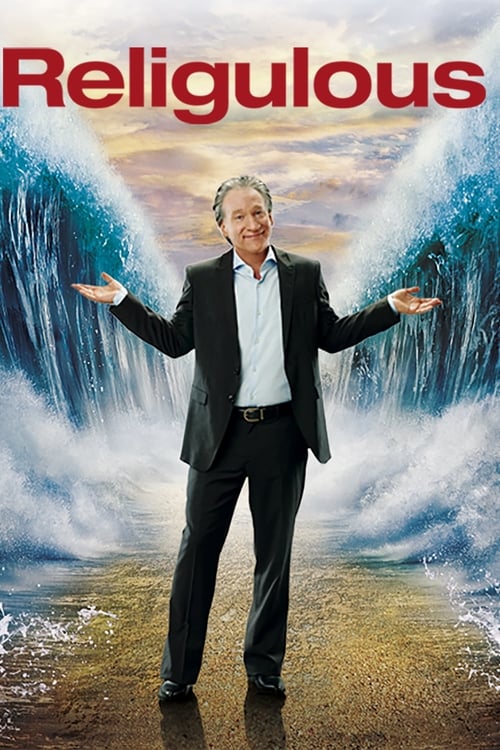
Commentator-comic Bill Maher plays devil's advocate with religion as he talks to believers about their faith. Traveling around the world, Maher examines the tenets of Christianity, Judaism and Islam and raises questions about homosexuality, proof of Christ's existence, Jewish Sabbath laws, violent Muslim extremists.
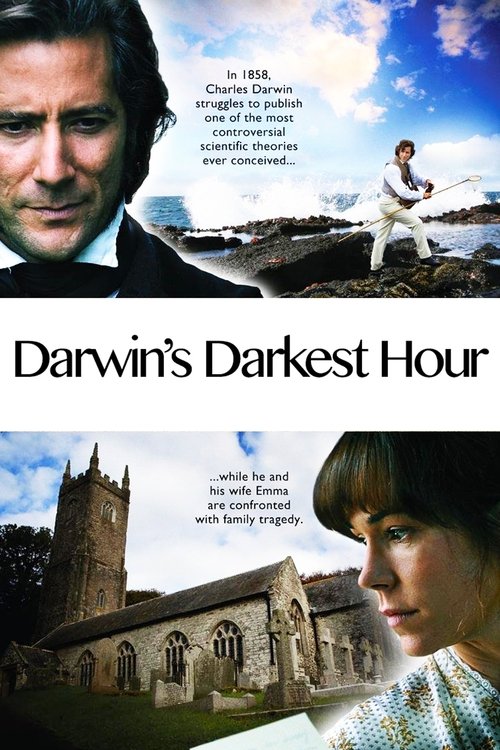
In 1858 Charles Darwin struggles to publish one of the most controversial scientific theories ever conceived, while he and his wife Emma confront family tragedy.
Nova and National Geographic present exclusive access to an astounding discovery of ancient fossil human ancestors.
Darwin's great insight – that life has evolved over millions of years by natural selection – has been the cornerstone of all David Attenborough’s natural history series. In this documentary, he takes us on a deeply personal journey which reflects his own life and the way he came to understand Darwin’s theory.
A scientist explains how the savagery and efficiency of the insect world could result in their taking over the world.
Featuring Michael Pollan and based on his best-selling book, this special takes viewers on an exploration of the human relationship with the plant world — seen from the plants' point of view. Narrated by Frances McDormand, the program shows how four familiar species — the apple, the tulip, marijuana and the potato — evolved to satisfy our yearnings for sweetness, beauty, intoxication.