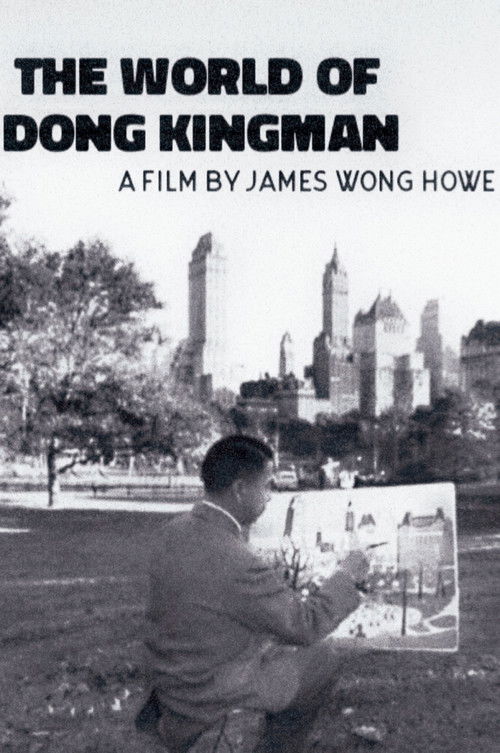
James Wong Howe follows artist Dong Kingman over the course of a day, in which the maestro starts and finishes a watercolor of a street in New York City.
No Trailers found.
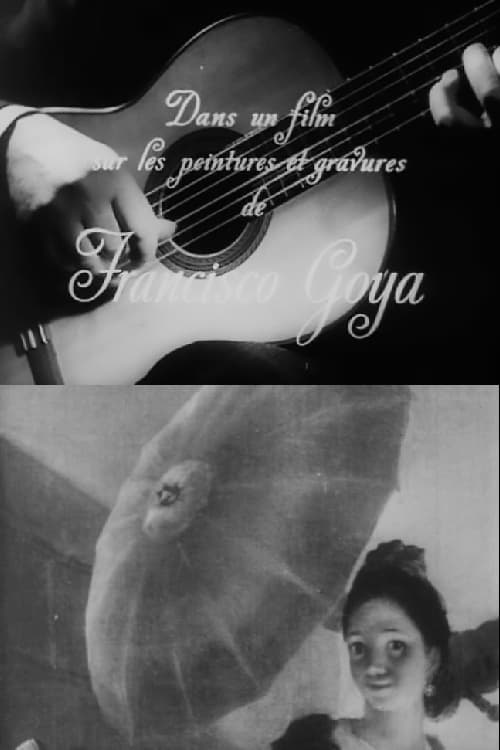
Presents life in 18th century Spain as the painter Francisco de Goya showed it to us.
Examines the mesmerising construction of clear crystal glass pieces created by the craftsmen of Waterford. The process from the intense heat of the furnace to glass blowing, shaping, cutting, honing, filling and finishing is all depicted in this celebration of the art of creation of Waterford Glass. Academy Award Nominee: Best Live Action Short - 1976.
The Mona Lisa Curse is a Grierson award-winning polemic documentary by art critic Robert Hughes that examines how the world's most famous painting came to influence the art world. With his trademark style, Hughes explores how museums, the production of art and the way we experience it have radically changed in the last 50 years, telling the story of the rise of contemporary art and looking back over a life spent talking and writing about the art he loves, and loathes. In these postmodern days it has been said that there is no more passé a vocation than that of the professional art critic. Perceived as the gate keeper for opinions regarding art and culture, the art critic has supposedly been rendered obsolete by an ever expanding pluralism in the art world, where all practices and disciplines are purported to be equal and valid. Robert Hughes, however, is one art critic who has delivered a message that must not be ignored.
No overview available.
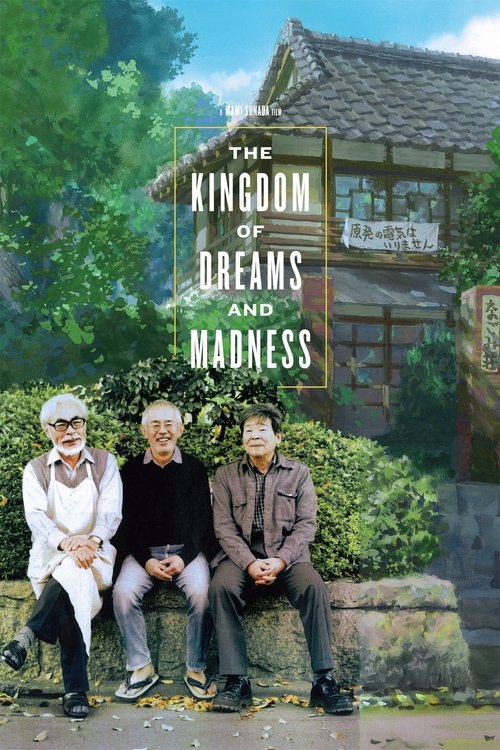
Follows the behind-the-scenes work of Studio Ghibli, focusing on the notable figures Hayao Miyazaki, Isao Takahata, and Toshio Suzuki.
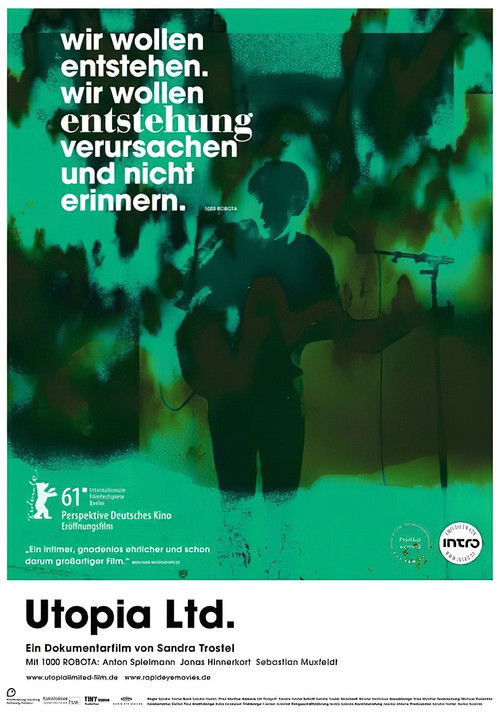
Anton Spielmann (18) and his two younger friends Basti Muxfeldt and Jonas Hinnerkort are living in their family homes with their parents in an idyllic village close to Hamburg. The three of them founded the band 1000 Robota. The band has an ambitious aim: „We want to cause creation not to remind of it”, and they want to live up to their ideals. In a society affected by economic pressure 1000 Robota are questioning themselves and others and they don‘t want to meet other people‘s expectations. In a world of excessive supply they are looking for significance and want to unite with others to create a new way of youth culture. But soon they have to face some serious difficulties.
Poème Électronique is an 8-minute piece of electronic music by composer Edgard Varèse, written for the Philips Pavilion at the 1958 Brussels World’s Fair. The Philips corporation commissioned Le Corbusier to design the pavilion, which was intended as a showcase of their engineering progress. The pavilion was shaped like a stomach, with a narrow entrance and exit on either side of a large central space. As the audience entered and exited the pavilion, the electronic composition Concret PH by Iannis Xenakis (who also acted as Le Corbusier's architectural assistant for the pavilion's design) was heard. Poème électronique was synchronized to a film of black and white photographs selected by Le Corbusier which touched on vague themes of human existence.
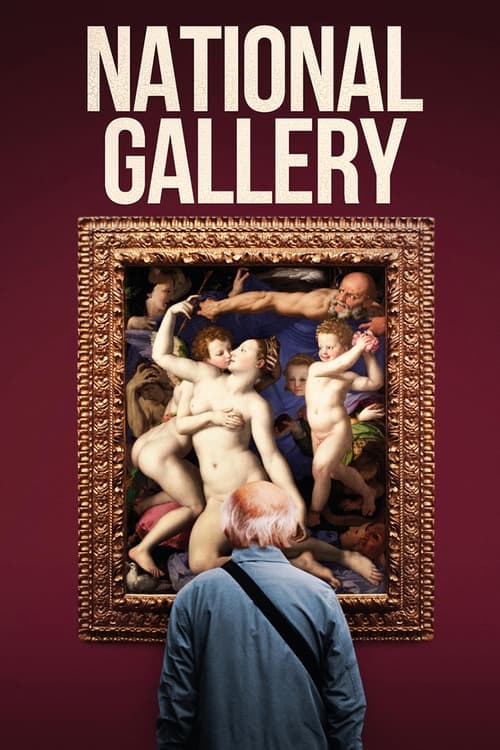
A portrait of the day-to-day operations of the National Gallery of London, that reveals the role of the employees and the experiences of the Gallery's visitors. The film portrays the role of the curators and conservators; the education, scientific, and conservation departments; and the audience of all kinds of people who come to experience it.
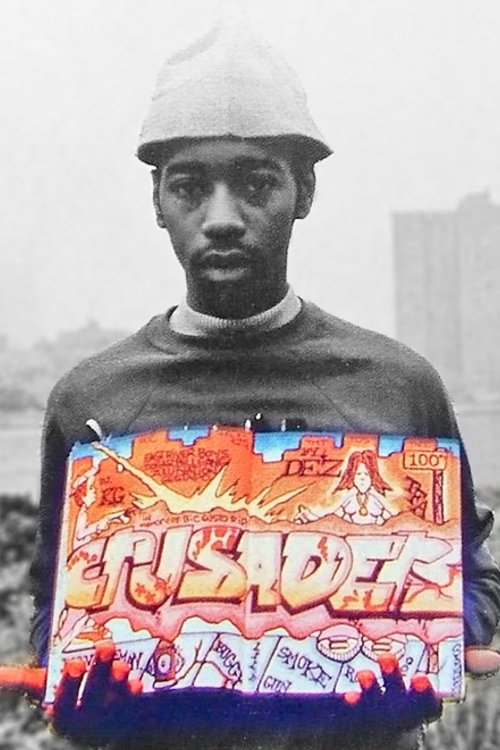
An incredible historic document showcasing the roots of Old School Hip Hop movement with all its disciplines involved: Djing, Mcing, Breakdancing, and Graffiti. Featured in the "NYC: Urban Image" show at MoMA PS1 1983.
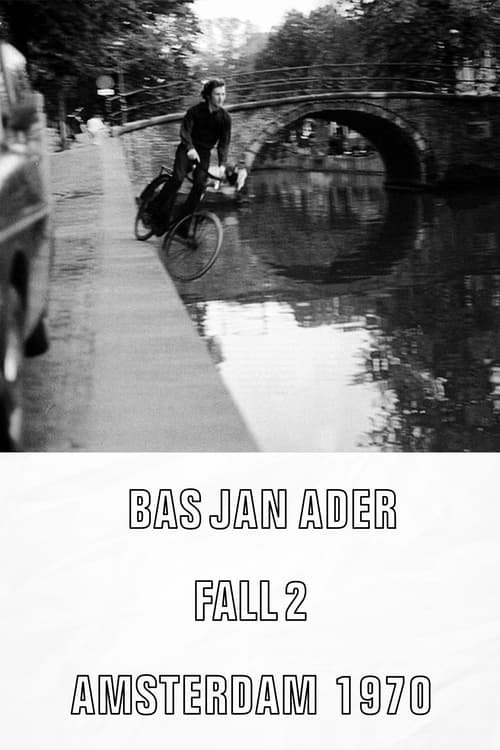
Bas Jan Ader rides his bike into a canal in Amsterdam.
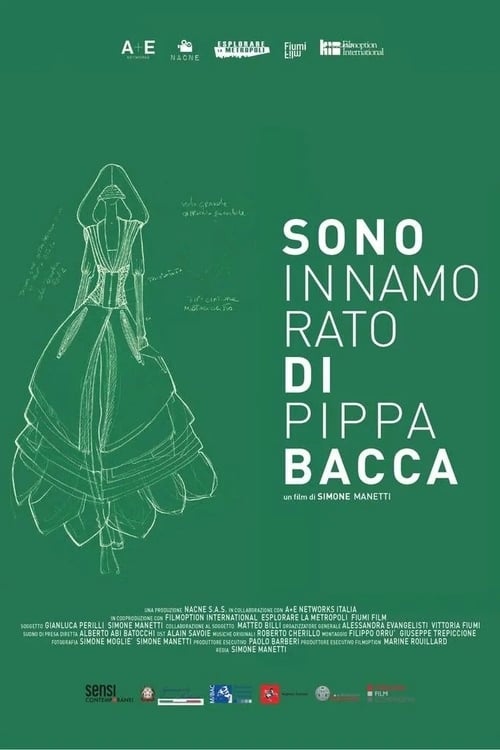
Giuseppina Pasqualino di Marineo, better known as Pippa Bacca, was a 34 years old Italian artist. She crossed 11 countries involved in wars, hitchhiking with another Milanese artist, Silvia Moro, both wearing a wedding dress. This was a performance for peace, trust and hoping to prove that if you rely on others, you’ll receive good things only. After travelling many roads, the two artists decided to split for a while in Istanbul, planning to meet again in Byblos. Pippa left then, alone, and nobody heard from her again.
This surreal abstract film falls into three sections, or movements, the first taking place on the ground, the second in the air and the third again on the ground. In the first movement various motifs or themes are introduced, which are again picked up and developed in the third movement. Six spheres, evolved in the first movement, become the sole subject matter–or “dancers”–of the second movement, which consists of a simple type of ballet using the floor-plan choreography or traditional ballet as a basis of interest.
In 1917, French artist Marcel Duchamp declared everyday objects as art. A provocative act that sparked a heated, still topical discussion around the question: what is art? Since then, that question has been asked time and time again. To the artist and to the viewer. If everything is possible and everything is allowed, how do you remember what art is? Director Ditteke Mensink spent two years at De Ateliers: the breeding ground for top talent in the visual arts. Her stay ended in a harsh confrontation with herself, the young artists and modern visual arts.
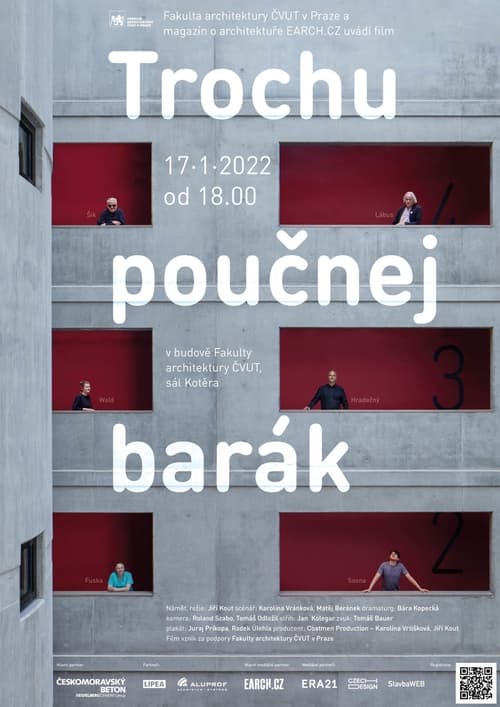
Colleagues, professional journalists and users comment on the masterpiece of the first lady of Czech architecture, Alena Šrámková... It is devoted to the building of the Faculty of Architecture of Czech Technical University, the work of the first lady of Czech architecture, Alena Šrámková, and from a distance brings users' perspective on how the building has succeeded over 10 years. Journalists who have been dedicated to architecture for many years, such as Karolína Vránková or Matěj Beránek, also collaborated on the film, and Bára Kopecká was in charge of the dramaturgical supervision.
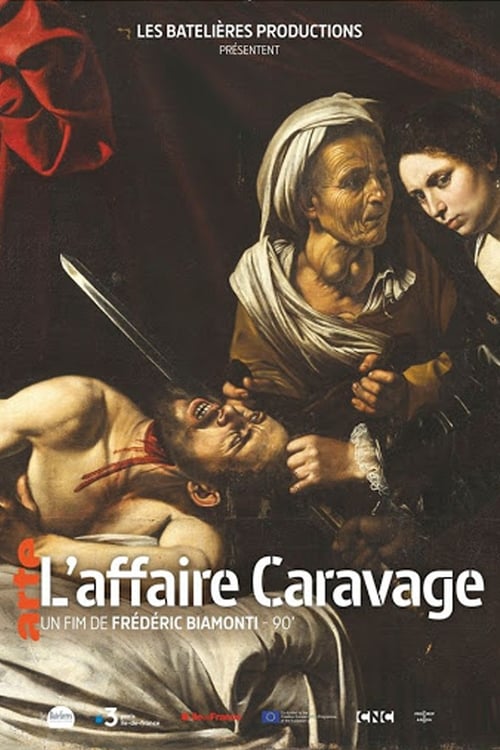
In 2014 a large painting representing Judith Beheading Holofernes was discovered in an attic in Toulouse, France. A controversy ensued immediately about the attribution of the painting's authorship to Caravaggio. The documentary follows a famed art expert in charge of organizing the sale of the painting on behalf of the owners, while specialists debate on its authenticity.
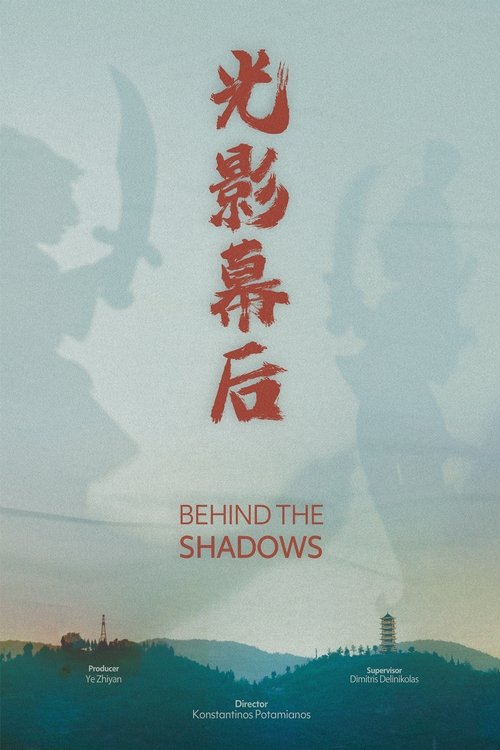
The Greek shadow puppetry began 130 years ago. A student of Greek shadow puppetry travels to China, where shadow puppetry began over 2000 years ago. There he follows Chinese shadow puppeteer master He Shihong in Wushan of China. Watching his performances and listening to him talk about his art and his career in it, many parallels are drawn and he expresses them by including his Greek shadow puppetry teacher in the film. This documentary is a cultural bridge between Greece and China through the art of shadow puppetry.
Documentary about the life and work of Mário Eloy, one of the greatest painters of the second generation of modernism in Portugal.
Deeply thoughtful and illuminating, DRAWING A LIFE reveals the details of artist Geoff McFetridge’s life and work while delving further into the universal questions of what makes a fulfilling life and how to live with intention in the limited time we all have.
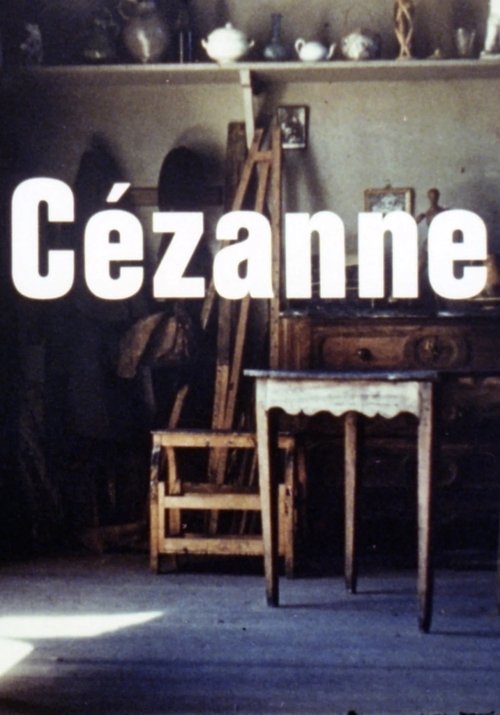
A film record of an exhibition of the late work of Paul Cezanne, organized by The Museum of Modern Art and the Reunion des Musees Nationaux in Paris. The camera moves across details of paintings, as well as details of Cezanne’s studio, providing an intimage, close-up view of the artist’s work. The narration is provided by Cezanne’s own words, taken directly from records of correspondence. 22nd Annual San Francisco International Film Festival Participation- Communication Competition, 1978.
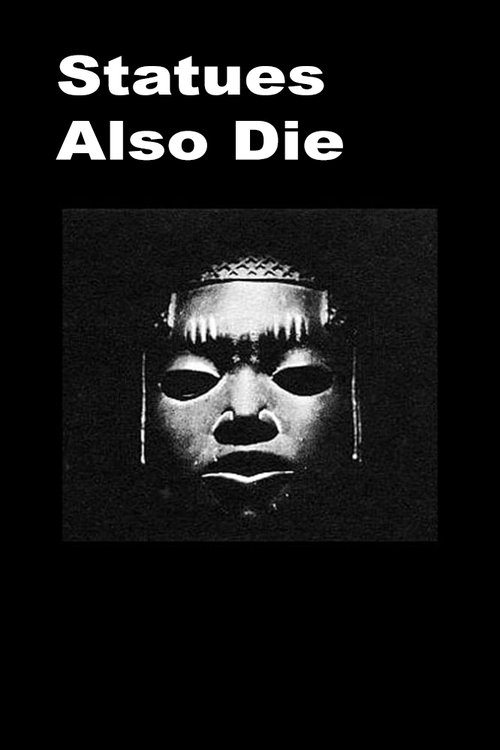
Commissioned by the journal Présence Africaine, this short documentary examines how African art is devalued and alienated through colonial and museum contexts. Beginning with the question of why African works are confined to ethnographic displays while Greek or Egyptian art is celebrated, the film became a landmark of anti-colonial cinema and was banned in France for eight years.
Himself
Narrator