logologo
MovieVerse© 2024
Privacy PolicyTerms of ServiceContact Us
Made with ❤️ by Thathsara
movie poster
The Machine That Killed Bad People
Sign in to create your own watchlist

The Machine That Killed Bad People

Feb 14, 1990
2h 0m
★ 0.0

Overview

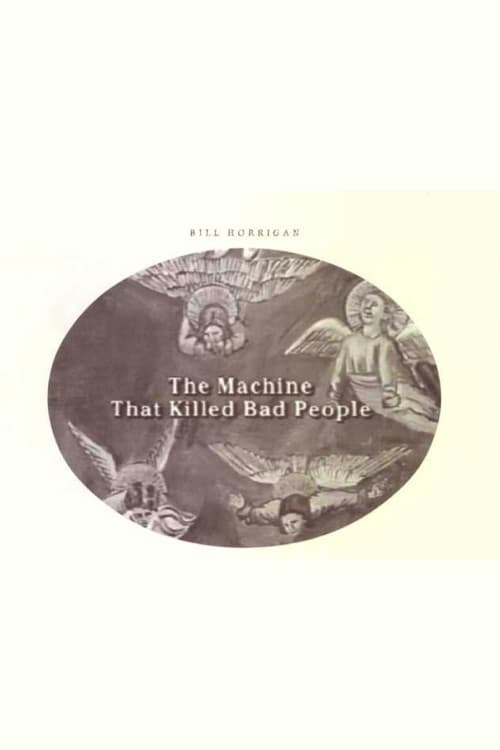
The Machine That Killed Bad People is about the cultural and political history of the Philippines leading up to the overthrow of President Ferdinand Marcos in 1986. It also addresses the role of electronic media in the struggle for power, and more broadly, American intervention in the Third World. Using a structure that emulates the way television news programs construct meaning through fragmentation, the tape interweaves clips of Filipino activists and reporters, a fictional television anchorwoman and correspondent, commentary by independent filmmaker Trinh T. Minh-ha, Fagin's off-camera voice and script, and anonymous excerpts from commercial television.

Genres

Documentary

Cast

Steve Fagin

Steve Fagin

Trịnh T. Minh-hà

Trịnh T. Minh-hà

Constance DeJong

Constance DeJong

Ron Vawter

Ron Vawter

You may also like

Wintopia
10.0

Wintopia

Nov 23, 2019

IDFA and Canadian filmmaker Peter Wintonick had a close relationship for decades. He was a hard worker and often far from home, visiting festivals around the world. In 2013, he died after a short illness. His daughter Mira was left behind with a whole lot of questions, and a box full of videotapes that Wintonick shot for his Utopia project. She resolved to investigate what sort of film he envisaged, and to complete it for him.

Guadalcanal Requiem
7.0

Guadalcanal Requiem

Jan 1, 1977

One of Paik’s most overtly political and poignant statements, Guadalcanal Requiem is a performance/documentary collage that confronts history, time, cultural memory and mythology on the site of one of World War II’s most devastating battles.

Good Morning, Mr. Orwell
8.1

Good Morning, Mr. Orwell

Jan 1, 1984

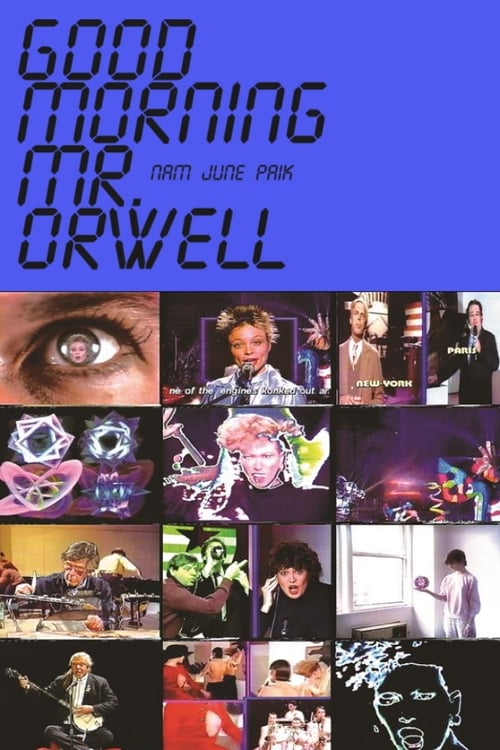
In his book "1984", George Orwell saw the television of the future as a control instrument in the hands of Big Brother. Right at the start of the much-anticipated Orwellian year, Paik and Co. were keen to demonstrate satellite TV's ability to serve positive ends-- Namely, the intercontinental exchange of culture, combining both highbrow and entertainment elements. A live broadcast shared between WNET TV in New York and the Centre Pompidou in Paris, linked up with broadcasters in Germany and South Korea, reached a worldwide audience of over 10 or even 25 million (including the later repeat transmissions).

Nam June Paik: Moon Is the Oldest TV
6.9

Nam June Paik: Moon Is the Oldest TV

Mar 24, 2023

The quixotic journey of Nam June Paik, one of the most famous Asian artists of the 20th century, who revolutionized the use of technology as an artistic canvas and prophesied both the fascist tendencies and intercultural understanding that would arise from the interconnected metaverse of today's world.

Gary Hill: I Believe It Is an Image
0.0

Gary Hill: I Believe It Is an Image

Jan 1, 2004

In this program video artist Gary Hill uses a number of his pieces to investigate otherness and ambiguity, dislocation of the senses, the boundary between words and comprehension, the physicality of text, and figurative interactivity.

John Baldessari: An Interview
0.0

John Baldessari: An Interview

Jan 1, 1979

From his photo-text canvases in the 1960s to his video works in the 1970s to his installations in the 1980s, John Baldessari’s (b.1931) varied work has been seminal in the field of conceptual art. Integrating semiology and mass media imagery, he employed such strategies as appropriation, deconstruction, decontextualization, sequentiality, and text/image juxtaposition. With an ironic wit, Baldessari's work considers the gathering, sorting, and reorganizing of information. “Something that is part of my personality is seeing the world slightly askew. It’s a perceptual stance. The real world is absurd sometimes, so I don’t make a conscious attempt, but because I come at it in a certain way, it seems really strange,” Baldessari says in this interview with Nancy Bowen. A historical interview originally recorded in 1979 and re-edited in 2003 with support from the Lyn Blumenthal Memorial Fund.

Moby Dick
0.0

Moby Dick

Jan 1, 2000

Guy Ben-Ner, one of Israel's foremost video artists, gained international recognition with a series of low-tech films, starring his family in absurdist settings carved out of their intimate spaces and their everyday surroundings. Many of his videos are inspired by screenplays for films, folktales and novels. Analyzing these literary and cinematographic passages allows him to exploit the conventions of film narrative: how to tell a story, captivate an audience through a tale, sustain a degree of tension and entertainment, and so on. At the same time, he corrupts the magic of fiction by openly showing us the entrails of everything he records, without worrying about revealing the tricks of the trade. A large part of his filmic oeuvre features a conglomeration of cinematic and literary references which the artist quotes, adapts or interprets. Ben-Ner self-referentially links the great themes and their literary, cinematic and artistic realization.

No Image Available
0.0

Centers

Jun 1, 1971

Poet and artist Vito Acconci points his finger towards the camera and his own reflection in an offscreen video monitor.

Green Grey Black Brown
0.0

Green Grey Black Brown

Sep 5, 2024

Departing from the traditional factory lines of production on the plastic plant manufacturing industry. From there, the film expands into the realm of synthetic nature, portraying a highly engineered landscape,developed by startups. The images appear to be bound together by a dark slime—an oily, recurrent presence as a connection to the strange and gory logics of petro capitalism and global territories of extraction.Petroleum, in both refined and unrefined forms, serves as a temporal vector: it is the raw material for plastic plants, Revealing the absurd techno-solutionist vision of the future.

Memorial
0.0

Memorial

May 9, 2022

A memorial mourns as time passes

Kusama's Self-Obliteration
5.6

Kusama's Self-Obliteration

Dec 31, 1967

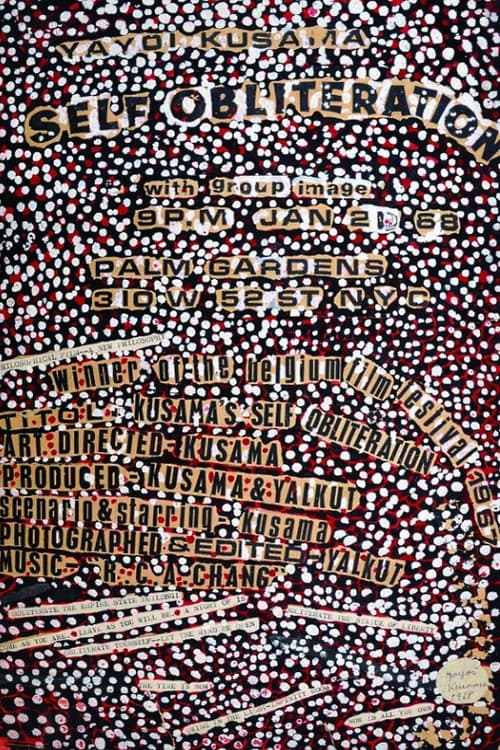
A film exploration of the work and aesthetic concepts of Yayoi Kusama, painter, sculptor, and environmentalist, conceived in terms of an intense emotional experience with metaphysical overtones, an extension of my ultimate interest in a total fusion of the arts in a spirit of mutual collaboration. —Jud Yalkut

Projections
0.0

Projections

Nov 29, 1993

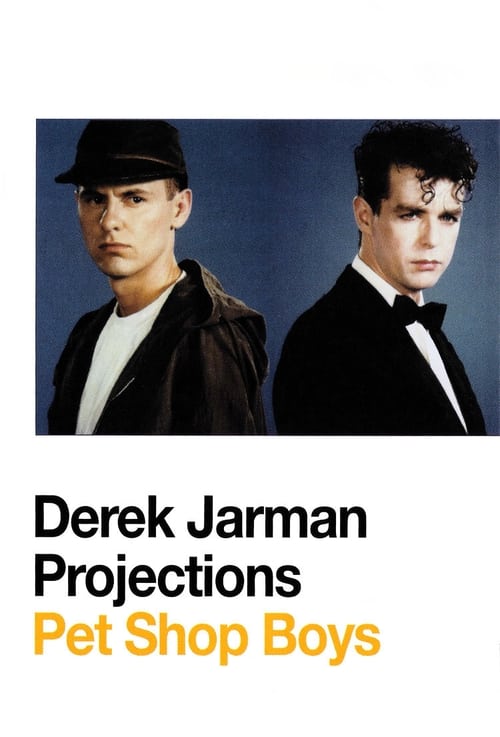
The innovative and influential British filmmaker Derek Jarman was invited to direct the Pet Shop Boys' 1989 tour. This film is a series of iconoclastic images he created for the background projections. Stunning, specially shot sequences (featuring actors, the Pet Shop Boys, and friends of Jarman) contrast with documentary montages of nature, all skillfully edited to music tracks.

Flooded McDonald’s
4.0

Flooded McDonald’s

Jan 16, 2009

Flooded McDonald's is a new film work in which a convincing life-size replica of the interior of a McDonald's burger bar, without any customers or staff present, gradually floods with water.

All Star Video
6.5

All Star Video

Jan 21, 1985

A compilation of avant-garde artwork and talent of the mid to late 20th century hosted by Ryuichi Sakamoto.

FUCK TV
0.0

FUCK TV

Aug 9, 2019

After concluding the now-legendary public access TV series, The Pain Factory, Michael Nine embarked on a new and more subversive public access endeavor: a collaboration with Scott Arford called Fuck TV. Whereas The Pain Factory predominantly revolved around experimental music performances, Fuck TV was a comprehensive and experiential audio-visual presentation. Aired to a passive and unsuspecting audience on San Francisco’s public access channel from 1997 to 1998, each episode of Fuck TV was dedicated to a specific topic, combining video collage and cut-up techniques set to a harsh electronic soundtrack. The resultant overload of processed imagery and visceral sound was unlike anything presented on television before or since. EPISODES: Yule Bible, Cults, Riots, Animals, Executions, Static, Media, Haterella (edited version), Self Annihilation Live, Electricity.

Grid
6.0

Grid

Oct 22, 2021

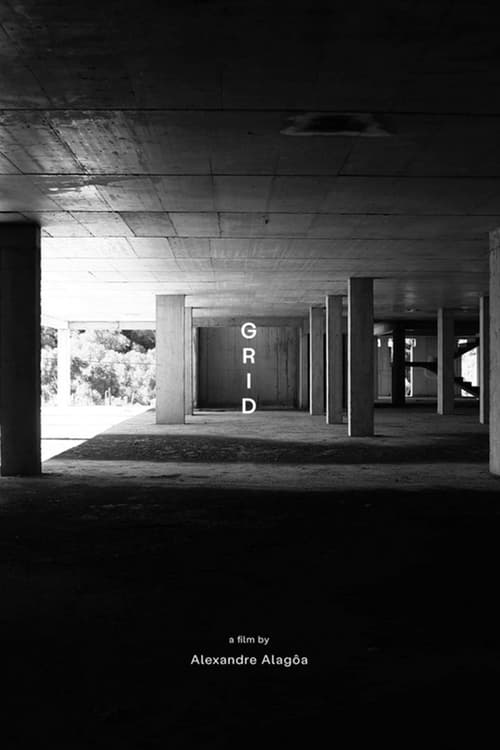
A ritual of grids, reflections and chasms; a complete state of entropy; a space that devours itself; a vertigo that destroys the gravity of the Earth; a trap that captures us inside the voids of the screen of light: «That blank arena wherein converge at once the hundred spaces» (Hollis Frampton).

Super Sauber
10.0

Super Sauber

Aug 27, 2018

A dream where obsession for German as a second language mixes up with an obsession for neatness and cleanliness as a distinctive feature of the national culture in question seen from the perspective of a foreigner. The dream is not a nightmare only because the set it is dreamt into is the seashore of the mare nostrum, where the dreaming subject is perfectly at home. A homeland which she, in turn, in her more secret thus naïf dreams would dream of being cleaner and tidier as in the reality, especially in front of such beauty of nature. As is right and proper.

108 spin
0.0

108 spin

Dec 13, 2025

A kinetic prayer and structuralist intervention. Shot entirely on an iPhone 11 in a desolate Midwest laundromat, 108 spin documents the mechanics of impermanence. The film shifts from heavy turbulence to suspended repetition—not as a path to completion, but as a study of the loop itself. Featuring a layered soundscape, the work asks the viewer to stare into the rotation until the noise becomes a mantra.

Junior War
0.0

Junior War

Nov 2, 2013

In Junior War, a throng of highschoolers congregate at night for a party in the woods sometime in the year 2000. A band plays, the kids get drunk, the boys and girls tepidly flirt, and groups deploy into cars for the purpose of destroying mailboxes, tee-peeing houses, breaking lawn ornaments, and sparring with the police. The film is composed entirely of footage Trecartin took during his senior year of high school in exurban Ohio; as such, it baits the viewer with genealogical significance.

Hibiscus
6.0

Hibiscus

Oct 19, 2019

'Hibiscus' highlights the city's hidden beauty and the warmth of its people that may go by unnoticed on a daily basis but are beautiful reminders to appreciate.

The Machine That Killed Bad People Trailers

No Trailers found.