logologo
MovieVerse© 2024
Privacy PolicyTerms of ServiceContact Us
Made with ❤️ by Thathsara
movie poster
The Armenian Genocide
Sign in to create your own watchlist

The Armenian Genocide

Apr 17, 2006
0h 57m
★ 6.7

Overview

Explores the Ottoman Empire killings of more than one million Armenians during World War I. The film describes not only what happened before, during and since World War I, but also takes a direct look at the genocide denial maintained by Turkey to the present day.

Genres

Documentary
History

Production Companies

Two Cats Productions

Cast

Julianna Margulies

Self - Narrator (voice)

Julianna Margulies

Ron Suny

Self

Ron Suny

Peter Balakian

Self

Peter Balakian

Elizabeth Frierson

Self

Elizabeth Frierson

Vahakn Dadrian

Self

Vahakn Dadrian

Taner Akçam

Self

Taner Akçam

Orlando Bloom

Auguste Berneau (voice)

Orlando Bloom

Ed Harris

U.S. Consul Leslie Davis (voice)

Ed Harris

Jared Leto

Haig Baronian (voice)

Jared Leto

Laura Linney

Maria Jacobsen (voice)

Laura Linney

Tom Mardirosian

U.S. Consul Jesse Benjamin Jackson (voice)
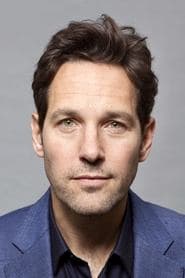
Tom Mardirosian

Paul Rudd

U.S. Consul Oscar Heizer (voice)

Paul Rudd

The Armenian Genocide Trailers

You may also like

Namibia: The Story of a German Colony
6.0

Namibia: The Story of a German Colony

Apr 22, 2019

Germans colonized the land of Namibia, in southern Africa, during a brief period of time, from 1840 to the end of the World War I. The story of the so-called German South West Africa (1884-1915) is hideous; a hidden and silenced account of looting and genocide.

12 Mart: "Sağ-Sol"
0.0

12 Mart: "Sağ-Sol"

May 8, 1994

In 1965,a two-month-old leader,the commander of the Western Front, knocked down the big plane tree in a shake. One was 40, the other 80. In the last 5 years, it wasnt even possible to think of a government without İnönü in the country,but things were changing.Actually, Demirel was supposed to take the task, but the AP leader did not want it. It's good for the prime minister. He was inexperienced. A moderate name was found for this eight-month temporary period: Suat Hayri Ürgüplü, one of the former ministers of İnönü, and the new EP Senator. Demirel also sat on the chair of the deputy prime minister. For the first time in his life, he entered the General Assembly Hall of the Assembly during this period. Although he was not a deputy, he settled at the forefront of the Cabinet of Ministers, met with the government, and reconciled with the circles that were said to never give power to the EP. At the end of eight months, when the elections were at the door, the squares were waiting for him

12 March: The Junta
9.0

12 March: The Junta

May 29, 1994

We are now saying goodbye to the 1960s. The 60's started eventfully on May 27. It ended as eventfully as it began. The '70s inherited escalating violence, student riots, and rumors of intervention. Prime Minister Demirel was trying to put out the fire in the street and to calm the increasingly restless army on the other. The October 1969 elections were held in this atmosphere and the Justice Party came out of the ballot box again. May 27 came by overthrowing the DP government, but the AP, which declared that three of the three elections held since the 1960s, were the continuation of the DP, emerged successfully. Demirel was about to roll up his sleeves for a new era. He felt that no one could stop him now. He was wrong. As he was dizzy from victory, he fell at Caesar's fault. Forgot about Brutus...

12 March: Rematch
0.0

12 March: Rematch

Jun 12, 1994

Demirkırat stumbled on March 12, 1971. Actually, you know, they shoot limping horses. But this time it didn't. Turkish democracy continued to run despite its wounds. Because March 12 was not a "seizure" but a "warning". The generals were saying, "If what we want is not done, we will seize it." The country was entering a new era under this Sword of Damocles. A president who was helpless in the face of events, a prime minister who had to leave his seat, a newly fallen parliament, four generals neither inside nor outside the power... Now, a solution would be tried to be found out of this complex equation. But how and with whom? No one knew the answer to these questions in Turkey on the morning of March 13.

The Devil Came on Horseback
7.2

The Devil Came on Horseback

Jan 19, 2007

While serving with the African Union, former Marine Capt. Brian Steidle documents the brutal ethnic cleansing occuring in Darfur. Determined that the Western public should know about the atrocities he is witnessing, Steidle contacts New York Times reporter Nicholas Kristof, who publishes some of Steidle's photographic evidence.

50 Years of Cyprus: Final
0.0

50 Years of Cyprus: Final

Jan 29, 1999

32.Day, a news classic by Mehmet Ali Birand, is with you this time with the documentary 50 Years of Cyprus!

It Started with Trees – Revolt in the Gezi Park
0.0

It Started with Trees – Revolt in the Gezi Park

Jun 16, 2013

Protesters diary from Gezi Park - Taksim Square, Istanbul. Occupy Gezi movement started when the government decided to build shopping mall in place of the last green area that remained in the middle of Taksim Square.

The Killing Fields
7.5

The Killing Fields

Nov 23, 1984

New York Times reporter Sydney Schanberg is on assignment covering the Cambodian Civil War, with the help of local interpreter Dith Pran and American photojournalist Al Rockoff. When the U.S. Army pulls out amid escalating violence, Schanberg makes exit arrangements for Pran and his family. Pran, however, tells Schanberg he intends to stay in Cambodia to help cover the unfolding story — a decision he may regret as the Khmer Rouge rebels move in.

Hotel Rwanda
7.7

Hotel Rwanda

Dec 22, 2004

Inspired by true events, this film takes place in Rwanda in the 1990s when more than a million Tutsis were killed in a genocide that went mostly unnoticed by the rest of the world. Hotel owner Paul Rusesabagina houses over a thousand refuges in his hotel in attempt to save their lives.

Return to al-Ma’in
0.0

Return to al-Ma’in

May 14, 2025

Return to al-Ma’in chronicles the multiyear collaboration between Forensic Architecture (FA) and Palestinian historian and Nakba survivor Salman Abu Sitta on the reconstruction of his birthplace, the lost village of Ma’in Abu Sitta (or al-Ma’in). Guided by the work and memories of Abu Sitta, FA-researchers reconstructed al-Ma’in’s occupation by Israeli forces on 14 May 1948, its subsequent demolition, and the settlements constructed on its ruins. The movie looks to the present moment and the connections between Israeli military’s conduct and appropriation of Palestinian land during and after 1948, and today in Gaza. The project looks back at the sophistication and sensitivity with which the Abu Sitta family cultivated their land, and the rich agricultural diversity that was lost when Israeli settlements were subsequently constructed over this landscape.

The Cut
5.9

The Cut

Oct 16, 2014

In 1915 a man survives the Armenian genocide in the Ottoman Empire, but loses his family, speech and faith. One night he learns that his twin daughters may be alive, and goes on a quest to find them.

Kampf auf der Bosporus-Brücke - Die Türkei und der gescheiterte Putschversuch
6.5

Kampf auf der Bosporus-Brücke - Die Türkei und der gescheiterte Putschversuch

Jan 22, 2021

The night of July 15, 2016 changed the history of Turkey. On that day there were coordinated attacks by parts of the Turkish army, among others in Istanbul. The aim of the military: a coup against the government. The decisive confrontation occurred on the Bosporus Bridge. While President Erdogan was still on vacation, live at TV he called on the people who were devoted to him to stand against the military. As an enemy for the masses, he presented his adversary Fethullah Gülen, whom he branded as the coup leader. He also urged the imams of the country's mosques to condition the population to resist. And so it happens that at night thousands of agitated people take to the streets to oppose the armed insurgents. The death toll was high. 352 people died across Turkey during the attempted coup. The consequences are even more serious: Erdogan used this gift, as he called it himself, to undermine democracy, to arrange mass arrests of dissidents and to transform Turkey into a dictatorship.

Demirkırat: Rebellion
9.0

Demirkırat: Rebellion

Jul 2, 1991

In the past, when spring came, there was a spring atmosphere in politics. But the spring of 1959 brought the CHP's spring offensive on the contrary. Seeing that the opportunity for a dialogue was completely lost after Menderes' plane crash, İsmet Pasha put on his boots in April and took his 46 deputies with him to the expedition. The chosen route was the route of the Great Offensive in the War of Independence. Uşak, where İnönü took the Greek Commander-in-Chief Trikupis prisoner, was the first stop...

Demirkırat: Island
0.0

Demirkırat: Island

Jul 16, 1991

It is a famous saying: "One can come to power with a bayonet, but not sit on it." The organization, which carried out 27 May, came to power with a bayonet. Moreover, these young officers seized power that night by breaking the traditional chain of command. In the morning, a 10-year DP period was over, the support of the public was gained at first hand, and a brand new phase was reached. Now, the days that would mark the future of Turkey were beginning. Now, as those days put it, the "second republic period" was beginning.

Radical Evil
7.2

Radical Evil

Jan 17, 2014

Das radikal Böse is a German-Austrian documentary that attempted to explore psychological processes and individual decision latitude "normal young men" in the German Einsatzgruppen of the Security Police and SD, which in 1941 during the Second World War as part of the Holocaust two million Jewish civilians shot dead in Eastern Europe.

Gallipoli
7.1

Gallipoli

Aug 13, 1981

Two Australian sprinters face the brutal realities of war when they are sent to fight in the Gallipoli campaign in the Ottoman Empire during World War I.

The Collaborator
7.4

The Collaborator

Jan 1, 2007

During the conflict in the former Yugoslavia many soldiers were convinced to kill fellow citizens including friends and relatives in the name of patriotism. The Kolaborator follows the story of Goran, 24, a promising young soccer player who is forced to become a soldier. Goran goes from being a talented athlete to an executioner virtually overnight. Following orders, Goran lines up civilians, shoots them and drags them into mass graves. Justifying his role as a protector of his people, Goran becomes increasingly detached from the task until his soccer coach and life-long friend, Asim, is led in front of him. As a familiar face stands defeated before him, Goran must reconsider his actions and choose between his own life and that of his dear friend.

Stacey on the Front Line: Girls, Guns and Isis
8.0

Stacey on the Front Line: Girls, Guns and Isis

Jan 17, 2017

September 2016: Stacey Dooley embeds herself on the frontline with the extraordinary all-female Yazidi battalion, who are fuelled to take revenge against the so-called Islamic State. As the battle to take Mosul from ISIS advances in Northern Iraq, in this extraordinary film for BBC Three, Stacey finds these young women's lives have been transformed by a desire to avenge their loved ones who were murdered by Isis.

Aurora's Sunrise
8.3

Aurora's Sunrise

Apr 21, 2023

The story of how Aurora Mardiganian (1901-94), a survivor of the Armenian genocide perpetrated by the Ottoman Empire (1915-17), became a Hollywood silent film star.

Osteuropa zwischen Hitler und Stalin  - Das große Sterben
0.0

Osteuropa zwischen Hitler und Stalin - Das große Sterben

Jun 10, 2025

Between 1930 and 1945, Eastern Europe experienced mass violence on an unprecedented scale. Hitler and Stalin exploited the vast region for their respective expansionist plans. It is estimated that around 14 million civilians were murdered—primarily Jews, Poles, Balts, Belarusians, and Ukrainians.