Collectively made Algerian film.
No Trailers found.
No Cast found.
70-year-old Timo makes the most of his short ride to work. Speeding up on a bicycle ends up in a ditch, but the adrenaline rush leaves a feeling of pleasure.
No overview available.
In 2001, Jimmy Wales published the first article on Wikipedia, a collaborative effort that began with a promise: to democratize the spreading of knowledge, monopolized by the elites for centuries. But is Wikipedia really a utopia come true?
In Rio de Janeiro, over many days, the director Maria Ramos witnesses and films the judgment of several teenagers accused of stealing, trafficking and murdering. Underage youths are protected by the Brazilian laws and their faces can not be exposed; therefore, they are replaced by teenagers from poor communities.
The catastrophic and avoidable coal mining disaster at the Knox Mine is recounted by the people who lived through the tragedy.
An intimate portrait of Salt Lake City and its surroundings. Shot on 16mm film.
What would American democracy look like in the hands of teenage girls? In this documentary, young female leaders from wildly different backgrounds in Missouri navigate an immersive experiment to build a government from the ground up.
American teenagers connect on the early internet to crusade for their favorite videogame of all time, pitting their fan site against a corporate goliath and their own looming adulthoods.
60 years ago, in the Algerian desert, an atomic bomb, equivalent to three or even four times Hiroshima, exploded. Named the “Blue Gerboise”, it was the first atomic bomb tested by France, and of hitherto unrivaled power. This 70 kiloton plutonium bomb was launched in the early morning, in the Reggane region, in southern Algeria, during the French colonial era. If this test allowed France to become the 4th nuclear power in the world, it had catastrophic repercussions. France had, at the time, certified that the radiation was well below the standard safety threshold. However, in 2013, declassified files revealed that the level of radioactivity had been much higher than announced, and had been recorded from West Africa to the south of Spain.
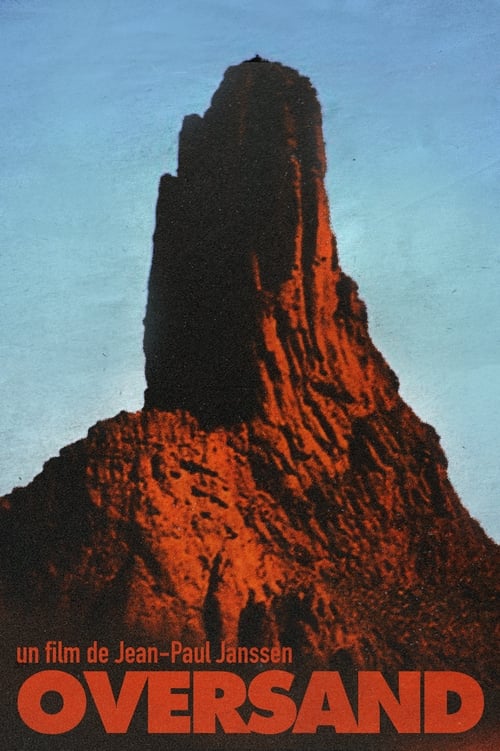
Oversand is one of the first films about free climbing, the third film in a series of three with "Overdon" and "Over-Ice". Directed by Jean-Paul Janssen, the film was shot in 35mm in Algeria, in the Sahara Desert, in the Tamanrasset region, on the walls of the majestic peaks of the Atakor massif, central sub-region of Hoggar, mountainous heart of Hoggar, a volcanic plateau of almost circular shape, whose average altitude is 2000 meters, and which culminates at Mount Tahat (2918m), the highest point in Algeria. The Atakor is distinguished by its spectacular volcanic peaks, its needles, and its rugged landscapes, resulting from the erosion of ancient volcanic chimneys, which make it the most emblematic summits of the Hoggar, such as the Assekrem, the Ilamane, or the Tizouyag, where climbers Patrick Edlinger, Patrick Bérhault, Bernard Gorgeon, Hugues Jaillet, Jacques Perrier, Stéphane Troussier and Odette Schoënleb evolve under the watchful eye of the Tuareg caravans.
Where did the universe come from and did a creator have a hand in making it? As scientists learn more about the universe, our ideas about exactly what God made (the earth, the universe, the multi-verse even nothing but empty space) have come into question.
This unusual documentary follows director Hideki Kojitani as he follows Tetsuro Shoji, a man who claims to be able to summon UFOs, and depicts the events that led to his attempt to film a UFO. While he seeks the opinions of various UFO researchers to determine the authenticity of UFOs, the sudden disappearance of Shoji leads to an unexpected turn of events.
They call each other Emmanuel and Vladimir - but despite the informal tone, a fateful negotiation is taking place. During France's presidency of the EU, President Macron takes on the task of negotiating with President Putin in an attempt to prevent an invasion of Ukraine. For the first time, we get to follow the diplomatic game behind the scenes and hear parts of their phone conversations.
Civil Rights Movement activist, TSSAA Hall of Fame Basketball Coach, swim coach, teacher, musical director, father, grandfather, and friend to many, Coach Sylvester Ford Sr. was known by many as “Big Time.” The nickname was given to him as a kid for his height, but “Big Time” showed time and time again why his nickname was about way more than his looks– it’s also because of how he showed up big for his community. Hometown Feature Audience Award winner at Indie Memphis 2024, Big Time chronicles the life of legendary Memphis basketball coach, Sylvester Ford Sr., while inspiring us all to live “big time” lives along the way.
Sound progression of two opposite landscapes.
The Palindromists is a documentary delving into the world of palindromes – those peculiar words and phrases that read the same backwards and forwards. Explore palindromes in history and meet the world's greatest palindromists as they see everything backwards preparing for the World Palindrome Championship.
This program reveals the daily battle between the Internet’s outlaws and the hackers who oppose them by warding off system attacks, training IT professionals and police officers, and watching cyberspace for signs of imminent infowar. Through interviews with frontline personnel from the Department of Defense, NYPD’s computer crime squad, private detective firm Kroll Associates, X-Force Threat Analysis Service, and several notorious crackers, the program provides penetrating insights into the millions of hack attacks that occur annually in the U.S.—including one that affected the phone bills of millions and another that left confidential details of the B-1 stealth bomber in the hands of teenagers. The liabilities of wireless networks, the Code Red worm, and online movie piracy are also discussed. A Discovery Channel Production. (51 minutes)
As glam rock's most flamboyant survivors, X Japan ignited a musical revolution in Japan during the late '80s with their melodic metal. Twenty years after their tragic dissolution, X Japan’s leader, Yoshiki, battles with physical and spiritual demons alongside prejudices of the West to bring their music to the world.
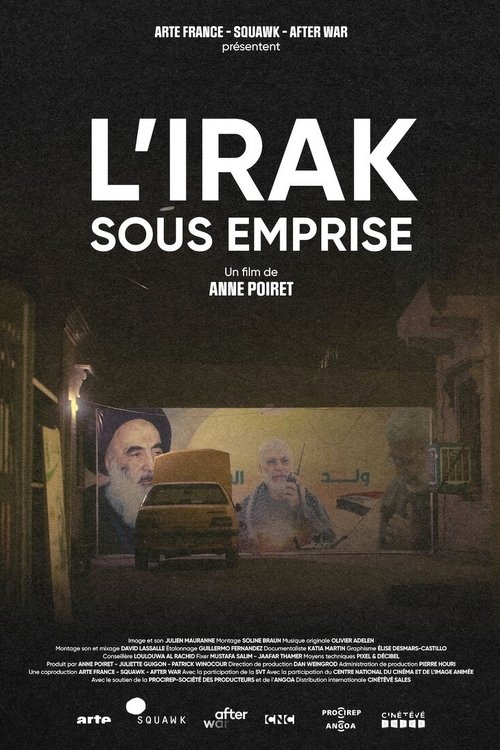
In 2014, when Mosul, Iraq's second largest city, fell to the Islamic State, the creation of dozens of factions was seen as the solution to organize the Shiite youth who had risen up en masse to fight Daesh and protect Baghdad, which was under threat. These factions were supposed to be a temporary force. In reality, they have never been demobilized, leading the Iraqi state into ever greater instability. How did they become so strategically important in post-Daesh Iraq?