A documentary short about the director's home town of Aarhus, Denmark.
No Trailers found.
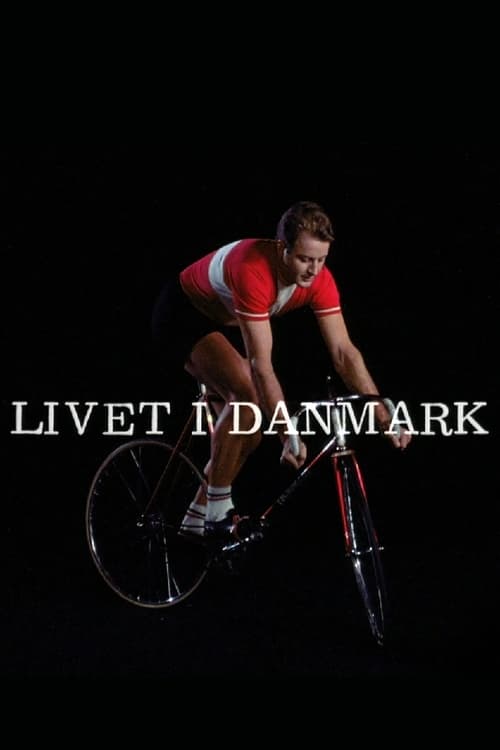
The intention of the film is to give an impression of what small exotic Denmark looks like, what the strange Danes look like and how they are. Nearly 100 Danes are presented in the film, amongst them a racing cyclist, a Minister of Finance, a popular actor and 13 unmarried women from a provincial town. "There is too much fogginess and rain and melancholy in most of the pictures of Denmark," says Jørgen Leth. "But not in my film. I would like to show you some authentic, clear and beautiful pictures from this strange country."
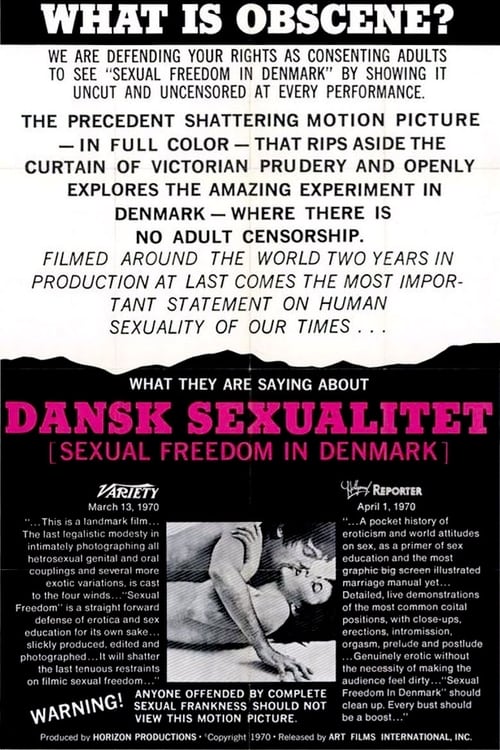
Starting as a documentary on the sexually liberated culture of late-Sixties Denmark, Sexual Freedom in Denmark winds up incorporating major elements of the marriage manual form and even manages to squeeze in a montage of beaver loops and erotic art. All narrated with earnest pronouncements concerning the social and psychological benefits of sexual liberation, the movie, is a kind of mondo film dotted with occasional glimpses of actual sex.
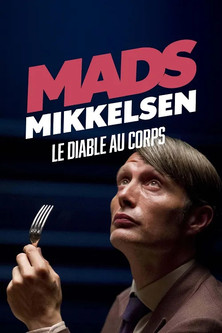
Impassivity and silence are Mads Mikkelsen's trademarks, and roles without reply his specialty. His sculptural allure is such that his mere presence takes on a dramatic dimension. For him, everything starts with the body. It's his main working tool, which he shapes and engages for each film. For the majority of world audiences, the Danish actor remains associated with his "villain" characters in Hollywood blockbusters - Casino Royale, Doctor Strange, Hannibal, Fantastic Beasts... Yet he finds with uncommon ease a balance between major American film franchises and more modest, confidential independent films. If the actor manages to move from one universe to another without being stereotyped, it's because he has a very physical - thanks to his former career as a gymnast - and pragmatic approach to his art.
No overview available.
When Danish filmmakers Mira Jargil and Christian Sønderby Jepsen try to find balance in their stressful lives, they seek guidance from a renowned Danish HIV researcher turned monk deep in the mountains of Sri Lanka. But their filming process goes differently than expected. When they hear that the renowned Danish doctor and HIV scientist Jan Erik Hansen has burned all boats to live as a Buddhist monk on a mountain in Sri Lanka, the two Danish documentary makers Mira Jargil and Christian Sønderby Jepsen decide to make a film about him. to make. Jan Erik Hansen, as monk Bhante, has become an important voice in the Buddhist community. He has a YouTube channel with many followers, and people from all over the world ask him their life questions. The film project ends unexpectedly when the monk and the filmmakers appear to have different ideas about the film.
Armed with skulls, black makeup, wild outfits and high mohawks, this gothic trinity fights to gain control of and thus free themselves from their loneliness and inner demons as well as pressure from authorities, which they feel disturbed and controlled by. But one day, Josephine meets the beautiful guy, Jan, on Instagram and falls head over heels in love with him and the precious trio friendship is put to the test.
The story about Danish national football (soccer) team, a traditional minnow until the mid-1980s when they improved dramatically and eventually went on to win the European championship in 1992.
A movie about the education for nurse told from Bente's perspective. She starts at the preschool at Rødkilde Højskole at Møn and comes from there to a hospital, where student time begins. After three years, Bente is trained and can get the nursing needle attached to the robe.
Social democracy propaganda film about future dreams for Denmark in 1960. Although Denmark is free again, the former opponent and worker, Svend, is disillusioned: "It is all something soft". The dream of the future is incarnated by a young woman, Karen, who shows Svend the visions of a better life in the 'youth's land'. There are homes and a nuclear-powered car for everyone.
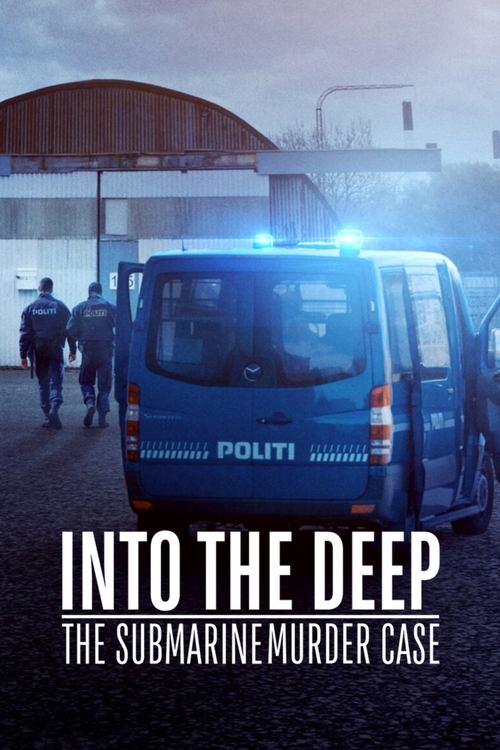
In 2016, a young Austrialian filmmaker began documenting amateur inventor Peter Madsen. One year in, Madsen brutally murdered Kim Wall aboard his homemade submarine. An unprecedented revelation of a killer and the journey his young helpers take as they reckon with their own complicity and prepare to testify.
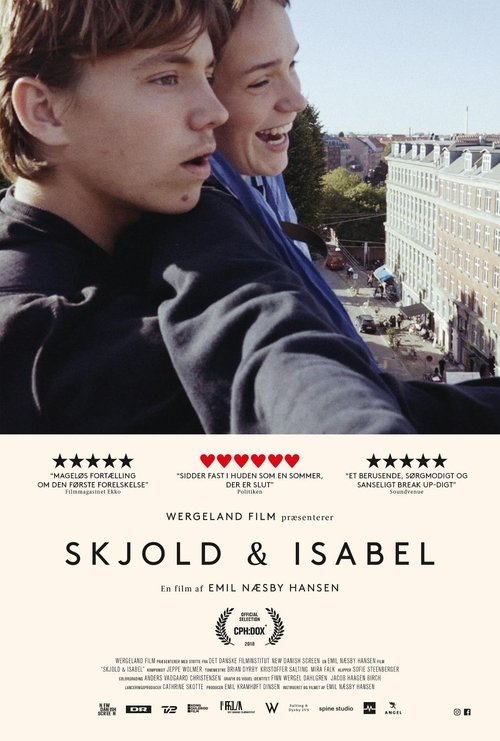
17-year-old Skjold and 18-year-old Isabel are no longer together, but they will always be each other's first love. The film throws us into a whirlwind of conversations, quarrels and happy moments during a long summer in Copenhagen. A vulnerable and confusing time for the two of them, as they try to define who they are, both as a couple and as individuals. They are entangled in romantic feelings and a strong friendship, and find it hard to let each other go, so to break with her feelings, Isabel decides to move to Barcelona on her own. But will their new freedom give Skjold and Isabel the answers to who they are? Emil Næsby Hansen is the fly on the wall, who effortlessly and without interfering is there with the couple during their ups and downs, managing to capture all the emotional nuances. From romantic love and unbearable loneliness to poetic freedom, with the Danish summer as a moody backdrop.
The cause of the traffic accident should not be sought at the time of the accident itself, but long before. The motorist who has been drinking a little. The cyclist who is busy and the motorcyclist who drives correctly but still falls victim to an accident due to the ruthlessness of others.
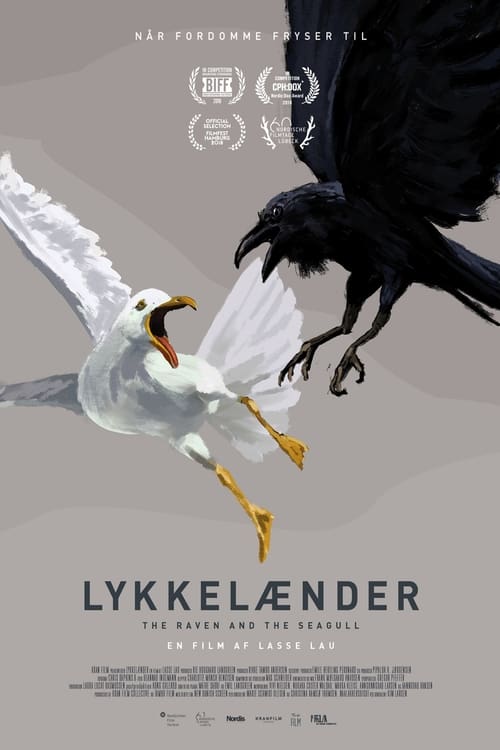
The relationship between Greenland and Denmark is full of fantasy and myths. And these are exactly what Danish artist Lasse Lau reflects upon – and in turn documents – in his first feature-length film. But how do you give a form to the Greenlandic experience when you are an outsider yourself? Lau has created a sensitive film about authenticity and recreation by letting both elements become a part of the work, together with his performers. But also by watching and listening intently. The colonial history is entrenched in both Greenland's infinitely beautiful landscapes and in the collective consciousness. But so is the willingness to break with it and look ahead with a new political self-awareness. 'Lykkelænder' is the result of a long-term research project, but talks about its extremely complex topics in a way that grounds the postcolonial perspective in a recognisable life experience. It does so with both a sense of humour and with emphasis.
Self