logologo
MovieVerse© 2024
Privacy PolicyTerms of ServiceContact Us
Made with ❤️ by Thathsara
movie poster
No Image Available
Sign in to create your own watchlist

The Screen Director

Mar 12, 1951
0h 9m
★ 6.0

Overview

A documentary short film depicting the work of the motion picture director. An anonymous director is shown preparing the various aspects of a film for production, meeting with the writer and producer, approving wardrobe and set design, rehearsing scenes with the actors and camera crew, shooting the scenes, watching dailies, working with the editor and composer, and attending the first preview. Then a number of real directors are shown in archive footage (as well as a predominance of staged 'archive' footage) working with actors and crew.
Genres

Documentary

Production Companies

Academy of Motion Picture Arts and Sciences (AMPAS)
Warner Bros. Pictures

Cast

Richard L. Bare

Stagehand on Telephone (uncredited)

Richard L. Bare

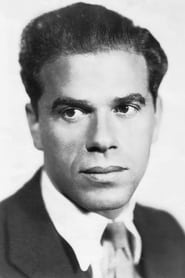
Frank Capra

Self (staged 'archive' footage) (uncredited)

Frank Capra

Phyllis Coates

Self (staged 'archive' footage) (uncredited)

Phyllis Coates

John Huston

Self (archive footage) (uncredited)

John Huston

Vivien Leigh

Self (archive footage) (uncredited)

Vivien Leigh

Michael Curtiz

Self (staged 'archive' footage) (uncredited)

Michael Curtiz

Edward Biby

Actor (uncredited)

Edward Biby

Roy Del Ruth

Self (uncredited)

Roy Del Ruth

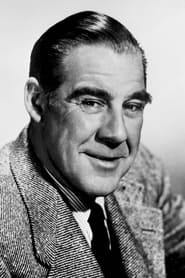
Paul Douglas

Self (archive footage) (uncredited)

Paul Douglas

Bess Flowers

Woman in Audience (uncredited)

Bess Flowers

John Ford

Self (staged 'archive' footage) (uncredited)

John Ford

Art Gilmore

Narrator (voice) (uncredited)

Art Gilmore

The Screen Director Trailers

No Trailers found.

You may also like

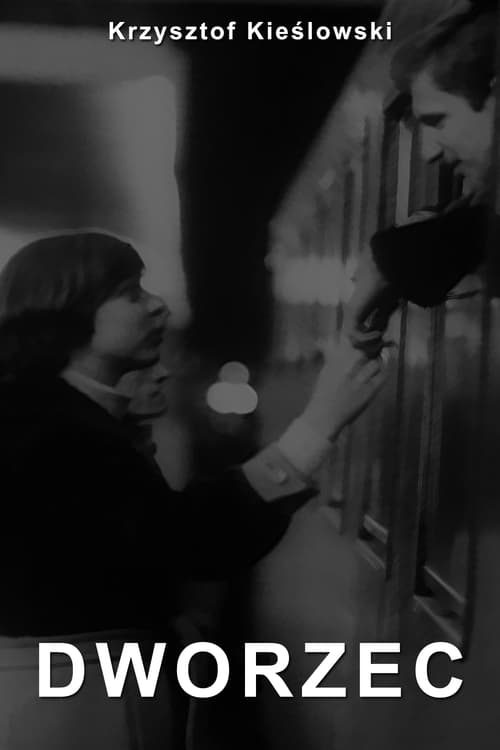
Railway Station
4.7

Railway Station

Jan 1, 1980

Warsaw's Central Railway Station. 'Someone has fallen asleep, someone's waiting for somebody else. Maybe they'll come, maybe they won't. The film is about people looking for something.

Meat Joy
6.6

Meat Joy

May 29, 1964

"Meat Joy is an erotic rite — excessive, indulgent, a celebration of flesh as material: raw fish, chicken, sausages, wet paint, transparent plastic, ropes, brushes, paper scrap. Its propulsion is towards the ecstatic — shifting and turning among tenderness, wildness, precision, abandon; qualities that could at any moment be sensual, comic, joyous, repellent. Physical equivalences are enacted as a psychic imagistic stream, in which the layered elements mesh and gain intensity by the energy complement of the audience. The original performances became notorious and introduced a vision of the 'sacred erotic.' This video was converted from original film footage of three 1964 performances of Meat Joy at its first staged performance at the Festival de la Libre Expression, Paris, Dennison Hall, London, and Judson Church, New York City."

Workers Leaving the Lumière Factory
6.7

Workers Leaving the Lumière Factory

Mar 22, 1895

Working men and women leave through the main gate of the Lumière factory in Lyon, France. Filmed on 22 March 1895, it is often referred to as the first real motion picture ever made, although Louis Le Prince's 1888 Roundhay Garden Scene pre-dated it by seven years. Three separate versions of this film exist, which differ from one another in numerous ways. The first version features a carriage drawn by one horse, while in the second version the carriage is drawn by two horses, and there is no carriage at all in the third version. The clothing style is also different between the three versions, demonstrating the different seasons in which each was filmed. This film was made in the 35 mm format with an aspect ratio of 1.33:1, and at a speed of 16 frames per second. At that rate, the 17 meters of film length provided a duration of 46 seconds, holding a total of 800 frames.

No Image Available
6.0

Salò: Fade to Black

Jan 1, 2001

A short documentary exploring the ongoing relevance and power of 'Salò o le 120 giornate di Sodoma'.

The Irishman: In Conversation
7.5

The Irishman: In Conversation

Nov 27, 2019

Martin Scorsese, Robert De Niro, Joe Pesci, and Al Pacino in conversation about The Irishman.

Montgomery Clift
3.8

Montgomery Clift

Jan 1, 1983

A documentary incorporating footage of Montgomery Clift’s most memorable films; interviews with family and friends, and rare archival material stretching back to his childhood. What develops is the story of an intense young boy who yearned for stardom, achieved notable success in such classic films as From Here to Eternity and I Confess, only to be ruined by alcohol addiction and his inability to face his own fears and homosexual desires. Montgomery Clift, as this film portrays him, may not have been a happy man but he never compromised his acting talents for Hollywood.

No Image Available
6.3

Auge in Auge - Eine deutsche Filmgeschichte

Jul 3, 2008

This is not merely another film about cinema history; it is a film about the love of cinema, a journey of discovery through over a century of German film history. Ten people working in film today remember their favourite films of yesteryear.

Okay for Sound
5.0

Okay for Sound

Sep 7, 1946

This short was released in connection with the 20th anniversary of Warner Brothers' first exhibition of the Vitaphone sound-on-film process on 6 August 1926. The film highlights Thomas A. Edison and Alexander Graham Bell's efforts that contributed to sound movies and acknowledges the work of Lee De Forest. Brief excerpts from the August 1926 exhibition follow. Clips are then shown from a number of Warner Brothers features, four from the 1920s, the remainder from 1946/47.

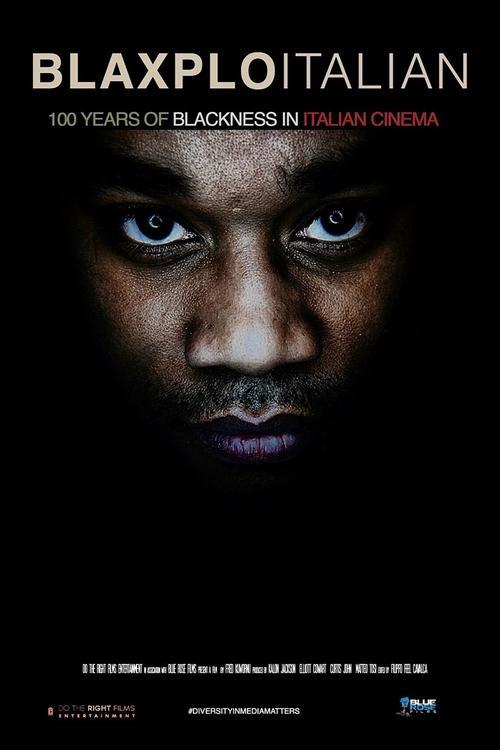
Blaxploitalian: 100 Years of Blackness in Italian Cinema
0.0

Blaxploitalian: 100 Years of Blackness in Italian Cinema

Jun 8, 2016

A documentary that uncovers the careers of a population of entertainers never heard from before: Black actors in Italian cinema. With modern day interviews and archival footage, the documentary discloses the personal struggles and triumphs that classic Afro-Italian, African-American and Afro-descendant actors faced in the Italian film industry, while mirroring their struggles with those of contemporary actors who are working diligently to find respectable, significant, and non-stereotypical roles, but are often unable to do so. Blaxploitalian is more than an unveiling of a troubled history; it is a call-to-action for increased diversity in international cinema through the stories of these artists in an effort to reflect the modern and racially diverse Italy.

The James Dean Story
5.4

The James Dean Story

Aug 13, 1957

Released two years after James Dean's death, this documentary chronicles his short life and career via black-and-white still photographs, interviews with the aunt and uncle who raised him, his paternal grandparents, a New York City cabdriver friend, the owner of his favorite Los Angeles restaurant, outtakes from East of Eden, footage of the opening night of Giant, and Dean's ironic PSA for safe driving.

No Image Available
7.2

Tin Tan

Nov 12, 2010

Germán Cipriano Gómez Valdés Castillo, a young radio announcer from Cuidad Juárez, succeeds in drawing attention to the pachuco movement through his character Tin Tan, laying the groundwork for a new form of binational and mass linguistic expression: Spanglish. He soon became a leading figure in theater and film on the American Continent. Singled out by critics as a destroyer of the language, he quickly won the approval of the public. His ability to improvise revolutionized the film industry. His talent as an actor, singer, dancer and comedian contributed to the Golden Age of Mexican Cinema. From El Hijo Desobediente to Capitán Mantarraya, from Cuidad Juárez to Havana, from mambo to rock, the legacy of Tin Tan makes him one of the great icons of Mexico today. This film tells his story as it has never been told before.

Monsieur Truffaut Meets Mr. Hitchcock
6.5

Monsieur Truffaut Meets Mr. Hitchcock

Aug 5, 1999

When Francois Truffaut approached Alfred Hitchcock in 1962 with the idea of having a long conversation with him about his work and publishing this in book form, he didn't imagine that more than four years would pass before Le Cinéma selon Hitchcock finally appeared in 1966. Not only in France but all over the world, Truffaut's Hitchcock interview developed over the years into a standard bible of film literature. In 1983, three years after Hitchcock's death, Truffaut decided to expand his by now legendary book to include a concluding chapter and have it published as the "Edition définitive". This film describes the genesis of the "Hitchbook" and throws light on the strange friendship between two completely different men. The centrepieces are the extracts from the original sound recordings of the interview with the voices of Alfred Hitchcock, Francois Truffaut, and Helen Scott – recordings which have never been heard in public before.

Impromptu
10.0

Impromptu

Jan 1, 2017

A journey to the origins of cinema, starting with its forgotten fathers: the pioneers who achieved moving images before 1895, the official year of the Lumière cinematograph. Through five studies by Frédéric Chopin, 'Impromptu' is also a tribute to the end of the 19th century, to its immortal muses, and to the fascination with movement itself.

Vivement Truffaut
6.0

Vivement Truffaut

Jul 12, 1985

A tribute to the late, great French director Francois Truffaut, this documentary was undoubtedly named after his last movie, Vivement Dimanche!, released in 1983. Included in this overview of Truffaut's contribution to filmmaking are clips from 14 of his movies arranged according to the themes he favored. These include childhood, literature, the cinema itself, romance, marriage, and death.

No Image Available
7.2

Comrades in Dreams

Oct 15, 2006

Four lives that could not be more different and a single passion that unites them: the unconditional love for their cinemas, somewhere at the end of the world. Comrades in Dreams brings together six cinema makers from North Korea, America, India and Africa and follows their efforts to make their audiences dream every night.

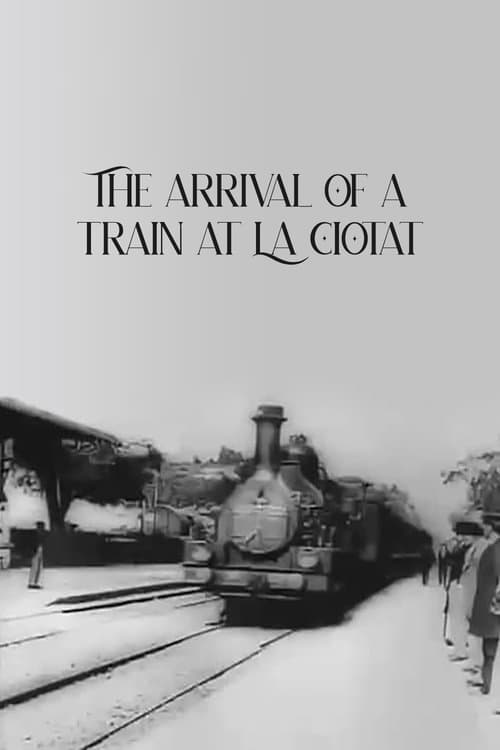
The Arrival of a Train at La Ciotat
7.1

The Arrival of a Train at La Ciotat

Jun 30, 1896

A group of people are standing along the platform of a railway station in La Ciotat, waiting for a train. One is seen coming, at some distance, and eventually stops at the platform. Doors of the railway-cars open and attendants help passengers off and on. Popular legend has it that, when this film was shown, the first-night audience fled the café in terror, fearing being run over by the "approaching" train. This legend has since been identified as promotional embellishment, though there is evidence to suggest that people were astounded at the capabilities of the Lumières' cinématographe.

Sailing with Bushnell Keeler
5.6

Sailing with Bushnell Keeler

Jan 1, 1967

In 1967, a young David Lynch grabbed his new Bolex 16mm camera, to film his friend and mentor Bushnell Keeler and brother Dave Keeler sailing on the Chesapeake Bay in Bush's King's Cruiser. This was David Lynch's very first film, which he prefers to call a "home movie". It depicts a man, a painter, who changed David's life forever pursuing the artist's life, which he continues to this day.

Black Holes: The Other Side of Infinity
5.2

Black Holes: The Other Side of Infinity

Feb 10, 2006

A presentation of the facts and theory surrounding the astronomical phenomenon of "black holes", using the latest in computer-generated imagery. Theories regarding their origin are presented, along with speculation about what lies with and beyond them.

The Battle of Midway
5.8

The Battle of Midway

Sep 14, 1942

The Japanese attack on Midway in June 1942, filmed as it happened. Preserved by the Academy Film Archive, in partnership with Twentieth Century Fox Film Corporation, in 2006.

Z Channel: A Magnificent Obsession
7.1

Z Channel: A Magnificent Obsession

May 16, 2004

A documentary on the Z Channel, one of the first pay cable stations in the US, and its programming chief, Jerry Harvey. Debuting in 1974, the LA-based channel's eclectic slate of movies became a prime example of the untapped power of cable television.