How are rampage killers made?
Can science help us understand these crimes?
Trailer
Self - Andy Williams's Father
Self (archive footage)
Himself
A mother determines to see her son faced with autism and depression overcome challenges, along with support from family, the community and teachers.
Piel dolor (Skin Pain) explains how power is structurally sustained in violence. Its nature and the relationships it establishes in society are based more on the imposition and use of force than on building consensus, dialogue, and respect for diversity. In that sense, power is a behavior that seeks dominance through force and man as a gender, becomes an instrument of violence that is exercised against the weakest. Extinguishing the socially constructed violence means eliminating the current power and its historical sustenance, questioning the source of origin, religion, ideology, the system and its values. Is that utopia possible?
In a television first, Fat Family Tree sets out to prove that unlocking the secrets of a fat family’s genes can help provide the answer to their lifelong weight problems. Presented by Dr Dawn Harper (Embarrassing Bodies), Fat Family Tree uses cutting edge genetics to decode the genes of an overweight family for whom all other attempts to shed the pounds have not worked. Discovering how the family’s genes have put them at risk of excessive weight gain is the first step to devising a diet to help them beat their genes. Based on the latest science, the programme’s “gene-busting” diet also promises fail safe diet tips that could help all of us lose weight.
A documentary film about a student filmmaker struggling with depression, expressed in the medium she loves the most.
A groundbreaking documentary about the temperament trait of high sensitivity found in 20% of the population in both men and women. Based on the findings of bestselling author-psychologist Dr. Elaine Aron ("The Highly Sensitive Person").
In his first HBO comedy special, Gary Gulman offers candid reflections on his struggles with depression through stand-up and short documentary interludes. While speaking to issues of mental health, Gulman also offers his observations on a number of topics, including his admiration for Millennial attitudes toward bullying, the intersection of masculinity and sports, and how his mother's voice is always in his head.
Painter Zdzisław Beksiński, his wife Zofia and their son Tomasz, a well-known radio journalist and translator, were a typical and unconventional family, both at the same time. One of the father’s obsessions was filming himself and his family members. Using archival footage only, shot primarily by Zdzisław, as well many other materials, which have not been presented anywhere so far, the film tells a tragic story of the Beksińskis that has never ceased to fascinate Polish filmmakers.
Travelling the length and breadth of Britain, the film explores the impact of teenage killings on families of different religion, race and class.
Somewhere in Myanmar is a forest rich in amber and controlled by the Kachin Independence Army (KIA). Most of its inhabitants work in a mine, digging the earth night and days in the hope of finding the precious ore that will get them out of poverty. But on top of the excruciating hardship of the work, they also have to fear an attack from the army.
James, giving himself 12 months before he has "a license to kill himself," sets off to the Amazon rainforest with hopes of finding a shaman who can save his life.
Why are men two or even three times less likely than women to be diagnosed with depression? Why are the figures reversed between the sexes in suicide statistics—some 47,000 people in Europe each year, more than three-quarters of whom are men? In men, the signs may differ from those generally identified with depression: anger rather than sadness, hyperactivity (at work or in sports) rather than asthenia, antisocial or addictive behavior, greater difficulty in asking for help due to modesty or shame, etc. But whatever form it takes, mental suffering is still often overlooked by those affected, misdiagnosed by many practitioners, and therefore generally underestimated.
In an intense action-filled 85 minutes, you will learn to defend yourself against the mounting threat of “knife culture” offenders.
Many geneticists and archaeologists have long surmised that human life began in Africa. Dr. Spencer Wells, one of a group of scientists studying the origin of human life, offers evidence and theories to support such a thesis in this PBS special. He claims that Africa was populated by only a few thousand people that some deserted their homeland in a conquest that has resulted in global domination.
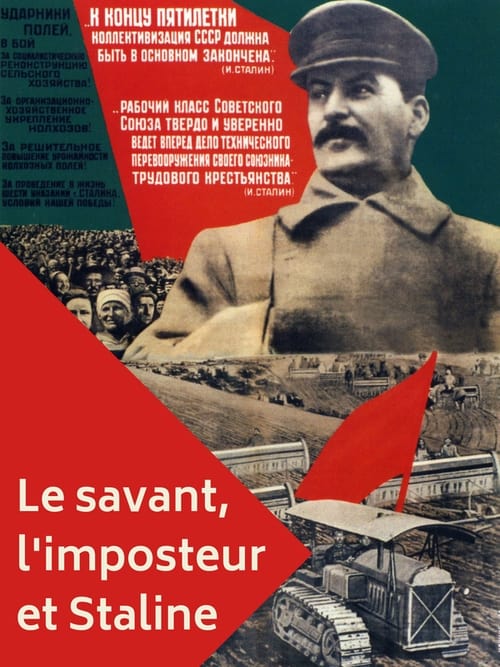
The documentary tells two very different human fates in the 1920s Soviet Union. Nikolai Vavilov was a botanical genius, Trofim Lyssenko was an agronomist who made great promises and fake inventions. Each of them tried to solve the country's nutritional problem, but only one succeeded.
The Show Must Go On is a personal journey behind the scenes that confronts the epidemic of mental health issues in the Australian entertainment industry.
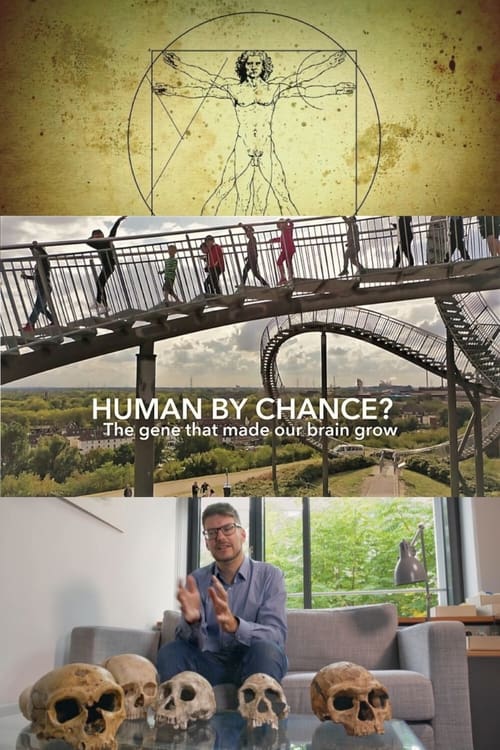
If we compare ourselves with our genetically closest living relatives, the chimpanzees, we have few physical advantages. We are far weaker, cannot move nearly as fast, and do not have the same climbing capabilities. Instead, humans excel in areas such as architecture, religion, science, language, writing, art, culture, and ideas. These achievements are due to our larger brain that contain billions of neurons. It was the rapid growth of our brain, originating about 2 million years ago, that allowed us to be the predominant species of the world. What caused this rapid growth of our cerebral cortex? Researchers worldwide have asked this question for many years, but now there finally seems to be an answer.
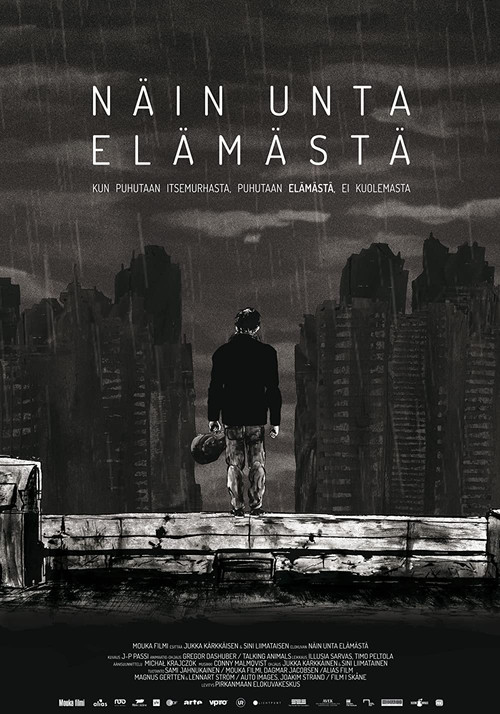
Every day in Finland alone, two people commit suicide. Thousands of people are affected by suicide yearly. Once I Dreamt of Life is a feature length documentary film about suicide. It’s an account about one’s personal relation to suicide, but also studies suicide as social phenomena: The motives, warning signs & consequences. The film follows the journey of a young man, an animated character based on a real person, on his path towards suicide. The journey is described by people who’ve had encounters with suicide – parents who lost their child, young adults who considered or even tried committing suicide. When linked together, these experiences offer a collage of our perception of suicide. They tell about how people cope with the past and find a reason to go on with their lives. The intention is not to romanticize suicide or judge. It encourages people to talk about painful and difficult experiences and reminds us how important it is to be heard.
No overview available.
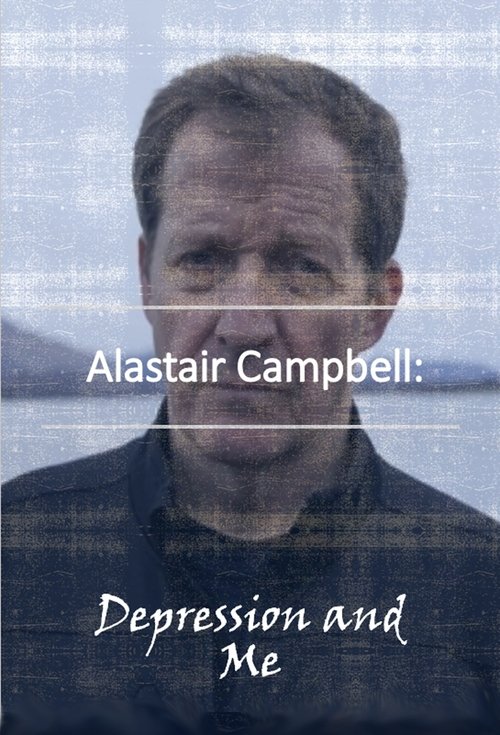
Alastair Campbell candidly talks about his experience living with depression and explores if radical new treatments can make a difference.
Three film-makers travel to Iraq to film the ongoing crisis in which ISIS forces are trying to take over the country. The film-makers speak with locals, military, police and other media outlets to get their opinions on the crisis but it's the voices of the children which often goes unheard, so the film-makers listen to the children, and find out their views on the crisis.