A parlor full of bon vivants pass around an enchanted pair of spectacles that “reveal the personality and pleasures of the one who wears them.”
No Trailers found.
No Cast found.
A couple of kids lay their hands on a pot of very strong glue and proceed to wreak havoc.
On the anniversary of their mother's death, brothers Enzo and Franco find a box with many old photographs. As one of the brothers is blind, the other will tell him what is in the photographs.
A young woman who lives with her uncle begins to dream about a monster that lurks in the shadows of the night.
With input from actor and writer Jan Hlobil, director and cinematographer Rene Smaal presents a film in the true surrealist tradition, in the sense that only 'found' elements were used, and that it defies interpretation based on ordinary cause-and-effect time sequence.
This mostly lost film is often confused with director Paul Wegener third and readily available interpretation of the legend; Der Golem, wie er in die Welt kam (1920). In this version of the golem legend, the golem, a clay statue brought to life by Rabbi Loew in 16th century Prague to save the Jews from the ongoing brutal persecution by the city's rulers, is found in the rubble of an old synagogue in the 20th century. Brought to life by an antique dealer, the golem is used as a menial servant. Eventually falling in love with the dealer's wife, it goes on a murderous rampage when its love for her goes unanswered.
A nervous and unsettling young boy takes a mysterious old suitcase across London... to a twisted and surreal conclusion.
God and Satan wager on the soul of a learned and prayerful alchemist as part of their eternal war over Earth.
As a young couple stops and rests in a small village inn, the man is abducted by Death and is sequestered behind a huge doorless, windowless wall. The woman finds a mystic entrance and is met by Death, who tells her three separate stories set in exotic locales, all involving circumstances similar to hers.
Mahonri, the brother of Jared, is a righteous man in wicked Babel. After the tower of Babel is destroyed and the language of the people is confused, the Lord shows Mahonri how to build barges to carry the righteous across the sea to the Promised Land. When the brother of Jared asks the Lord to touch stones to light the barges, his faith is so strong that he receives a great revelation.
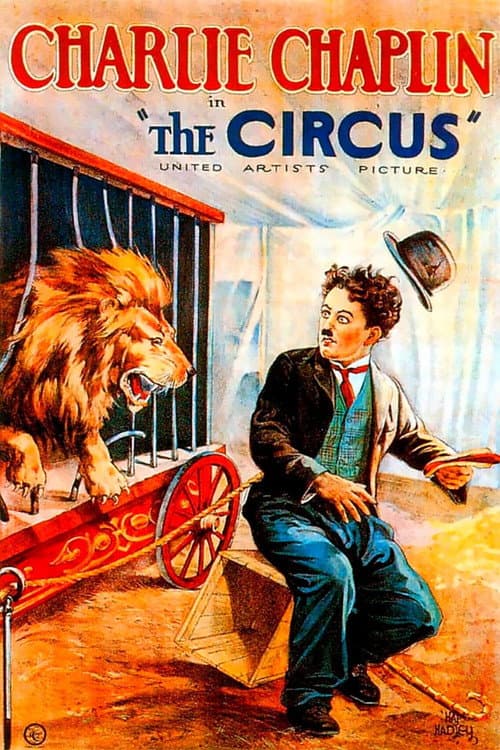
Charlie, a wandering tramp, becomes a circus handyman - soon the star of the show - and falls in love with the circus owner's stepdaughter.
At Thanksgiving, a tramp arrives in a homeless-hostile town.
A recalcitrant thief vies with a duplicitous Mongol ruler for the hand of a beautiful princess.
A young woman, Margaret Dauncey, is caught between the forces of a charlatan magician, Oliver Haddo, whom she is unable to resist, and the love of a handsome surgeon, Arthur Burdon, who has saved her from being a helpless cripple by performing a delicate operation on her spine.
As a practical joke, an actor impersonates the screen monster he made famous. A lost film.
Wanting his son to get away from his many girlfriends and buckle down to work, the New York industrialist father of a playboy sends him to an obscure village in Spain to find samples of a rare mineral. When the son gets to Spain, he promptly falls for a beautiful señorita, and runs afoul of the local police chief.
Avant-garde homage to pre-revolution Russian silent movies, and to the poet Aleksandr Blok.
Grandmother Koba has to take care of her grandchild Emma's digital horse farm.
Silent about two clumsy glaziers.
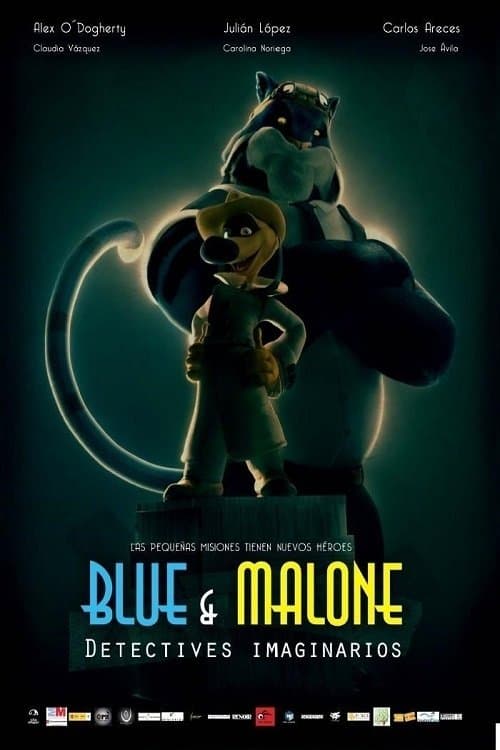
Gobinchu, Marc's imaginary friend, has disappeared. Berta, his younger sister, hires detectives Blue & Malone, a giant cat and a plasticine dog, to investigate what happened. Together, they tour the house living many adventures and knowing and facing numerous fantastic creatures.
Using an array of gloves in different styles and from different historical periods, the film is a short history of the cinema - from silent movies via pastiches of Buñuel and Fellini and Close Encounters of the Third Kind to a futurist junkyard where tin cans become animated police cars in a city of urban decay.