A portriat of the daily lives of Beatriz and Gilberto, a couple that has been together for over 40 years. A reflection about love and marriage. An intimate glimpse into the lives of two people who struggle to live in harmony.
Trailer
An isolated village in the Lithuanian countryside. Seated in her house, an elderly woman recites an old folk story. Then she climbs up the tall ladder that takes her to the rooftop of the church.
Elem Klimov's tribute to his late wife, director Larisa Shepitko, killed in a car accident a year earlier. Features excerpts from all of her films, and archival audio of her discussing life and art.
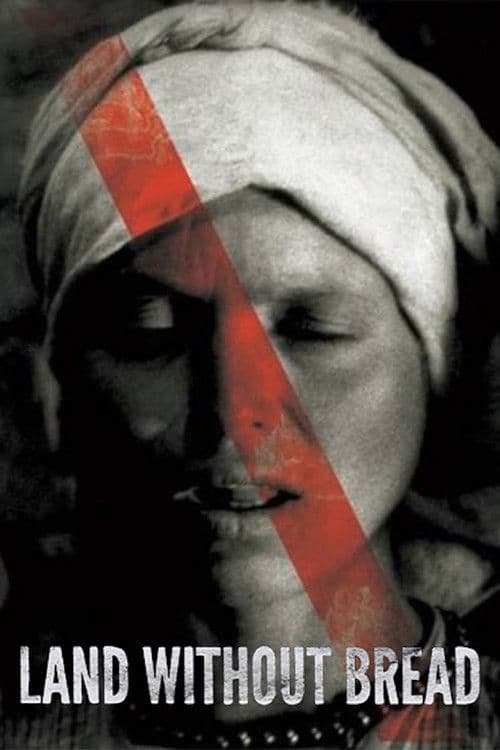
An exploration —manipulated and staged— of life in Las Hurdes, in the province of Cáceres, in Extremadura, Spain, as it was in 1932. Insalubrity, misery and lack of opportunities provoke the emigration of young people and the solitude of those who remain in the desolation of one of the poorest and least developed Spanish regions at that time.
To the city come men, women, fruits, flowers, vegetables, goats and sheep – all ready for consumption. It is the process of consumption/exploitation that forms the core of the film.
Society has created a stereotype of the LGTBQ collective in which its members are young people who are fashionable, who have money, who have a lot of fun and who never pass the age of forty. But where are the older ones? When they reach that age, do they evaporate? This documentary makes visible a little-discussed topic: old age.
Too hot! The spawning fish do not come at the right time and the pepper plants end up dying in this heat. "This is a very different weather that not even the spirits can understand." From their gardens, homes, and backyards, the indigenous women of the Amazon involve us in their vast universe of knowledge while they observe the impacts of climate change in their ways of life.
Like it or not, porn is here and it is harmful. In this controversial film, award-winning filmmaker Justin Hunt dissects the impact of pornography on societies around the globe, from how it affects the brain of the individual, to how modern technology leads to greater exposure to youth, to watching it literally tear a family apart. In what may well be one of the most devastating issues in modern culture, this film will break down the damage that porn is doing to us a human race and leave you thinking that it's clearly time that we start taking porn addiction a bit more seriously.
A contemplation of life.
St. Joseph Fort: Principality of Pontinha, the diamond that illuminates the Atlantic Pearl.
In 1967, de Andrade was invited by the Italian company Olivetti to produce a documentary on the new Brazilian capital city of Brasília. Constructed during the latter half of the 1950s and founded in 1960, the city was part of an effort to populate Brazil’s vast interior region and was to be the embodiment of democratic urban planning, free from the class divisions and inequalities that characterize so many metropolises. Unsurprisingly, Brasília, Contradições de uma Cidade Nova (Brasília, Contradictions of a New City, 1968) revealed Brasília to be utopic only for the wealthy, replicating the same social problems present in every Brazilian city. (Senses of Cinema)
Documentary about influential Brazilian sociologist Gilberto Freyre, made in his country house in Apipucos, Pernambuco (Northeast Brazil).
A portrait of Łódź, Poland that exists in a time-warp of sad memory.
No overview available.
"Not a documentary but the the ruins of an attempted documentary." - Grashina Gabelmann Nico’s solo concert in West Berlin 1986. She’s high, giggly, not entirely there but her voice is still haunting and raspy and her presence still the one of a star. We see short clips of an interview held the same year in a hotel – an interview Gaul found somewhere, where he can not remember. We see footage borrowed from Andy Warhol’s estate. Footage of factory parties and screen tests.
Based on an unrealized film script written in 1964 for The Homosexual Law Reform Society, a British organisation that campaigned for the decriminalization of homosexual relations between men, "The Colour Of His Hair" merges drama and documentary into a meditation on queer life before and after the partial legalization of homosexuality in 1967.
A 10-minute portrait of modernist poet and de Andrade’s godfather, Manuel Bandeira, is clear in its affection for it subject, though like many New-Waveish films of the time, depicts the modern urban landscape as an ominous and alienating force.
A short documentary where director Dave Jackson digs into his catboy past and life after Cat Sick Blues.
East German short film
Documentary on Antonio "King Tone" Fernandez and his gang, the Latin Kings, whose main target was to protect Latin people.
Iran, 2008. As President Mahmoud Ahmadinejad's motorcade creeps through the teeming streets of Qom Shrine, thousands of people jam hand-written letters into the hands of his handlers. Hearing their President deliver a speech is a thrill, but more promising to these men and women is the hope that their letters - expressing pleas for loans, medical attention, housing and jobs - will be answered. Since his 2005 election on a populist, "man of the people" platform, Ahmadinejad has encouraged Iranians to send him such letters; according to a staff member, he has received about 10 million of them, and has been able to respond to nearly 76 percent. In one letter, a 16-year-old boy says his family has no money and goes to bed hungry every night. According to the staff member, the boy will be helped. As other letters are read, the worker says that "In Islam, charity is a necessity."