logologo
MovieVerse© 2024
Privacy PolicyTerms of ServiceContact Us
Made with ❤️ by Thathsara
movie poster
The Batman Shootings
Sign in to create your own watchlist

The Batman Shootings

Aug 19, 2012
0h 57m
★ 6.4

Overview

The premiere of The Dark Knight Rises was the big event in Aurora, Colorado. So popular with young cinema-goers, the city's theatre complex put on an extra showing. But minutes into the film, lone gunman James Holmes, dressed as the Joker, entered the room and started firing indiscriminately. Twelve people died, many more were injured. This documentary tells the life story of Holmes, of his victims and speaks to survivors.

Genres

Documentary
History

Production Companies

BBC
Mentorn Media

The Batman Shootings Trailers

No Trailers found.

Cast

Amal Fashanu

Self - Presenter

Amal Fashanu

James Holmes

Self (archive footage)

James Holmes

You may also like

No Image
7.5

Thank You, Mr. Robertson

Jan 1, 1985

A glimpse of the pre-history of cinema starting with the projections of Etienne Gaspard Robert (also known as M. Robertson), who used magic lanterns and other optical illusions to develop the genre of the Gothic phantasmagoria in the late eighteenth century.

São Paulo, Cinemacity
0.0

São Paulo, Cinemacity

Jun 6, 1994

Mixing new images to existing São Paulo movies takes, the documentary presents the city from the perspective of five main attributes: transformation, anonymity, crowd, precariousness and dimension.

De Arm Van Jezus
8.0

De Arm Van Jezus

Jan 24, 2003

Jakob Yzermans is an American salesman looking for his roots in Rotterdam. He thinks his father (Hendrik Yzermans) has left Holland with the money he took from his collegues. Jakob is trying to get the money together to repay the money. While doing so he encounters more and more problems.

In the Shadow of Hollywood: Race Movies and the Birth of Black Cinema
6.5

In the Shadow of Hollywood: Race Movies and the Birth of Black Cinema

Sep 15, 2007

This documentary captures the sounds and images of a nearly forgotten era in film history when African American filmmakers and studios created “race movies” exclusively for black audiences. The best of these films attempted to counter the demeaning stereotypes of black Americans prevalent in the popular culture of the day. About 500 films were produced, yet only about 100 still exist. Filmmaking pioneers like Oscar Micheaux, the Noble brothers, and Spencer Williams, Jr. left a lasting influence on black filmmakers, and inspired generations of audiences who finally saw their own lives reflected on the silver screen.

No Image
5.0

Made in Hollywood

May 12, 2011

A breathtaking investigation into blockbusters, a film genre that enjoys worldwide success yet keeps its secret weapon well hidden backstage in Hollywood. The blockbuster appeals to a very wide audience, from 7 to 77 years and from Paris to Beijing. These films, which have boosted the film industry, started out with "Jaws" and "Star Wars" and are still prospering with Avatar or Alice in Wonderland. To succeed, the films must meet a few precise criteria, one of them being their cost - at 100 million dollars minimum. But in Hollywood, the films' ingredients are a well-kept secret; perhaps for fear of discovering that the studios' house rules are not as rosy as in certain fruitful happy endings? The pressure and the stakes are colossal. This fascinating documentary reviews the numerous professions affiliated with the blockbuster, via interviews with producers of the major studios (Walt Disney Studio, 20th Century Fox...)...

My Best Fiend
7.3

My Best Fiend

May 17, 1999

A film that describes the love-hate relationship between Werner Herzog and Klaus Kinski, the deep trust between the director and the actor, and their independently and simultaneously hatched plans to murder one another.

Red Chairs - Parma and the Cinema
0.0

Red Chairs - Parma and the Cinema

Jul 24, 2014

The relations between Parma and cinema were so strong for almost the whole of the twentieth century that this city became an early laboratory of ideas and theories on cinema and a set chosen by some of the greatest Italian authors and beyond. Furthermore, a considerable number of directors, actors, screenwriters and set designers were born in Parma who have made their way internationally, testifying to the fact that in this small city in Northern Italy there was a decidedly cinematic air. Red armchairs takes up the thread of this story, wondering why, unique among the Italian provincial cities, Parma has given so much to the cinema, accompanying the viewer on a journey backwards that from the first projections of the Lumière cinema reaches the ultramodern experience of new multiplexes. During this journey we will meet the characters who created the conditions for this diffusion of cinematographic culture in Parma.

Waltz with Bashir
7.7

Waltz with Bashir

Jun 12, 2008

An Israeli film director interviews fellow veterans of the 1982 invasion of Lebanon to reconstruct his own memories of his term of service in that conflict.

Ensuring Your Place In Hell Vol. II
0.0

Ensuring Your Place In Hell Vol. II

Jul 1, 2021

The sequel to one of the most infamous shockumentaries ever made. Includes a real home video of a girl being exorcised, a recording of the aftermath of a brutal gang massacre, a russian science experiment on a decapitated dog, and a splatter-filled educational video.

Bowling for Columbine
7.5

Bowling for Columbine

Oct 9, 2002

This is not a film about gun control. It is a film about the fearful heart and soul of the United States, and the 280 million Americans lucky enough to have the right to a constitutionally protected Uzi. From a look at the Columbine High School security camera tapes to the home of Oscar-winning NRA President Charlton Heston, from a young man who makes homemade napalm with The Anarchist's Cookbook to the murder of a six-year-old girl by another six-year-old. Bowling for Columbine is a journey through the US, through our past, hoping to discover why our pursuit of happiness is so riddled with violence.

The Arrival of a Train at La Ciotat
7.1

The Arrival of a Train at La Ciotat

Jun 30, 1896

A group of people are standing along the platform of a railway station in La Ciotat, waiting for a train. One is seen coming, at some distance, and eventually stops at the platform. Doors of the railway-cars open and attendants help passengers off and on. Popular legend has it that, when this film was shown, the first-night audience fled the café in terror, fearing being run over by the "approaching" train. This legend has since been identified as promotional embellishment, though there is evidence to suggest that people were astounded at the capabilities of the Lumières' cinématographe.

Islands of Forgotten Cinemas
0.0

Islands of Forgotten Cinemas

Mar 3, 2016

A poetic documentary about the lost film culture in the small villages on the Croatian islands during the SFR of Yugoslavia.

No Image
7.2

Comrades in Dreams

Oct 15, 2006

Four lives that could not be more different and a single passion that unites them: the unconditional love for their cinemas, somewhere at the end of the world. Comrades in Dreams brings together six cinema makers from North Korea, America, India and Africa and follows their efforts to make their audiences dream every night.

Handbook of Movie Theaters' History
7.5

Handbook of Movie Theaters' History

Mar 11, 2021

Handbook of Movie Theaters' History is a documentary about the history, the development in the present days and the future of movie theaters in the city of Turin, Italy. It mixes the documentary language with comedy and fiction, and is enriched by interviews to some of the most important voices of Turin cinematography. The film follows the evolution of movie theaters by enlightening its main milestones: the pre-cinema experiences in the late 19th Century, the colossals and the movie cathedrals of the silent era, the arthouse theaters, the National Museum of Cinema, the Torino Film Festival, the movie theaters system today and the main hypothesis about its future. The mission of Handbook of Movie Theaters' History is to explore and give back to the audience a deep reflection about the identity and the value of movie theater, in its social and anthropological role and as a mass media, and to analyze the experience of the viewer.

The Killing Fields
7.5

The Killing Fields

Nov 23, 1984

New York Times reporter Sydney Schanberg is on assignment covering the Cambodian Civil War, with the help of local interpreter Dith Pran and American photojournalist Al Rockoff. When the U.S. Army pulls out amid escalating violence, Schanberg makes exit arrangements for Pran and his family. Pran, however, tells Schanberg he intends to stay in Cambodia to help cover the unfolding story — a decision he may regret as the Khmer Rouge rebels move in.

Andrés Caicedo: A Few Good Friends
7.0

Andrés Caicedo: A Few Good Friends

Jan 1, 1986

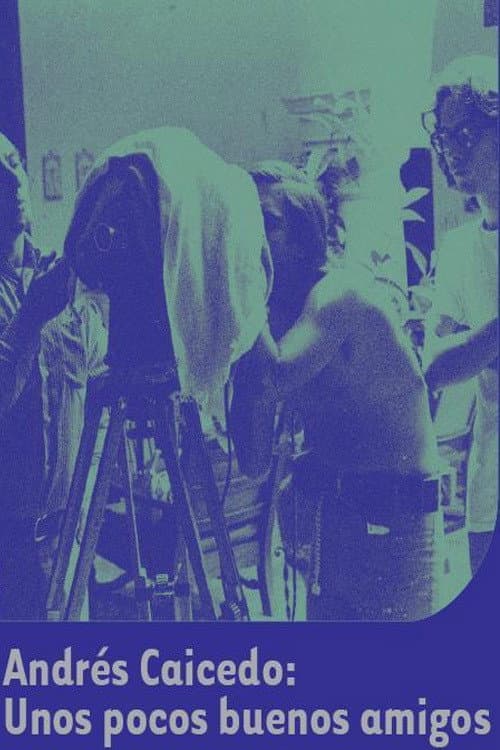
Using the unfinished film, ANGELITA Y MIGUEL ÁNGEL, by Andrés Caicedo and Carlos Mayolo, as a structuring device, friends of prolific film critic and writer Andrés Caicedo, an unforgettable figure of the group of Cali in the 1970s who left an incredible amount of texts, reflect upon his life, his work, and his suicide at the age of 25, testify to his influence in the cultural life of Colombia, and remember his strong and touching personality.

Sexo en el plató
5.8

Sexo en el plató

Apr 9, 2007

How are the sex scenes filmed? What tricks are used to fake the desire? How do the interpreters prepare and feel? Spanish actors and directors talk about the most intimate side of acting, about the tricks and work methods when narrating exposed sex. In Spain the general rule is that there are no rules. Each film, each interpreter, faces it in very different ways.

Cine São Paulo
5.0

Cine São Paulo

Apr 22, 2017

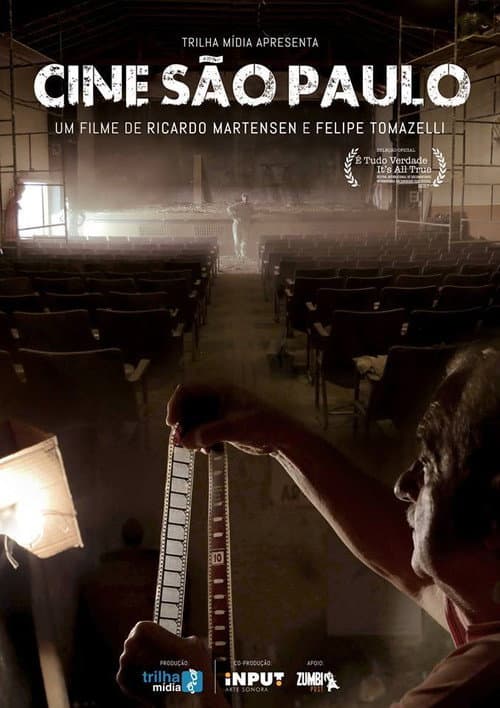
Chico has dedicated his whole life to CINE SAO PAULO. The building, inherited from his father, is now badly deteriorated. Refurbish it, in order to make the old movie theater get back to work, becomes his great obsession.

City of Life and Death
7.4

City of Life and Death

Apr 22, 2009

In 1937, during the height of the Second Sino-Japanese War, the Imperial Japanese Army has just captured Nanjing, then-capital of the Republic of China. What followed was known as the Nanking Massacre, or the Rape of Nanking, a six week period wherein tens of thousands of Chinese soldiers and civilians were killed.

Bury My Heart at Wounded Knee
6.5

Bury My Heart at Wounded Knee

May 27, 2007

Beginning just after the bloody Sioux victory over General Custer at Little Big Horn, the story is told through two unique perspectives: Charles Eastman, a young, white-educated Sioux doctor held up as living proof of the alleged success of assimilation, and Sitting Bull the proud Lakota chief whose tribe won the American Indians’ last major victory at Little Big Horn.