logologo
MovieVerse© 2024
Privacy PolicyTerms of ServiceContact Us
Made with ❤️ by Thathsara
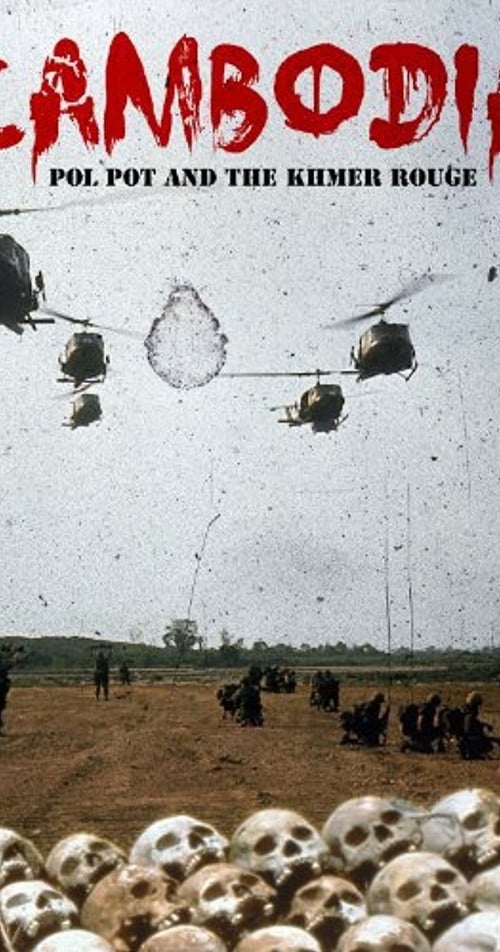
movie poster
Cambodia, Pol Pot and the Khmer Rouge
Sign in to create your own watchlist

Cambodia, Pol Pot and the Khmer Rouge

Jan 1, 2011
1h 0m
★ 0.0

Overview

Between April, 1975 and January, 1979, Pol Pot and the Khmer Rouge were responsible for the deaths of 1.7 million people in Cambodia. A quarter of the population were wiped out in one of the most brutal and virulent genocides of the twentieth century. This new film explores the life of Pol Pot, the ever-smiling, obsessively secretive leader of the Khmer Rouge. What drove him to inflict such a radical experiment on his own people? How did the Khmer Rouge turn from a band of nationalist revolutionaries into a ruthless killing machine? And why did the West stand by and let it happen?
 As an international tribunal in Cambodia finally brings the surviving leaders of the Khmer Rouge to justice, it's time to re-examine the gruesome legacy of Pol Pot.

Genres

Documentary

Production Companies

3DD Productions

Cambodia, Pol Pot and the Khmer Rouge Trailers

No Trailers found.

You may also like

No Image Available
5.2

“May Your Memory Be Love“ - The Story of Ovadia Baruch

Dec 16, 2008

In March 1943, twenty-year-old Ovadia Baruch was deported together with his family from Greece to Auschwitz-Birkenau. Upon arrival, his extended family was sent to the gas chambers. Ovadia struggled to survive until his liberation from the Mauthausen concentration camp in May 1945. While in Auschwitz, Ovadia met Aliza Tzarfati, a young Jewish woman from his hometown, and the two developed a loving relationship despite inhuman conditions. This film depicts their remarkable, touching story of love and survival in Auschwitz, a miraculous meeting after the Holocaust and the home they built together in Israel. This film is part of the "Witnesses and Education" project, a joint production of the International School for Holocaust Studies and the Multimedia Center of the Hebrew University of Jerusalem. In this series, survivors recount their life stores - before, during and after the Holocaust. Each title is filmed on location, where the events originally transpired.

Palestinians Don't Need Sidewalks
0.0

Palestinians Don't Need Sidewalks

Feb 4, 2025

A raw journey through occupied West Bank and East Jerusalem, this film profiles Palestinian life under Israeli aggression, exposing Australia’s complicity and media bias.

Osteuropa zwischen Hitler und Stalin  - Das große Sterben
0.0

Osteuropa zwischen Hitler und Stalin - Das große Sterben

Jun 10, 2025

Between 1930 and 1945, Eastern Europe experienced mass violence on an unprecedented scale. Hitler and Stalin exploited the vast region for their respective expansionist plans. It is estimated that around 14 million civilians were murdered—primarily Jews, Poles, Balts, Belarusians, and Ukrainians.

John Baumhackl: Chemical Memories
0.0

John Baumhackl: Chemical Memories

Jan 1, 2014

John Baumhackl recalls the early days of the Vietnam War when more and more troops were being sent into combat every month. In 1968, John's number came up and he was drafted into the conflict. Buying a camera at his company store before shipping off, he captured many battles while in a helicopter. John was near the front lines when President Nixon made the controversial decision to push into Cambodia. In John's view, this saved American lives.

500 Years
5.9

500 Years

Apr 6, 2017

From a historic genocide trial to the overthrow of a president, the sweeping story of mounting resistance played out in Guatemala’s recent history is told through the actions and perspectives of the majority indigenous Mayan population, who now stand poised to reimagine their society.

Namibia: The Story of a German Colony
6.0

Namibia: The Story of a German Colony

Apr 22, 2019

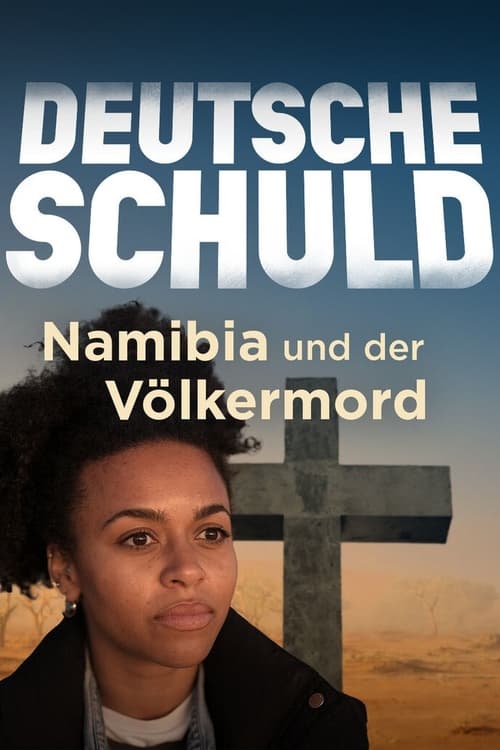
Germans colonized the land of Namibia, in southern Africa, during a brief period of time, from 1840 to the end of the World War I. The story of the so-called German South West Africa (1884-1915) is hideous; a hidden and silenced account of looting and genocide.

Lakota Nation vs. United States
6.2

Lakota Nation vs. United States

Jun 11, 2022

Poet Layli Long Soldier crafts a searing portrait of her Oyate’s connection to the Black Hills, through first contact and broken treaties to the promise of the Land Back movement, in this lyrical testament to resilience of a nation.

If Only I Were That Warrior
6.5

If Only I Were That Warrior

Nov 28, 2015

If Only I Were That Warrior is a feature documentary film focusing on the Italian occupation of Ethiopia in 1935. Following the recent construction of a monument dedicated to Fascist general Rodolfo Graziani, the film addresses the unpunished war crimes he and others committed in the name of Mussolini’s imperial ambitions. The stories of three characters, filmed in present day Ethiopia, Italy and the United States, take the audience on a journey through the living memories and the tangible remains of the Italian occupation of Ethiopia — a journey that crosses generations and continents to today, where this often overlooked legacy still ties the fates of two nations and their people.

Radical Evil
7.2

Radical Evil

Jan 17, 2014

Das radikal Böse is a German-Austrian documentary that attempted to explore psychological processes and individual decision latitude "normal young men" in the German Einsatzgruppen of the Security Police and SD, which in 1941 during the Second World War as part of the Holocaust two million Jewish civilians shot dead in Eastern Europe.

The Devil Came on Horseback
7.2

The Devil Came on Horseback

Jan 19, 2007

While serving with the African Union, former Marine Capt. Brian Steidle documents the brutal ethnic cleansing occuring in Darfur. Determined that the Western public should know about the atrocities he is witnessing, Steidle contacts New York Times reporter Nicholas Kristof, who publishes some of Steidle's photographic evidence.

No Image Available
0.0

Tierra

Apr 4, 2024

"Regina José Galindo’s Tierra (2013) explores connections between the exploitation of labor, resources, and human life in Guatemala. Presented at a larger-than-life scale, Galindo stands naked on a parcel of land that is excavated by an encroaching bulldozer. Conjuring imagery of machine-dug mass graves, the work draws attention to the massacre of hundreds of thousands of Indigenous people, mostly Maya Ixil, during the Guatemalan Civil War (1960–96). As the excavator digs around her, the artist stands fixed and unrelenting." - MoMA PS1

The Look of Silence
7.8

The Look of Silence

Nov 13, 2014

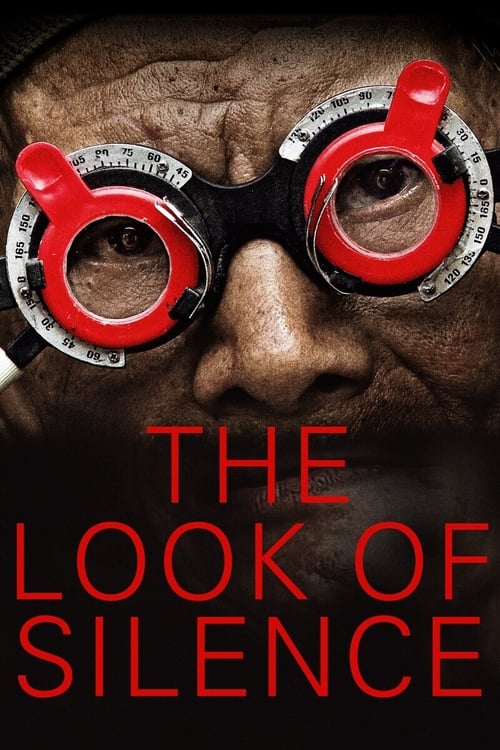
An optician grapples with the Indonesian mass killings of 1965-1966, during which his older brother was exterminated.

No Image Available
0.0

Katyń

Jan 1, 2008

The murder of thousands of Polish officers and representatives of the elite by the Soviets was a planned action of extermination of that part of the society of the Second Republic, which formed the foundation of Polish statehood. For the Communists, it was a prelude to their subsequent seizure of power, which is why the Katyn lie became one of the cornerstones of the Polish People's Republic. From the beginning, however, Poles demanded that the truth about the crime be revealed.

No Image Available
0.0

Zbrodnia katyńska

Jan 1, 1991

Katyń. The name of this town was banned during the communist era in Poland. It appeared as an entry in only one edition of the PWN encyclopedia from 1958, where the Germans were blamed for the crimes. When, in 1989, one of the periodicals placed this word on the cover of its April issue in the context of National Remembrance Month, the publication provoked deep and loud outrage from Wiesław Górnicki, a publicist and official advisor to General Wojciech Jaruzelski. The name Katyń had been ruthlessly and consistently erased from the national memory.

Rain Falls from Earth: Surviving Cambodia's Darkest Hour
0.0

Rain Falls from Earth: Surviving Cambodia's Darkest Hour

Invalid Date

On April 17, 1975, the face of Cambodia would forever be changed. As Khmer Rouge soldiers marched into the capital city of Phnom Penh, the unsuspecting people of Cambodia had little idea they would be forced into a living nightmare that would last nearly four years. Rain Falls From Earth is a story of courage, a story of survival and a story of eventual triumph over the Communist regime that was responsible for the deaths of over two million people. The voices of many Cambodians are heard as they convey their thoughts, ideas and emotions - the very things they were forced to abandon in the "killing fields" of Cambodia. Their stories are an eyewitness account to genocide.

Bengal Memory
0.0

Bengal Memory

Invalid Date

A Bangladeshi American undertakes a journey to learn about the liberation war in his native country, traveling there for the first time in nearly two decades, and uncovering the controversial role the U.S. played in a forgotten genocide that occurred there over 50 years ago. From 1971 to the present day, this is a story of Bangladesh’s independence, a family’s journey immigrating to America, and the cognitive dissonance of a person belonging to both homelands. Driven by interviews with his father and other family members, along with experts and witnesses, archival videos, declassified recordings, and animations, BENGAL MEMORY is a unique and untold oral history through a personal lens.

Walled Off
0.0

Walled Off

Oct 6, 2024

A secret museum in an art hotel sparks intrigue when it's revealed to be a creation of controversial artist, Banksy. Using art as a form of political resistance, the hotel highlights the reality of life under Israeli military occupation. The film journeys through the hotel, Palestine, and a relevant past to dismantle the mainstream media's bias towards the Palestinian struggle for freedom and equality.

Broken Rainbow
5.7

Broken Rainbow

May 5, 1985

Documentary chronicling the government relocation of 10,000 Navajo Indians in Arizona.

No Image Available
0.0

Sebastia

Oct 1, 2020

Sebastia, a small archaeological town, sits on top of a hill Northwest of Nablus, Palestine surrounded by Shavei Shomron, an illegal Israeli settlement and confiscated agricultural fields of olive groves and apricot trees. This ancient site was excavated multiple times over the last century by colonial archaeologists funded by Zionist individuals and institutions. The first excavation of 1908 led by Harvard University took advantage of Sebastia locals including women, men, and children as cheap labor digging their own land for the sake of biblical archaeology. Each excavation extracted soil and artifacts from the ground, taking what they considered valuable to their home institutions and leaving pottery shards and rubble on the surface. Today, what’s left of the archaeological monuments is contested by the nearby settlement as well as the Israeli military. The Roman Forum is a battlefield, but the locals are incredibly resilient.

The Last Season
5.8

The Last Season

Apr 25, 2014

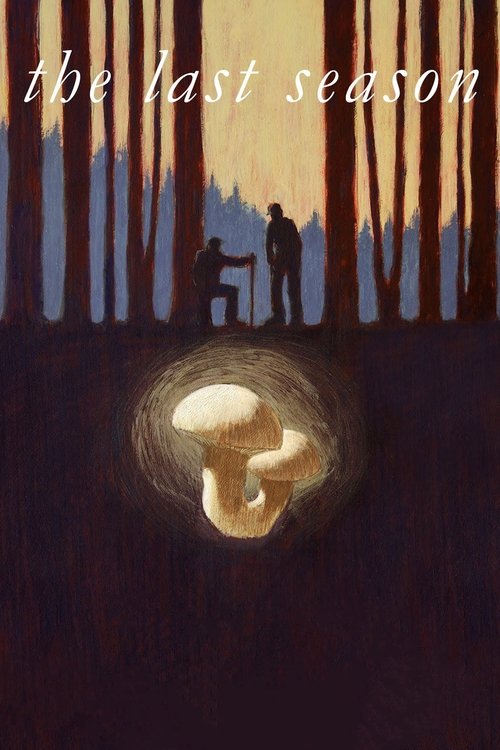
In search of the lucrative matsutake mushroom, two former soldiers discover the means to gradually heal their wounds of war. Roger, a self-described 'fall-down drunk' and sniper in Vietnam, and Kouy, a Cambodian refugee who fought the Khmer Rouge, bonded in the bustling tent-city known as Mushroom Camp, which pops up each autumn in the Oregon woods. Their friendship became an adoptive family; according to a Cambodian custom, if you lose your family like Kouy, you must rebuilt it anew. Now, however, this new family could be lost. Roger's health is declining and trauma flashbacks rack his mind; Kouy gently aids his family before the snow falls and the hunting season ends, signaling his time to leave.

Cast

No Cast found.