Self
Filmmaker Herbert Alfonso and musician Glenn de Randamie travel to Ghana to do some research on polyrhythm and the West-African spirituality. However, their trip to The Motherland makes them realize that home is more than the place where they grew up. Years later, they recollect their faded memories and try to find the right words to describe their intense experience. What exactly made them feel at home and lost at the same time? What does being home actually mean for a black individual from Europe while visiting Africa? Only abstractions seem to persevere as this colourful and musically-charged collage serves to show how a life-changing experience can leave us with nothing but fragments of a truth that has yet to be discovered.
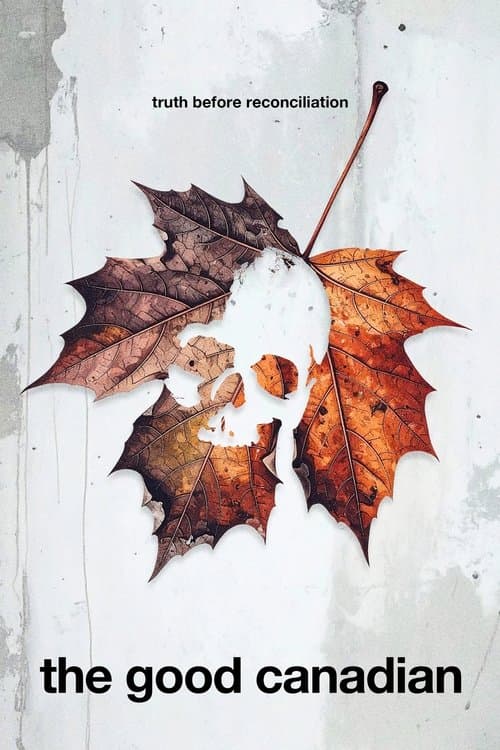
The world knows the image of the good Canadian. But what if there was a dark secret behind a national identity? THE GOOD CANADIAN exposes the truth behind the idea of a True North strong and free. In this unflinching and eye-opening documentary, directors Leena Minifie and David Paperny move us through the corridors of systemic inequity, from the Indian Act to residential schools, to modern-day family separation. Fusing shocking footage with detailed interviews with experts, advocates, whistleblowers and politicians, THE GOOD CANADIAN challenges national myth-making, while offering Canadians the chance to forge a new identity from the truth.
No overview available.
The artistic journey of Dahmane El Harrachi, born in 1925 in Algiers, bears the mark of his experience. An attentive and vigilant observer of the environment of immigrant workers, Dahmane has always avoided falling into the ambient miserabilism. From the Algerian Chaâbi, he has kept certain melodic lines and a clear propensity for sayings drawn from the oral poetic tradition. El Harrachi uses simple language, understandable by all popular sectors of the Maghreb, which partly explains its wide success. In 1949, he went to France and it was in cafes, springboard places where people come to breathe the air of the country, that he performed regularly. Elegant, with his beautiful atmosphere, the “bluesman” of the suburbs seduces, upsets and stirs consciences. Discovered late by the new generation, the creator of Ya Rayah met a tragic end, on August 31, 1980, in a car accident, on the Algiers coast which he sublimated above all else.
The Rainbow Warrior was a Greenpeace ship that was bombed by operatives of the French government, in New Zealand in 1985, while heading to a protest against nuclear testing, tragically taking the life of photographer Fernando Pereira. Edward McGurn’s enlightening and exciting documentary uncovers a tangled tale of nuclear weapons, geopolitical coverups, and attempts to take action against impending environmental collapse. Was Pereira’s death an accident or part of a larger political plot?
Over a dozen students at this school in Quebec were radicalised. To tackle the issue, a pilot project was launched to heal divides within the student body. It's a hybrid cultural model, made up of the many cultures of its students.
The Tet Offensive during the Vietnam War, the Civil Rights Movement, the May events in France, the assassinations of Martin Luther King and Robert F. Kennedy, the Prague Spring, the Chicago riots, the Mexico Summer Olympics, the presidential election of Richard Nixon, the Apollo 8 space mission, the hippies and the Yippies, Bullitt and the living dead. Once upon a time the year 1968.
The rock-wild youth of the 1960s during the apparitions of their idols.
The incredible house of Pierre Loti (1850-1923) in Rochefort will reopen to the public in June 2025. This is an opportunity to look back on the romantic life of one of the most widely read and translated authors of his time. The writer-officer, who joined the navy at the age of 17, traveled around the world as his assignments took him. Through his literary work, he built a sensitive memory of the diversity of cultures at the turn of the 20th century, questioning the major geopolitical upheavals of his time. The film draws heavily on Loti's own words, combined with a collection of rare archives from the period.
May 5, 1821. Napoleon Bonaparte, deposed emperor exiled on the island of St. Helena, is about to take his last breath. The son of a Corsican family, he has been close to death on many occasions since, as a young captain in the revolutionary army, he seized Toulon from the royalists in 1793.
THE ARYANS is Mo Asumang's personal journey into the madness of racism during which she meets German neo-Nazis, the US leading racist, the notorious Tom Metzger and Ku Klux Klan members in the alarming twilight of the Midwest. In The ARYANS Mo questions the completely wrong interpretation of "Aryanism" - a phenomenon of the tall, blond and blue-eyed master race.
yaya/ayat explores identities, being lost in translation and distance. But at its core it's about the filmmaker longing for a relationship with her geographically distant grandma and her journey to Greece to find her. This is an experimental documentary about how being a part of any diaspora shapes a person's identity.
From May 10, 1940, France is living one of the worst tragedies of it history. In a few weeks, the country folds, and then collapsed in facing the attack of the Nazi Germany. On June 1940, each day is a tragedy. For the first time, thanks to historic revelations, and to numerous never seen before images and documents and reenacted situations of the time, this film recounts the incredible stories of those men and women trapped in the torment of this great chaos.
A local fisherwoman navigates her way through a male dominated environment to work in an industry that has been essential to island life for hundreds of years.
In this short documentary, a Musqueam elder rediscovers his Native language and traditions in the city of Vancouver, in the vicinity of which the Musqueam people have lived for thousands of years. Writing the Land captures the ever-changing nature of a modern city - the glass and steel towers cut against the sky, grass, trees and a sudden flash of birds in flight and the enduring power of language to shape perception and create memory.
In 150 years, twice marked by total destruction —a terrible earthquake in 1923 and incendiary bombings in 1945— followed by a spectacular rebirth, Tokyo, the old city of Edo, has become the largest and most futuristic capital in the world in a transformation process fueled by the exceptional resilience of its inhabitants, and nourished by a unique phenomenon of cultural hybridization.
No Trailers found.