After spending more than 36 years in prison, Giampaolo Manca, 'Il Doge', a former boss of the Mala del Brenta gang in Venice, Italy is on a path towards redemption, but he can't seem to forgive himself for the violent crimes of his past.
A day in the city of Berlin, which experienced an industrial boom in the 1920s, and still provides an insight into the living and working conditions at that time. Germany had just recovered a little from the worst consequences of the First World War, the great economic crisis was still a few years away and Hitler was not yet an issue at the time.
Images complement what is always lacking in words. The poems complement what is always present in the city. Freely inspired by the poetry Cidade City Cité, by Augusto de Campos.
The T.N.P., the Théâtre National Populaire, an important experimental theater directed by Jean Vilar. Franju combines sequences from theatrical performances with documentary images, creating links and confrontations between theater and the real world.
Cinema and painting establish a fluid dialogue and begins with introspection in the themes and forms of the plastic work of a woman tormented by the elongated specters, originating from her obsessions and nightmares.
No overview available.
Children get ready to start the first grade. They start learning the first letters.
The movie shows the consequences of total and partial removal of the epithelial bodies in a cat
Two cats housed in a glass box, one of which had received a small amount of atropine in the preliminary experiment, are exposed to ether vapors with the result that only the animal which had not been pretreated began to salivate (profusely).
Parasympathetic irritation is generated in the test animal by subcutaneous injection of muscarine. Salivary secretion, miosis, convulsive evacuation of thin feces and severe shortness of breath as signs of intoxication with a parasympathomimetic. The symptoms of intoxication are reversed by subcutaneous injection of atropine.
Compulsory locomotion and continuous circular movement to the operated side without orientation in case of a onesided removal of the cerebrum and corpus striatum. In case of a doublesided removal there are no spontaneous movements with a normal posture and movement coordination. The dogs' reaction towards external stimuli only.
Between 1979 and 1987, a far-left group wreaked havoc across France. Robberies, bombings, assassinations. They struck hard and disappeared in a cloud of explosives, leaflets scattered in the wind, and relentless ideological demands. Their name? Action Directe. More than 80 attacks, 26 wounded, and 12 dead in less than ten years. Stunned French citizens discovered posters plastered everywhere showing portraits of these young women and men who looked like everyone else and whom nothing seemed to be able to stop. A long and intense manhunt began, culminating in the arrest of the group's leadership.
Short film about the GDR state border
The Dangers of the Fly is an educational film made by Ernesto Gunche and Eduardo Martínez de la Pera, also responsible for Gaucho Nobility (1915), the biggest blockbuster of Argentinean silent cinema. De la Pera was a talented photographer, always willing to try new gadgets and techniques. This film experiments with microphotography in the style of Jean Comandon's films for Pathé and it is part of a series which included a film about mosquitoes and paludism and another one about cancer, which are considered lost. Flies were a popular subject of silent films and there are more than a dozen titles featuring them in the teens and early twenties.
Short documentary about social and economic situation in Galicia (Spain) in 1936
A photographer explores the seldom noticed architecture in his home town.
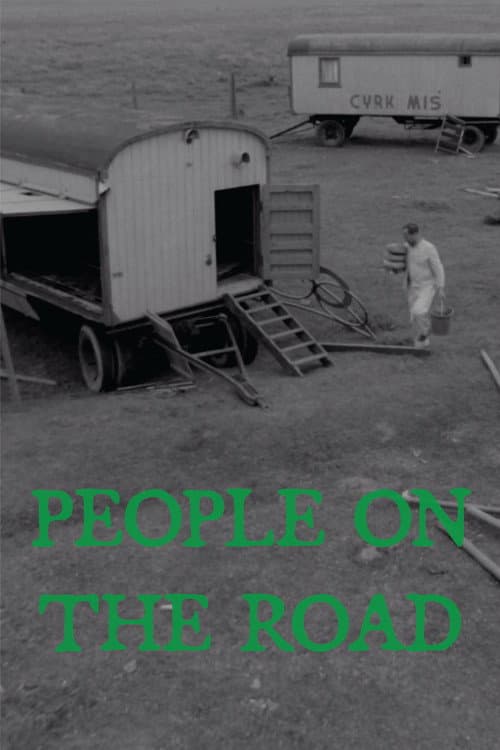
A portrait of a traveling circus.
Presents life in 18th century Spain as the painter Francisco de Goya showed it to us.
This documentary tells the story of the brilliant Italian polymath, artist, sculptor, painter, poet, musician, writer, philosopher, scientist, botanist, geologist, cartographer, mathematician, anatomist, paleontologist, architect, urban planner, engineer, and inventor. The legacy of the brilliant Leonardo (1452-1519) to the world came in many forms: in the breathtaking beauty of The Last Supper and The Mona Lisa; in his rich collection of engravings; and in his notes on original thoughts on astronomy, biology, and physiology.
Trailer