BATE CABELO! unveils the story of an artistic creation that became a living symbol of memory, embodiment, and resistance.
Trailer
Welcome to a different kind of drag race! As NYC emerges from the chaos of 2020, Marti Cummings (they/them), an audacious and big-hearted drag queen, goes all out in a historic bid to become a City Councilperson. It’s one of the most hotly contested Council races in years, and Marti’s strongest competitor is Shaun Abreu, a tenants’ lawyer with deep roots in the district’s Latinx community. As these first-timers race to do the most good for their Upper Manhattan neighbors, they offer very different visions for Democratic politics – one in a suit and tie, the other in combat boots and floral print. As this immersive documentary reveals, Marti’s passion inspires queer activists and allies to change the political system. Their campaign becomes a community of its own, especially for Marti’s non-binary peers who have never before seen themselves represented.
Tips for what to expect when taking a vacation aboard a cruise ship, and how to make the most of the trip.
Documentary about the making of ’Spring Break Zombie Massacre.’
An Oscar nominated documentary about a middle-class American family who is torn apart when the father Arnold and son Jesse are accused of sexually abusing numerous children. Director Jarecki interviews people from different sides of this tragic story and raises the question of whether they were rightfully tried when they claim they were innocent and there was never any evidence against them.
No overview available.
In Uganda, AIDS-infected mothers have begun writing what they call Memory Books for their children. Aware of the illness, it is a way for the family to come to terms with the inevitable death that it faces. Hopelessness and desperation are confronted through the collaborative effort of remembering and recording, a process that inspires unexpected strength and even solace in the face of death.
Thomas Haemmerli is about to celebrate his fortieth birthday when he learns of his mother's death. A further shock follows when he and his brother Erik discover her apartment, which is filthy and full to bursting with junk. It takes the brothers an entire month to clean out the place. Among the chaos, they find films going back to the 1930s, photos and other memorabilia.
At 85, Icelandic design icon Gunnar Magnússon begins a final project with help from his daughter Tinna. As his health suddenly fails, she is left to complete the work herself, turning her father’s last creation into a daughter’s final gesture of love.
Until now, they have stood on the sidelines. They have not appeared before the cameras. They have not taken part in public discussion. It is mainly to them that the documentary film by the well-known journalist Ewa Ewart was devoted. It shows the face of the Smolensk catastrophe through the eyes of the victims' families. April 10, 2010 went down in the memory of Poles as a day of national drama. But for the characters in the film, it was the day of their greatest personal drama. Along with the presidential couple, their loved ones passed away in shocking circumstances. For most, the time passing since the Smolensk catastrophe does not bring relief. Ewa Ewart and her film crew accompany the families at various stages of their struggle with difficult emotions. The film is in the process of being made and will include sequences and stills that have not been used anywhere before.
Pauline, a plucky Super Ager from Erie, Pennsylvania lives her 102nd and 103rd years on camera, revealing the power that family, faith, purpose, a sense of humor and some good genetics play in a long, well-lived life. An intimate portrayal of grit and resilience emerges with a needed acknowledgment of the often overlooked role of women in America's "Greatest Generation."
It’s summertime, 2021. Isabelle Huppert plays Lioubov, Chekhov’s unforgettably heroine in The Cherry Orchard. In a near theatre, Fabrice Luchini recites Nietzsche. Both actors are premiering at Avignon’s Festival. When they leave backstage to stand out on stage, they are completely transformed. As everything seems utterly natural, audience does not imagine what happened before. By following their daily lives during the weeks preceding the premieres, Benoît Jacquot brings a singular perspective of the two actors and shows them like we’ve never seen before.
Gavin built a giant volcano sculpture that's now in his dad's shed. Gavin seeks his dad's understanding but he's uninterested in modern art and refuses to participate in the documentary.
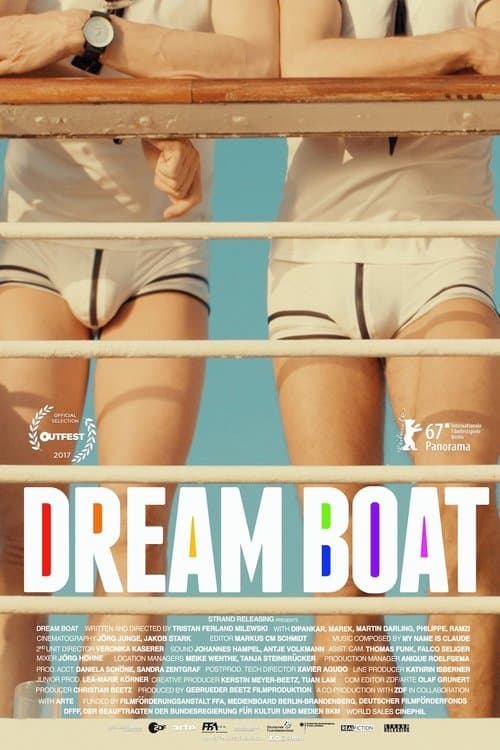
A cruise ship and 3,000 men – it is a universe without heteros and women that usually remains a mystery to the outside world. Once a year the Dream Boat sets sail for a cruise exclusively for gay men where most passengers are united by the wish to live life authentically as themselves in a protected place.
What happens when your child comes out to you? In this feature documentary, parents of lesbian, gay, bisexual and trans-gender individuals in Turkey intimately share their experiences with the viewer, as they redefine what it means to be parents in this conservative society.
Traces the lives of the Hartings, a blind Montreal family of three who make their living singing in the city's subway stations. The Hartings lost their only sighted child Hassan in a tragic drowning accident, and have since turned to the teachings of Russian mystic Grigori Grabovoi, hoping to resurrect their son. Resurrecting Hassan is an exploration of this family's legacy of grief, tragedy and abuse; the film will follow them on their path to redemption.
After her gender identity was denied in her homeland, Lee Li, a transgender asylum seeker, was forced to leave her country, family, and language to embark on a journey toward belonging, freedom, and self-empowerment.
Buzz One Four chronicles the ill-fated flight of a Cold War B-52 Stratofortress loaded with two 3-4-megaton nuclear bombs that crashed 90 miles from Washington DC in 1961. Information suggests that detonation came closer than official reports indicated. The full details of the crash have remained classified and otherwise repressed by the Air Force, but the filmmaker, Portlander Matt McCormick, grew up with this story because the pilot was his grandfather. As McCormick recounts the history of the era, aspects of this crash, and other little-know nuclear-weapons accidents, he leaves us wondering if the U.S. was in greater danger of nuking itself than of being attacked by the Russians.
Márcia Pantera
Natasha Princess
Silvetty Montilla
Gretta Starr