No Trailers found.
Self
No overview available.
In a country that prides itself on democracy, a group of activists, known for chalking messages and holding signs, faces a terrifying escalation: repression so severe that their right to speak freely becomes their last, desperate stand.
After a plane crash, four indigenous children fight to survive in the Colombian Amazon using ancestral wisdom as an unprecedented rescue mission unfolds.
Deep beneath the surface in the Syrian province of Ghouta, a group of female doctors have established an underground field hospital. Under the supervision of paediatrician Dr. Amani and her staff of doctors and nurses, hope is restored for some of the thousands of children and civilian victims of the ruthless Syrian civil war.
A short documentary about the October 14 1979 March For Lesbian And Gay Rights in Washington D.C.
A documentary film depicting five intimate portraits of migrants who fled their country of origin to seek refuge in France and find a space of freedom where they can fully experience their sexuality and their sexual identity: Giovanna, woman transgender of Colombian origin, Roman, Russian transgender man, Cate, Ugandan lesbian mother, Yi Chen, young Chinese gay man…
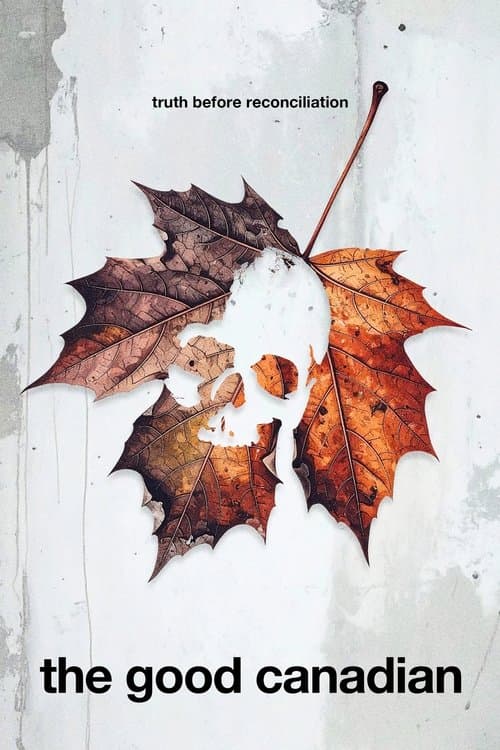
The world knows the image of the good Canadian. But what if there was a dark secret behind a national identity? THE GOOD CANADIAN exposes the truth behind the idea of a True North strong and free. In this unflinching and eye-opening documentary, directors Leena Minifie and David Paperny move us through the corridors of systemic inequity, from the Indian Act to residential schools, to modern-day family separation. Fusing shocking footage with detailed interviews with experts, advocates, whistleblowers and politicians, THE GOOD CANADIAN challenges national myth-making, while offering Canadians the chance to forge a new identity from the truth.
In the 1970's, filmmakers Tom Burger, Bill McKiggan and Chuck Lapp began documenting the history and current struggles of inshore fishermen in Atlantic Canada to form a union. Until 1979 it was illegal for fishermen to form a union in Nova Scotia. The committed funding from the National Film Board was withdrawn for this film, however the filmmakers continued to edit the film by entering the NFB at night. The CBC refused to broadcast the film, but it was finally released in 1990 and broadcast nationally that year on Vision TV.
After her gender identity was denied in her homeland, Lee Li, a transgender asylum seeker, was forced to leave her country, family, and language to embark on a journey toward belonging, freedom, and self-empowerment.
Rebellion for Future depicts the activities of the Extinction Rebellion community from the inside. What price must one pay for criticizing prevailing social practices? How does it feel to face the authorities and their heavy-handed tactics? This feature-length documentary closely follows events over a two-year period, both in the marshlands of Lapland and on the streets of Helsinki. In their efforts to curb the climate crisis and the destruction of nature, the rebels use their own bodies to block factories, production equipment, and streets. Clashes with the authorities are tense, and the rebels are sometimes thrown in jail, brought before the courts, and even subjected to violence.
Throughout the Islamic world, each year hundreds of women are shot, stabbed, strangled or burned to death by male relatives because they are thought to have “dishonoured” their families. They may have lost their virginity, refused an arranged marriage or left an abusive husband. Even if a woman is raped or merely the victim of gossip, she must pay the price. Crimes of Honour documents the terrible reality of femicide – the belief that a girl’s body is the property of the family, and any suggestion of sexual impropriety must be cleansed with her blood. We meet women in hiding from their families, a brother who describes his reasons for killing the sister he loved, and a handful of women who have committed themselves to the protection of young women in danger of losing their lives.
In April 1977, the small coastal town of Seabrook, New Hampshire became an international symbol in the battle over atomic energy. Concerned about the dangers of potential radioactive accidents, over 2,000 members of the Clamshell Alliance, a coalition of environmental groups, attempted to block construction of a nuclear power plant. 1,414 people were arrested in that civil disobedience protest and jailed en masse in National Guard armories for two weeks.
In the aftermath of a tragic fire in a Romanian club, burn victims begin dying in hospitals from wounds that were not life threatening. A team of investigative journalists move into action uncovering the mass corruption of the health system and of the state institutions. Collective follows journalists, whistle blowers, and authorities alike. An immersive and uncompromising look into a dysfunctional system, exposing corruption, propaganda, and manipulation that nowadays affect not only Romania, but societies around the world.
In 2021, the border area between Poland and Belarus became a forbidden zone, three kilometers wide, where refugees found themselves brutally trapped. They had become the stakes in a political game: Belarus supposedly guaranteed free passage to the EU, but in Poland the refugees met with pushbacks, forcing them back across the border. Once in Belarus again, they were driven back towards Poland—a horrific stalemate in an inhospitable landscape of treacherous marshes.
“Can I be nostalgic about something I’ve never experienced?” asks debut filmmaker Pranami Koch. She has in mind her grandmother, a person she never knew who belonged to the Koches, a people in India with their own culture and traditions. In her search for connection and identity, Pranami travels to the countryside and immerses herself in the Koch community.
In this ultimate guide to Scandinavia travelers Megan McCormick, Ian Wright and Neil Gibson explore Denmark, Sweden, Norway, Lapland, Finland and the Baltic States. From enjoying a traditional Viking festival to crossing the Arctic Circle into Lapland for dinner with reindeer herders to a visit to the capital of Lithuania, Vilinus, and the Midsummer Night Festival in Kernave, these hosts will introduce the viewer to a variety of sites and attractions during their Scandinavian tour.
Promised Land is a social justice documentary that follows two tribes in the Pacific Northwest: the Duwamish and the Chinook, as they fight for the restoration of treaty rights they've long been denied. In following their story, the film examines a larger problem in the way that the government and society still looks at tribal sovereignty.