No Trailers found.
No Cast found.
This documentary juxtaposes scenes of El Salvador's opposition factions, including U.S. government advisors and government troops, and guerrillas and their sympathizers.
Filmed by Guillermo Escalón in July 1981, it shows daily life in territories under guerrilla control in the Francisco Sánchez Northeastern Front, Department of Morazán,
A meditation on the intersection of Afro-Caribbean and Indigenous American existence.
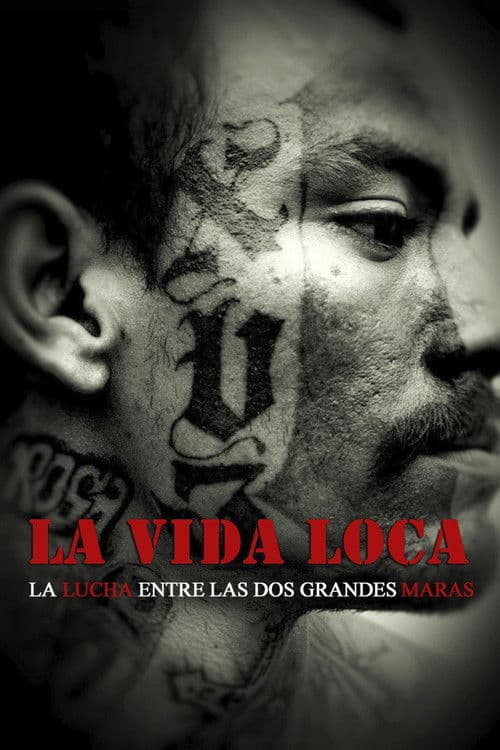
A documentary about the rival gangs Mara 18 and Mara Salvatrucha, originating in Los Angeles but terrorizing El Salvador. It explores their origins as possible founding myths of organized crime in a globalized world.
It is El Salvador, 1989, three years before the end of a brutal civil war that took 75,000 lives. Maria Serrano, wife, mother, and guerrilla leader is on the front lines of the battle for her people and her country. With unprecedented access to FMLN guerrilla camps, the filmmakers dramatically chronicle Maria's daily life in the war.
Join affable presenter Nigel Marven as he explores El Salvador, the volatile land of volcanoes with a colorful culture and natural history. Follow along as he climbs an active volcano near the capital San Salvador, comes face-to-face with a crocodile, cuddles a caecilian, fights fire with fire, dives deep into a volcanic lake, and discovers the Pompeii of Central America.
Years after the Salvadoran military destroyed the village of Cinquera in that country’s civil war, survivors have returned to rebuild their community. Soulful, beautifully rendered, this amazing debut is an evocative testament to place, memory and the power of life to rebound from tragedy.
Fleeing the 1980 Civil War in El Salvador, Dora Rodriguez, among a group of twenty-five asylum seekers, were abandoned by their guide and left to fend for themselves in the relentless Sonoran desert of Arizona.
January 22, 1932. An unprecedented peasant uprising erupts in western El Salvador, as a group of Latino and indigenous peasants cut army supply lines, attack a military garrison, and take control over several towns. Retribution is swift. After three days, the army and militias move in and, in some villages, slaughter all males over age 12. Elsewhere, they summarily execute anyone suspected of having a link to the Communists. Over the next few weeks, 10,000 people are massacred.
The battle of El Salvador and its revolutionary history, from the time of the Spanish conquest and colonization, to the insurgency of the 80s, approached by a Puerto Rican filmmaker immersed in the conflict. Depicts a host of F.M.L.N. guerrillas marching forth from Monte Alzaco, the spiritual home of Salvadoran resistance.
Filmed during the Salvadoran civil war, La luz que te decía documents the struggles of the country’s labor and trade union movement amid escalating political violence. Through strike footage, congress meetings, marches, and first-person testimonies, the film portrays a society marked by state repression, workers’ mobilization, and efforts to build national and international solidarity. The documentary pays particular attention to the strike of the National Water Authority workers (ANDA), featuring members of the SETA union who describe the causes of the protest, the repression they faced, and the survival strategies adopted during the conflict. Testimonies from other unions, grassroots organizations, and international labor groups broaden the film’s perspective beyond a single labor dispute.
Through dances and games, migrant boys and girls who live in a shelter in Reynosa, on the US-Mexico border, shared their dreams and stories of hope with us.
In the early 1980s, at the beginning of what would become a 12-year-long civil war, El Salvador's talented football team was one national institution upon which both the left and the right could agree. When the team pulled off a stunning 1-0 upset against Mexico and qualified to compete in the 1982 World Cup, it was a high point for the tiny country's national pride. Unfortunately, the team's Cinderella story devolved into a nightmarish farce.
A powerful three-part documentary studying the US involvement in Guatemala, El Salvador and Nicaragua. The differing factions - Sandinista leaders, Guatemalan campesinos, CIA operatives, Contras and US government apologists - are interviewed and, in the absence of a controlling narration, the audience is encouraged to draw its own conclusions.
No overview available.
The war in El Salvador was the most cruel and bloody Latin America has ever seen. During that time of turmoil Latin American bishops created the famous preferential option for the poor, demanding justice, food and education in the name of the gospel. Using interviews and old footage, the film follows the civil war and the role of the Church in it. In 1977, after the murder of Father Rutilio Grande, the Archbishop Oscar Romero took a strong anti government position, broadcasting sermons over Radio Luz demanding that the government stop the repression. He could not understand why he was thought to be a follower of Karl Marx, when he knew "he followed only Jesus Christ." An inspiring film about people of faith who stood up against injustice.
Filmed on the war fronts of Chalatenango and Guazapa, the film is based on the construction of Local Popular Powers (PPL) in areas under guerrilla control.
This Traveltalk series short starts in San Salvador, El Salvador's capital, emphasizing the Spanish architectural heritage. We then go to the Izalco Volcano, which was created in 1770 by an eruption of the Santa Ana Volcano. The focus then shifts to the country's agriculture. The two main products are coffee and henequen, a plant with tough, fibrous leaves used to make rope, baskets, and other products.
In El Salvador, Chelino tells about the indigenous massacre of 1932, of which he survived, while he teaches the melodies of traditional Salvadoran dances.