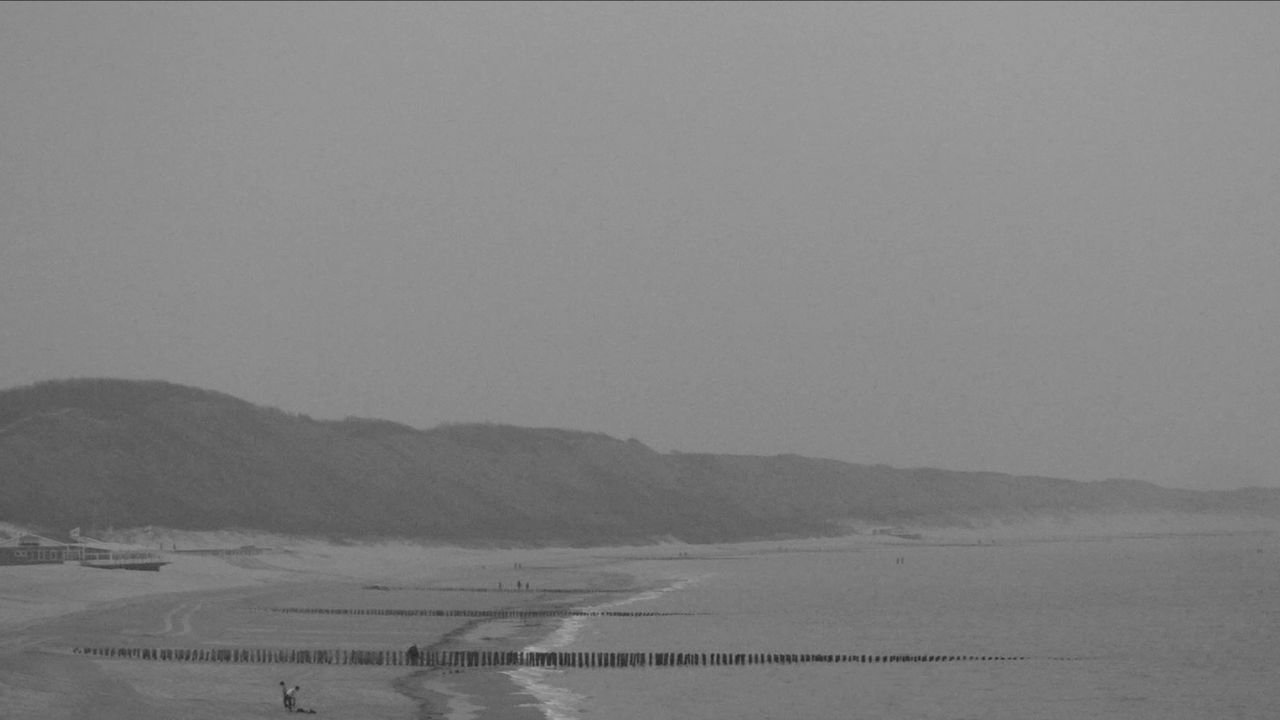
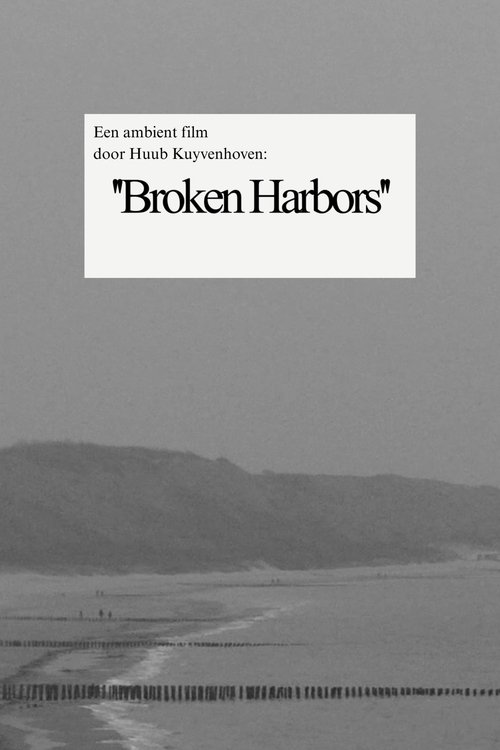
An ambient short film of seaside cinematography accompanied by Stars of the Lid's 'Broken Harbors pt.2' and 'Broken Harbors pt.3' It is shot in black and white, but switches to color near the end.
No Trailers found.
No Cast found.
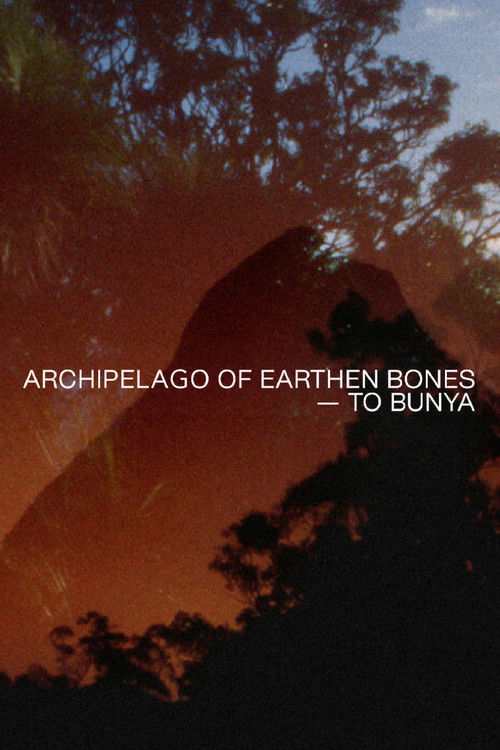
Forming part of a film constellation that stretches from Chile across the Pacific, in which Malena Szlam trains her camera on far-flung volcanic landscapes — by turns barren and verdant — the dazzling in-camera multiple exposures of Archipelago of Earthen Bones — To Bunya evoke the layered histories of the titular Bunya Mountains in eastern Australia’s Beerwah region, further deepened by sonified atmospheres from artist Lawrence English.
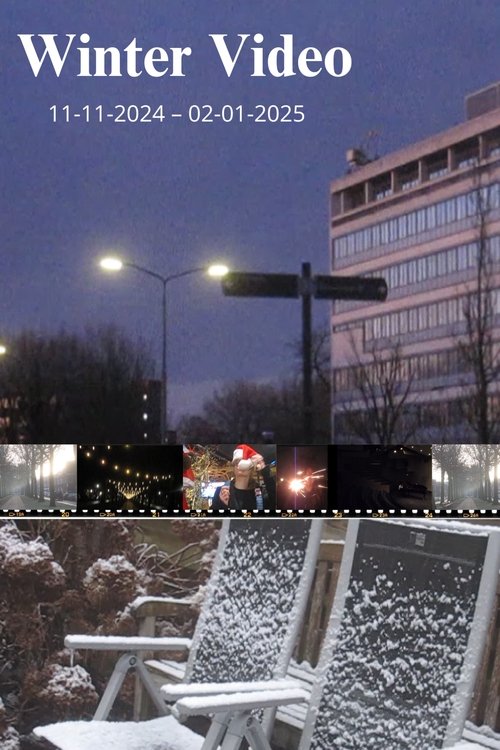
A collection of personal footage from the end of 2024. A mix of private holiday scenes and cold city cinematography, in differing video quality. You can see it as a creative video diary.
A disorienting realm where reality itself flickers and fragments. Through a visceral exploration of digital distortion and failing verification processes, this challenges your perception and dares you to question what lies beneath the surface. Are we truly awake to the genocides and wars raging beyond our privileged bubbles, or are we content to remain ensnared by manipulated realities? This is a personal call to shatter the illusions, to seek deeper truths, and to recognize the profound fortune of our existence amidst global turmoil.
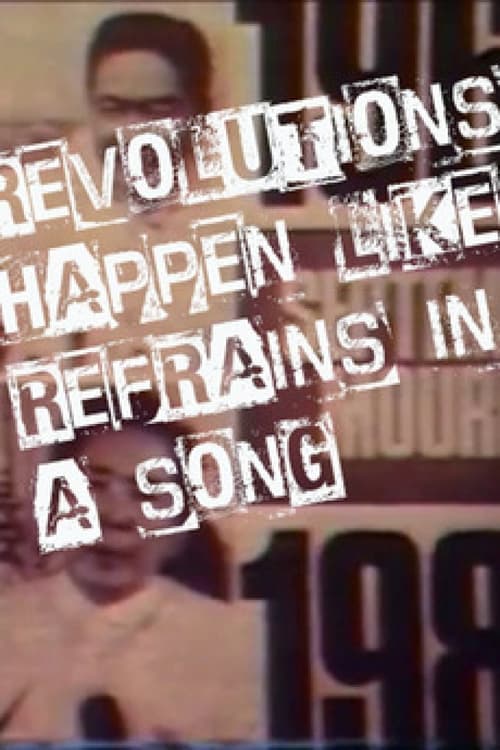
Narrated by Deocampo in English, the film documents the anti-Marcos revolution, the life of Oliver (a transvestite who was the subject of the first film in the trilogy), child prostitution, and the filmmaker's own personal history, including his homosexuality, his filmmaking, and his travels abroad.
The film conducts an elusive search for the traces of Lee Kyung Soo, a Korean War orphan adopted by a U.S. Navy officer. Lee’s image circulated widely across newspapers, magazines, and photographs—serving specific purposes and cultural narratives. Over time, these representations fractured, faded, and reemerged, leaving silences in the archive and gaps in visibility. The cut-out fragments from the scattered information are pieced together to imagine the child’s unspoken point of view throughout his wandering life.
In a record of images and sounds, a HIV-positive man recounts his sexual experience on the border between Argentina, Brazil and Paraguay.
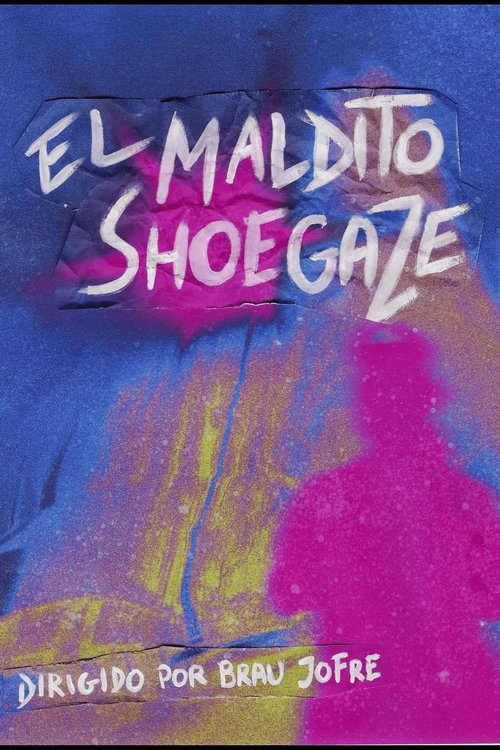
Demoni through a performative act reflects on the musical genre shoegaze, from the deformation of the image and the distortion of the audio to generate its own chaos that leads to a comment on cultural hegemony in Chile.
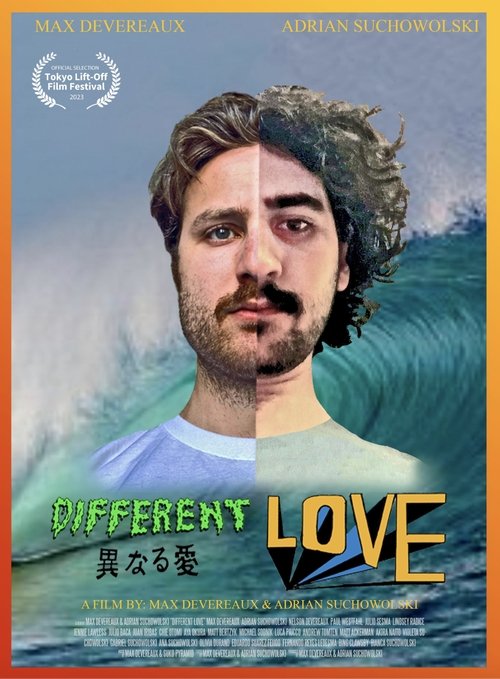
Max Devereaux and Suko Pyramid documentary about the making of their first three albums together as a duo and the story of their inspiring, international collaboration. Produced entirely remotely, featuring never-before-seen photos, videos and audio as well as interviews with close collaborators from all over the world.
A farewell to the amalgamation of memories that a family crossed by the passage of time leaves in Denia.
A frenetic Santiago gives me space to reflect on depression, loneliness and home in an attempt to piece together my past. Pandemic revelations and crises of youth appear as fragments. The liveliness I find in the crowd connects me with its movement.
A trip that the author makes to a distant beach trying to find the place where his grandfather made a painting years ago.
No overview available.
Ramsés begins to experience disturbing changes in his body and mind, unsettling shifts that disrupt his daily life. Soon he realizes he is no longer alone in his own skin: the demon Asmodeus has taken control. Under this possession, Ramsés is driven into a spiral of desire and violence, seeking out both men and women to consume through blood and sex, feeding the darkest temptations of the demon within. As reality and delusion blur, Ramsés struggles to hold onto what remains of his humanity while Asmodeus leads him ever deeper into a world of lust, horror, and destruction.
Documentary with fragments and records about the boundaries between art and counterculture, based on a debate held at the Museum of Modern Art, Rio de Janeiro, in October 1968.
A girl from Hainan recounts her youth in a seaside village she couldn't leave.
16mm film by Paul Clipson, and music by Sarah Davachi. Filmed in New York, Los Angeles, Hong Kong, Brisbane, Krakow, Sidney, Portland, Napa, Oakland and San Francisco.
An influencer gets canceled and goes on a journey that forces him to view his life through the lens of social media.
Short documentary that captures glimpses of everyday reality and, in this process, encourages the viewer to poetically observe these details.
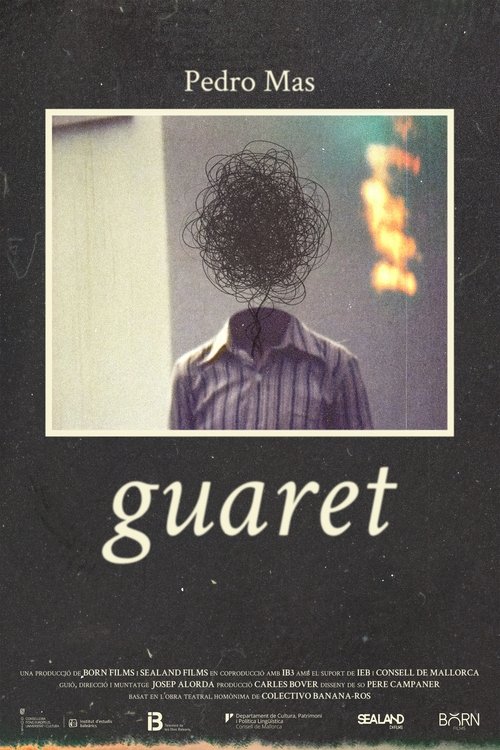
Pedro is Mallorcan, born to a mother from Burgos and a father from Mallorca. Due to his distant relationship with his father, Pedro doesn't fully master Mallorcan as a language. He turns to the works of Damià Huguet to remember his father, as only his poems can fill the void left by his death. The poet's words transport Pedro to his childhood and his roots, even though many of the words are unknown to him, despite them belonging to his language. This becomes the driving force behind the protagonist's search for his own identity, his origins, what it means to be a man, father-son relationships, collective identity, and "mallorquinness". Pedro constantly questions the emotions stirred by Huguet's poetry, and, most importantly, who he is and where he belongs.
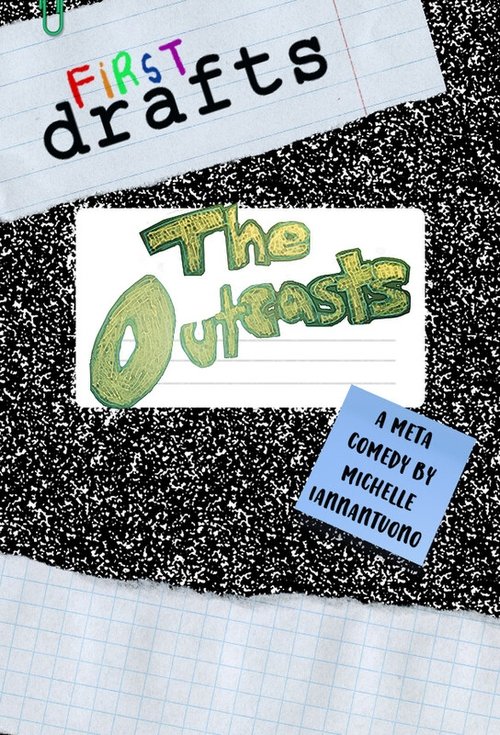
What if you rediscovered the script you wrote when you were 12? And what if you performed it with real actors, without changing a word? In this unique comedy, actors faithfully bring their director's hilariously bad childhood script to life, while their "Teacher" Michael Smallwood uproariously reacts to the chaos.